Cookbook Challenge Week 5
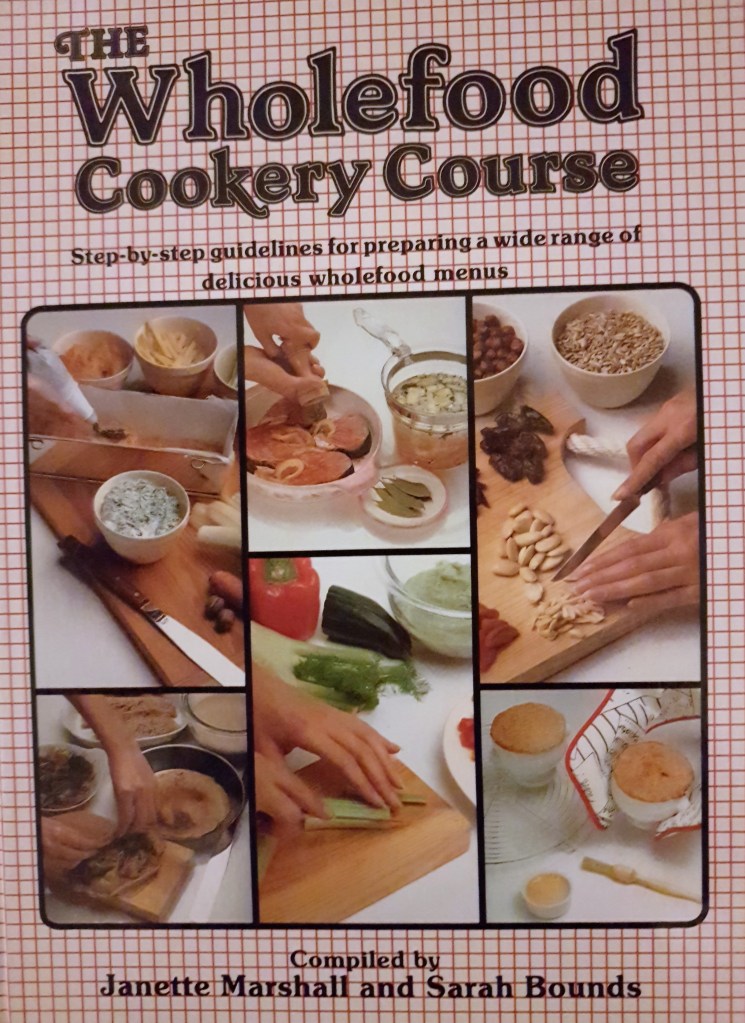
Today in the UK it’s Mother’s Day, so my dinner is being cooked for me while I sit on the sofa eating chocolates and writing about what I cooked last night. This was the least successful meal so far, and to be honest I think my family would prefer me to stay on the sofa and not make anything else from this book!
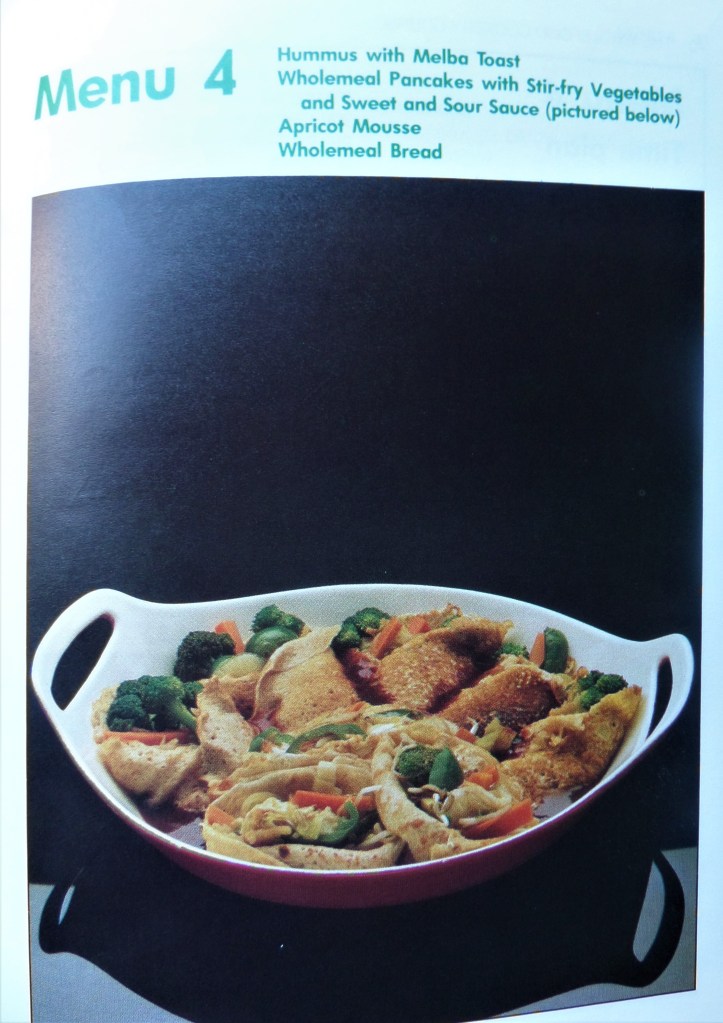
The book contains several menus and the one I picked included wholemeal vegetable pancakes with sweet and sour sauce, followed by apricot mousse. It also suggested making wholemeal melba toast with houmous, but I could not see the point of making a lovely fresh loaf just to slice it up and make dry toast, and anyway it seemed like quite enough high fibre food for one meal. Each menu includes a basic timeplan and is followed by nutritional notes. I was surprised to learn that even if I had made the full menu it would still not quite meet the recommended daily fibre allowance and most people are not eating anywhere near the guideline amounts.
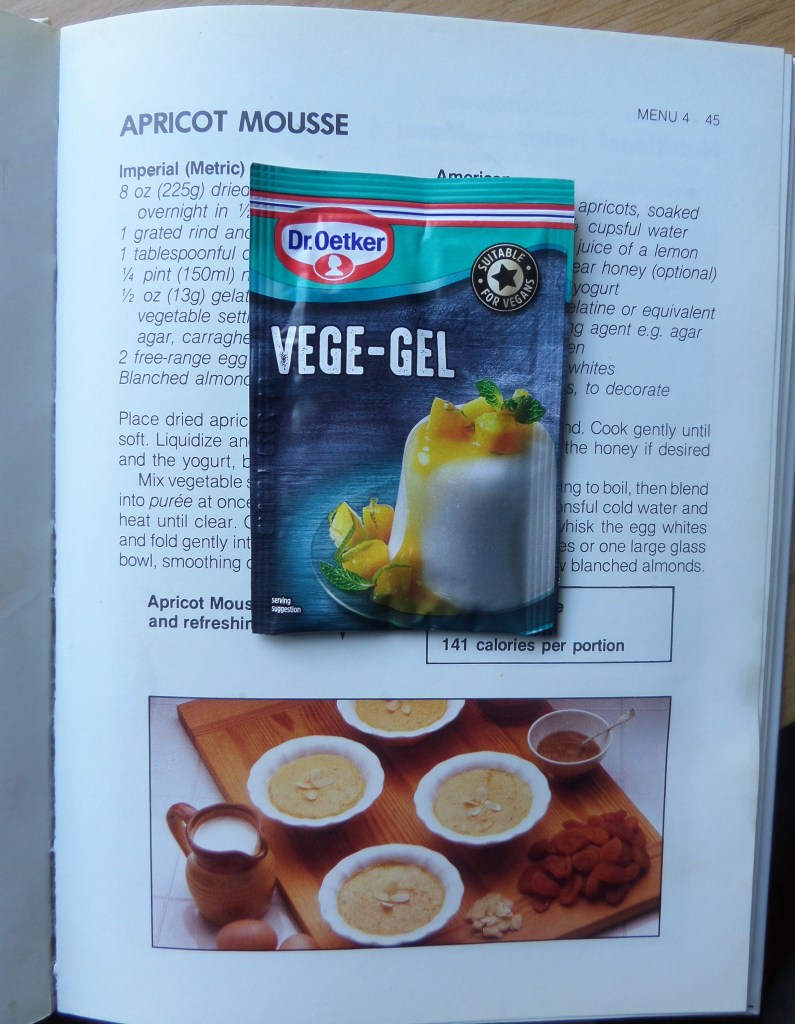
I made the mousse earlier in the day as I needed to cook and puree the apricots (which had been soaked overnight), and having learnt from my mango ice cream experience I wanted to allow time for it to cool and set.
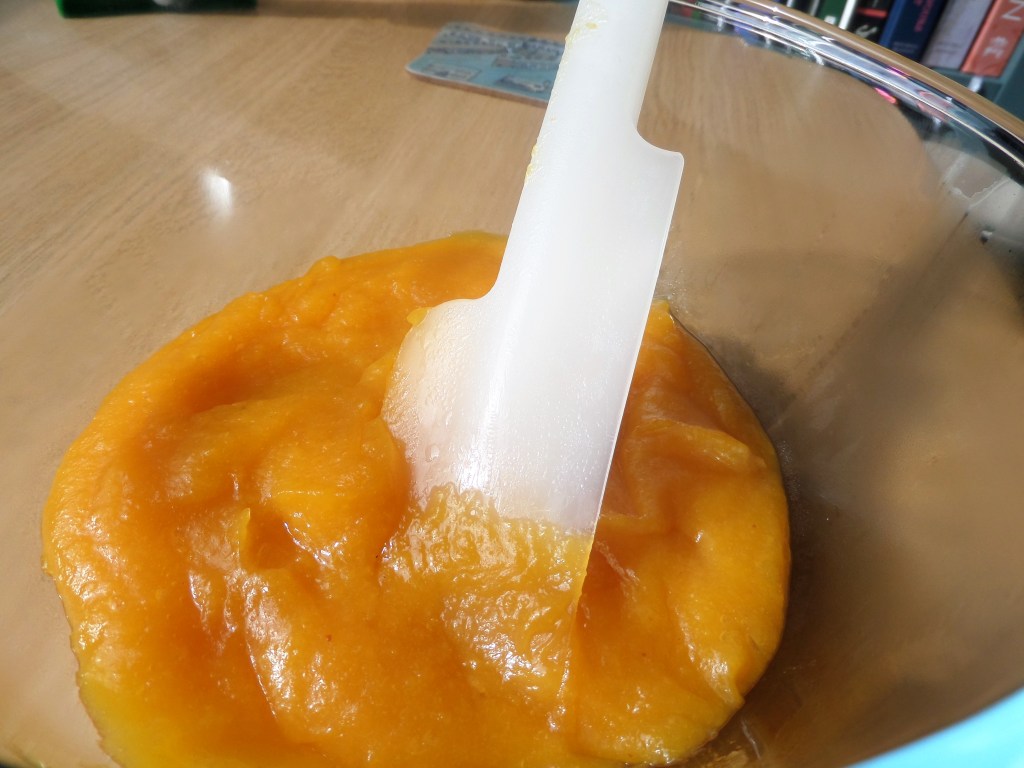
The apricot puree – pretty colour isn’t it? My dried apricots contained sulphur dioxide to keep the colour. Organic ones would be brown, but those are the ones to use if you are worried about allergies or sensitivities.
The recipe includes two stiffly beaten egg whites which are folded in at the end. Now, this book predates the UK ‘salmonella in eggs’ scandal of 1988, in which the Junior Health Minister Edwina Currie stated that most British eggs were contaminated with salmonella. This caused a huge scandal, a 60% reduction in egg sales and led to her resignation. Even though the statement was not actually quite correct, for years afterwards recipes warned that children, the elderly and pregnant women should not eat raw or lightly cooked eggs. Fortunately chicken farming has improved since then and in 2017 the Food Standards Agency advice was updated to say that raw eggs with the Lion mark are safe again for most people.
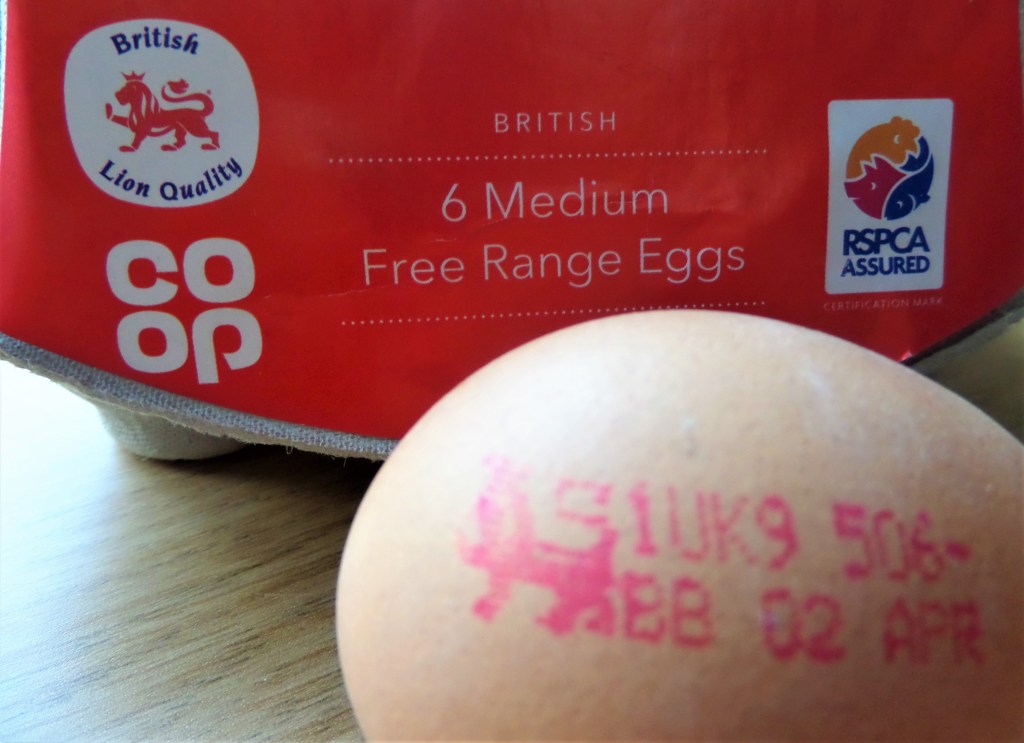
Here is the Lion mark on the egg box and stamped on the egg so we know it’s safe.
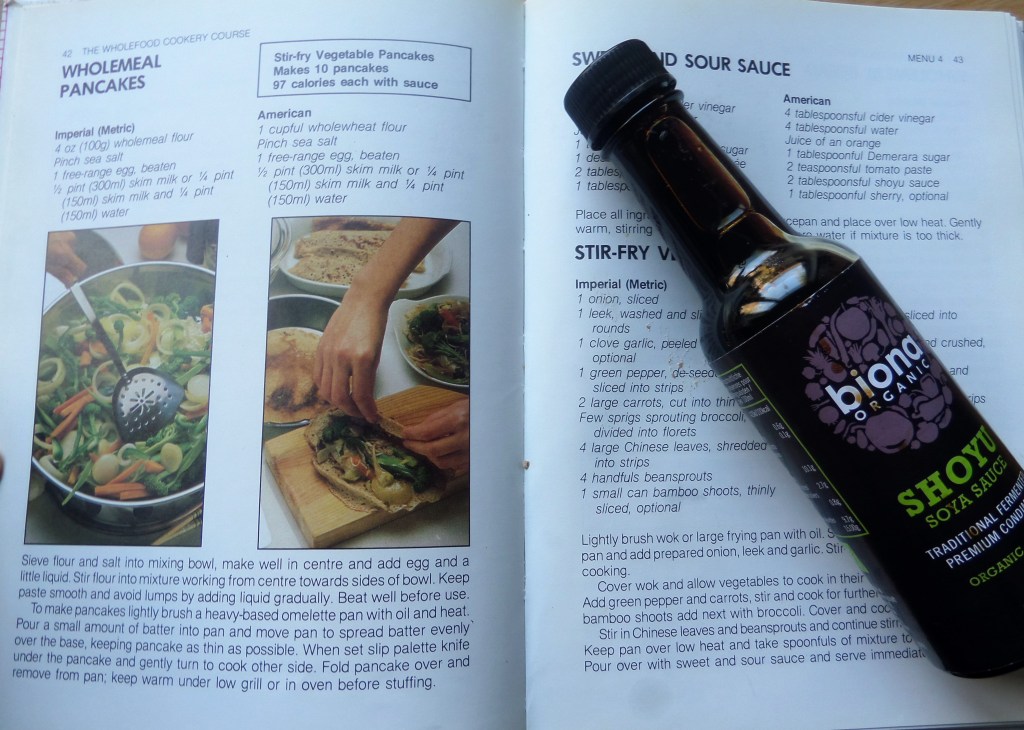
The vegetable stir fry included a large amount of veg (which I shredded in my food processor) but no seasoning apart from one optional clove of garlic. The sweet and sour sauce did contain salt from the shoyu, but I knew a big pile of plain vegetables was not going to go down well, so I cooked them in flavoured oil and also added a green chilli, a pinch of salt and some 5 Spice seasoning. The vegetables were fine, but the main problem with this recipe was that I really can’t make pancakes! I admit that is a problem with the cook rather than the recipe itself, but I had to make two batches before I had enough that were whole enough to wrap around the filling.
If you’ve read previous cookbook challenge posts, you may have noticed that I like to try and pair some wine with the recipes. This time it was a Gewurztraminer from the Alsace region – slightly sweet with some tropical fruit notes and often paired with spicy food and desserts including dried fruit. It was probably the best part of this meal!
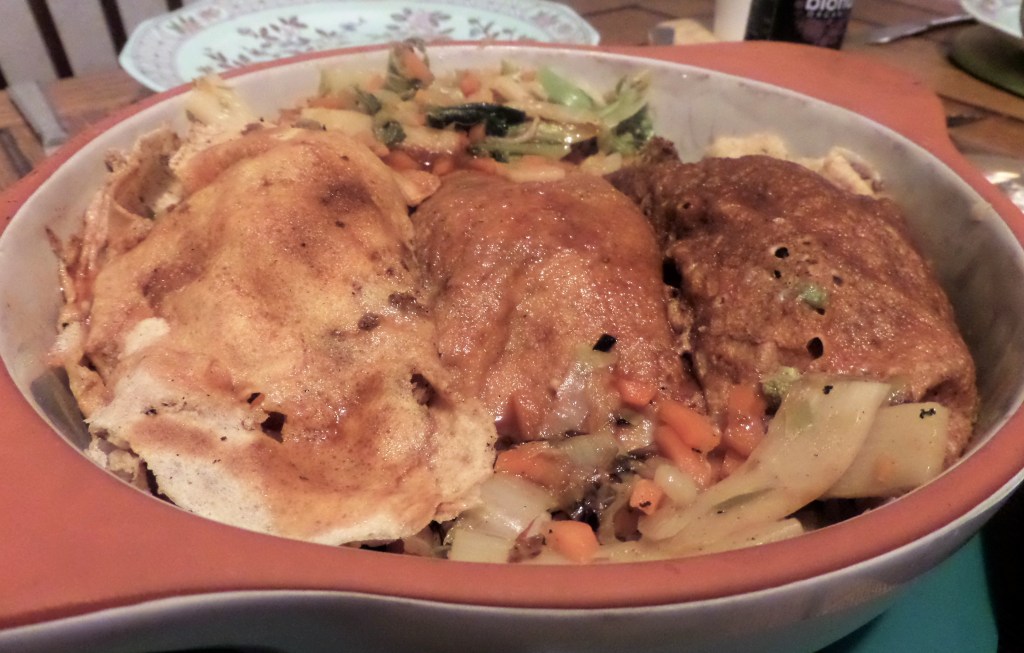
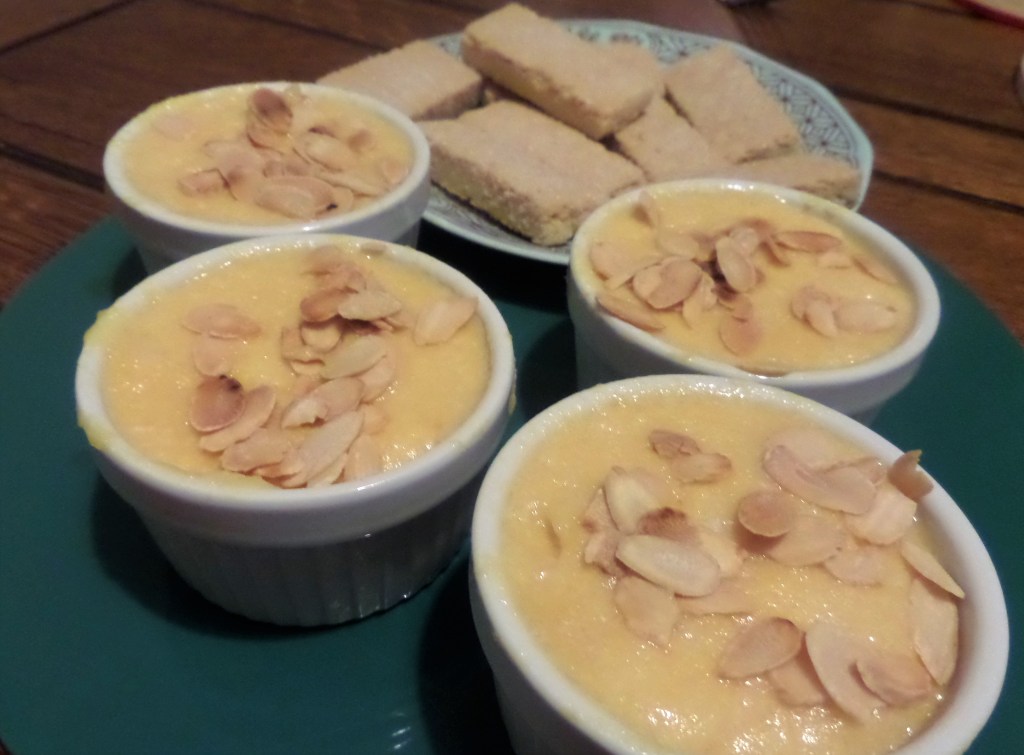

I can’t say I really enjoyed cooking this. It was extremely hot work to cook all the pancakes and them keep them warm while I cooked the stir fry and the whole thing generated a lot of washing up.
The food was not bad, but not particularly good either. My sons thought the stir fry was OK, but did not think it went well with pancakes – even though they like pancakes they would have preferred rice or noodles with this. Son two also found the sauce far too acidic even though I added extra sugar. The mousse had a good apricot flavour but was a bit intense – my eldest son ate it but didn’t ask for any more and the younger one did not like it at all.
On reflection, I don’t think I’ll be revisiting this book. It seems very much of its time, whereas now Instagram is full of posts showing far more appealing and tasty looking dishes. Healthy cooking has definitely moved on and that’s for the best. Which healthy recipe books do you recommend?

 Apricots In Manchester