Exploring Mauritian Cuisine: A Culinary Adventure

Cookbook Challenge Part 14: Sunshine on a Plate by Shelina Permalloo
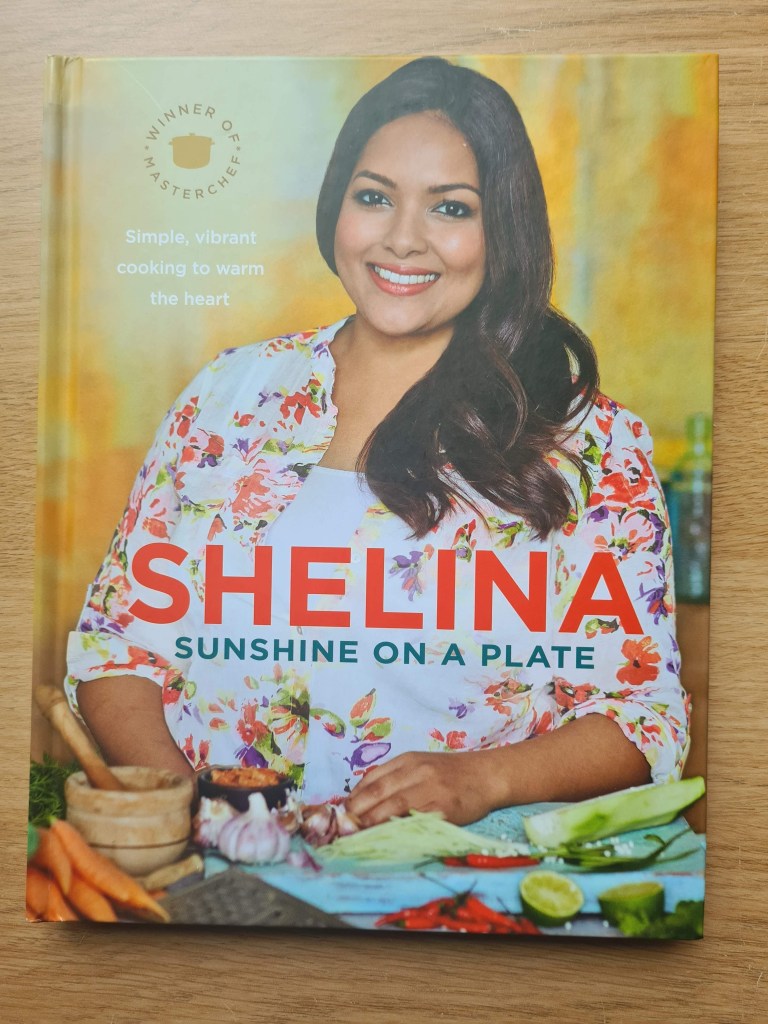
Last November, we went on a long awaited holiday to Mauritius. It was our first time there and one of the things we were most looking forward to was trying some Mauritian food.

Mauritian food reflects the country’s varied cultural mix and includes culinary traditions from India, China, Africa and France. When you travel around the island, it’s easy to see how the cuisine is inspired by the sunny weather, relaxing atmosphere and colourful produce.


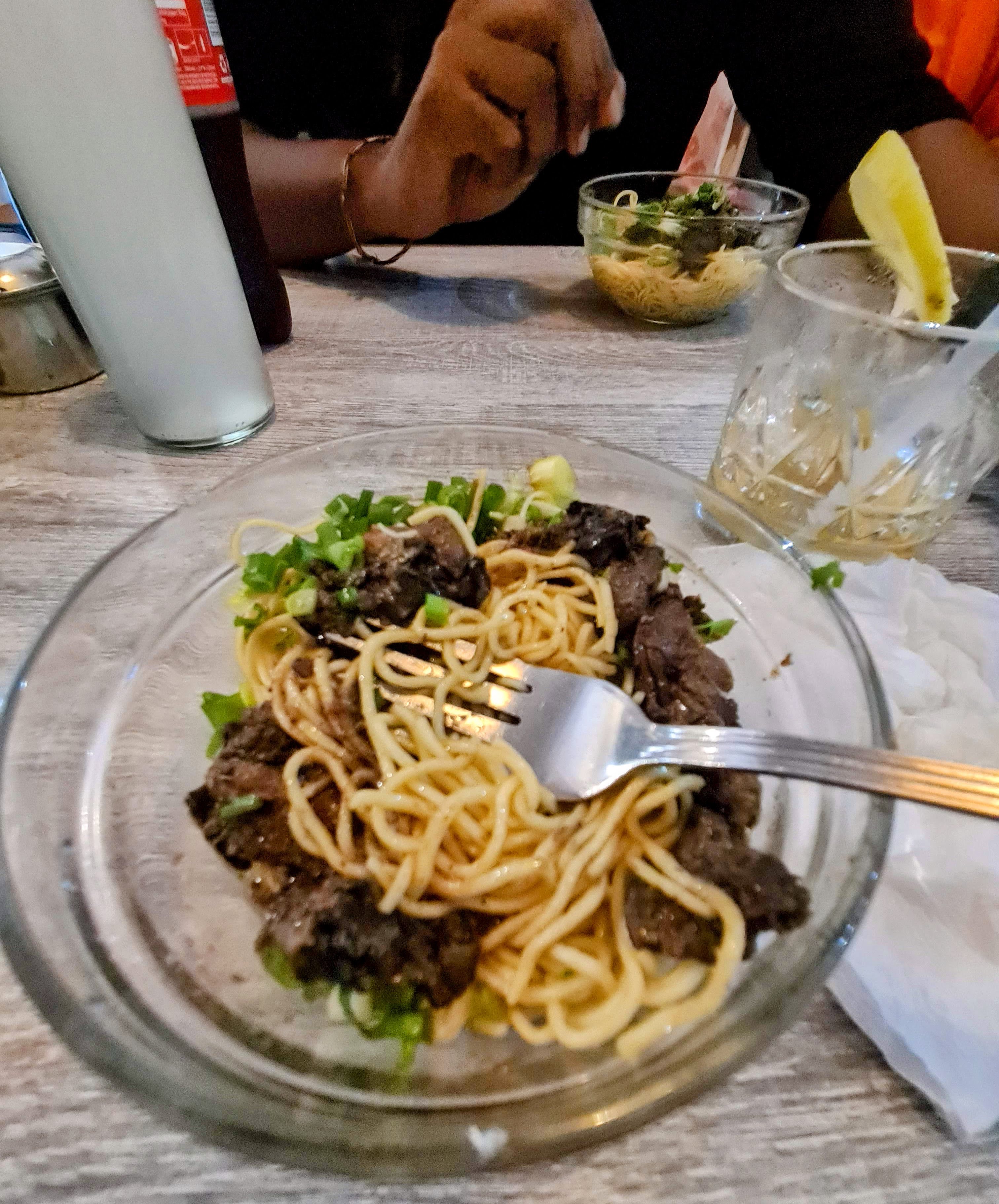
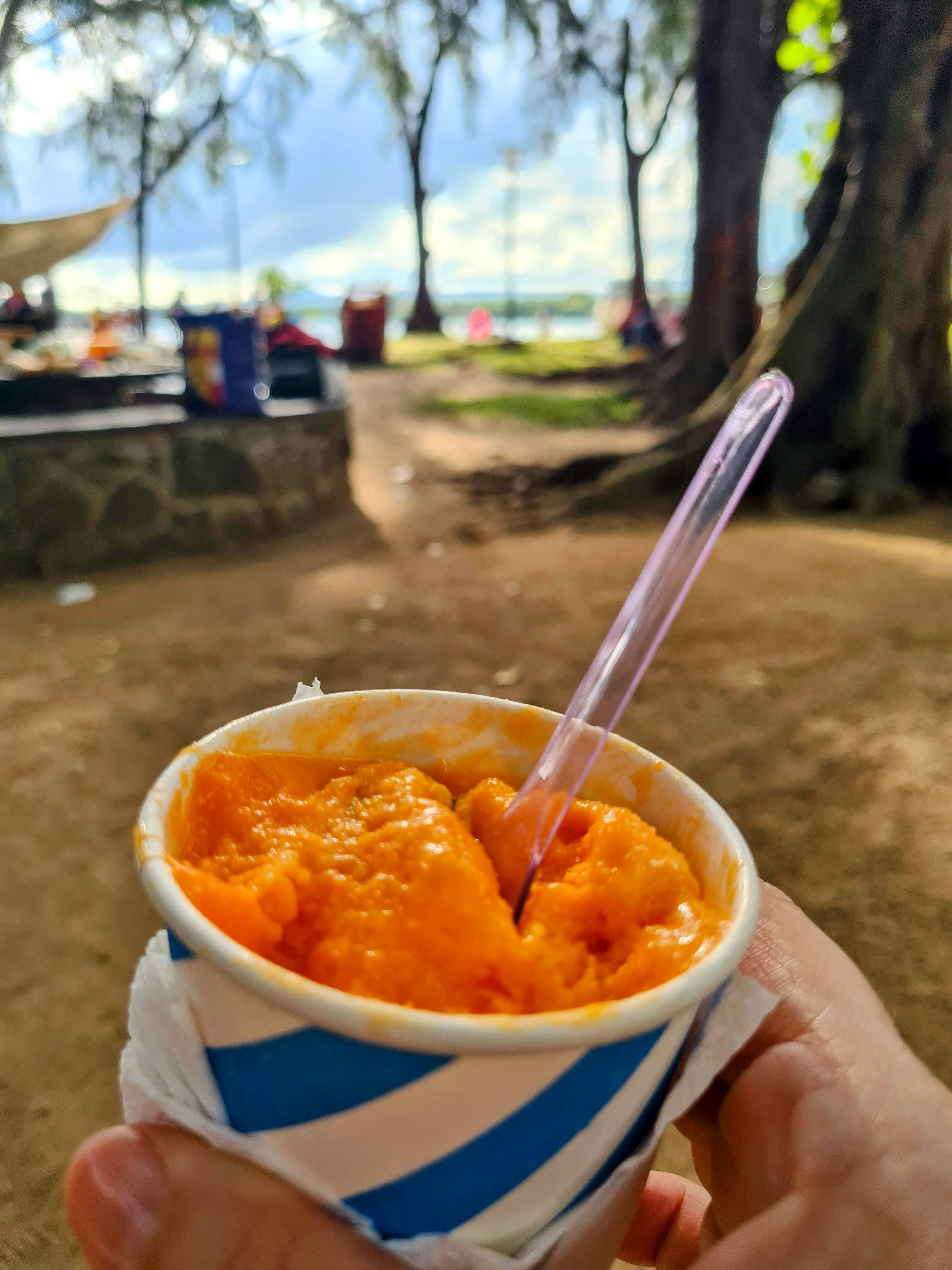
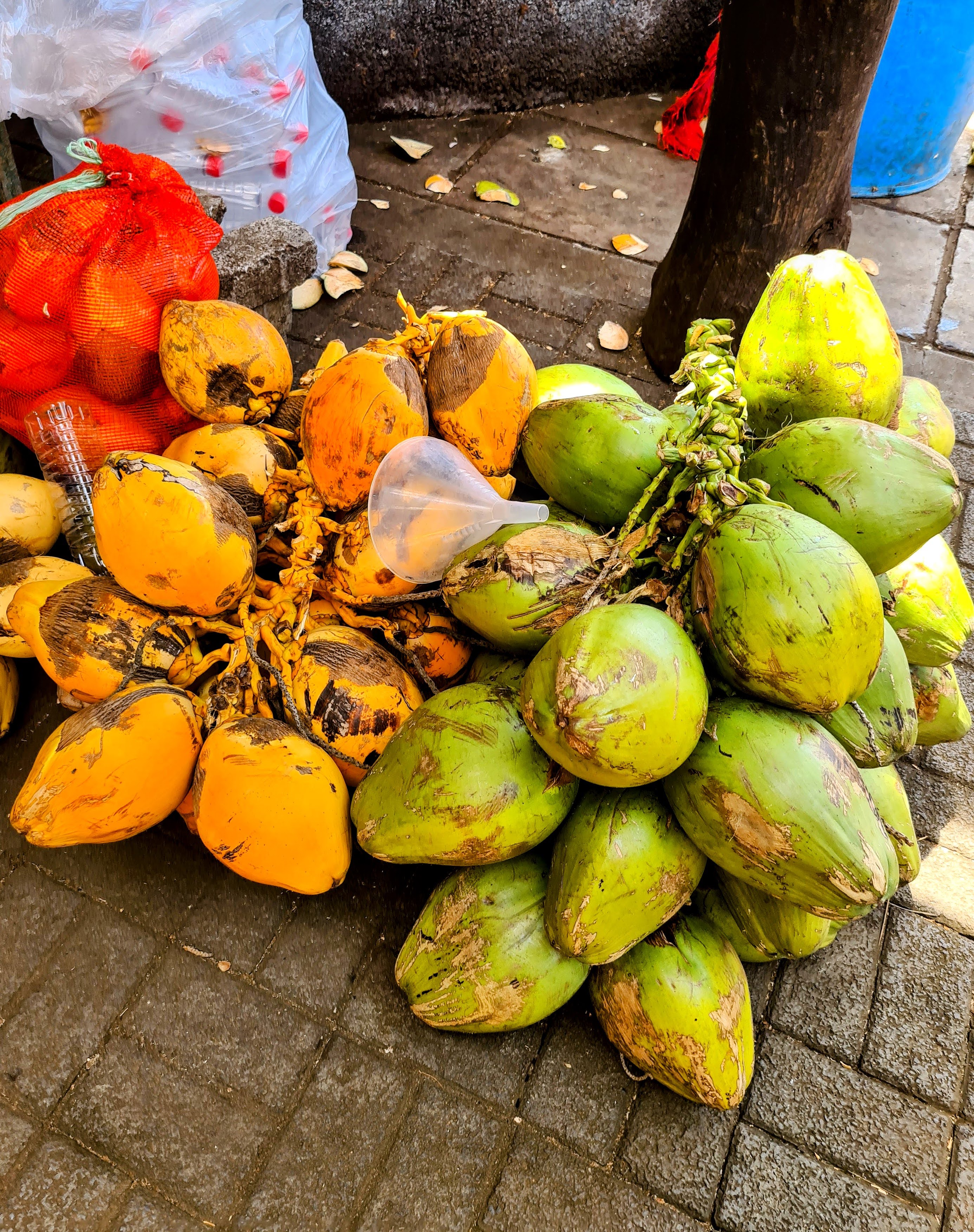
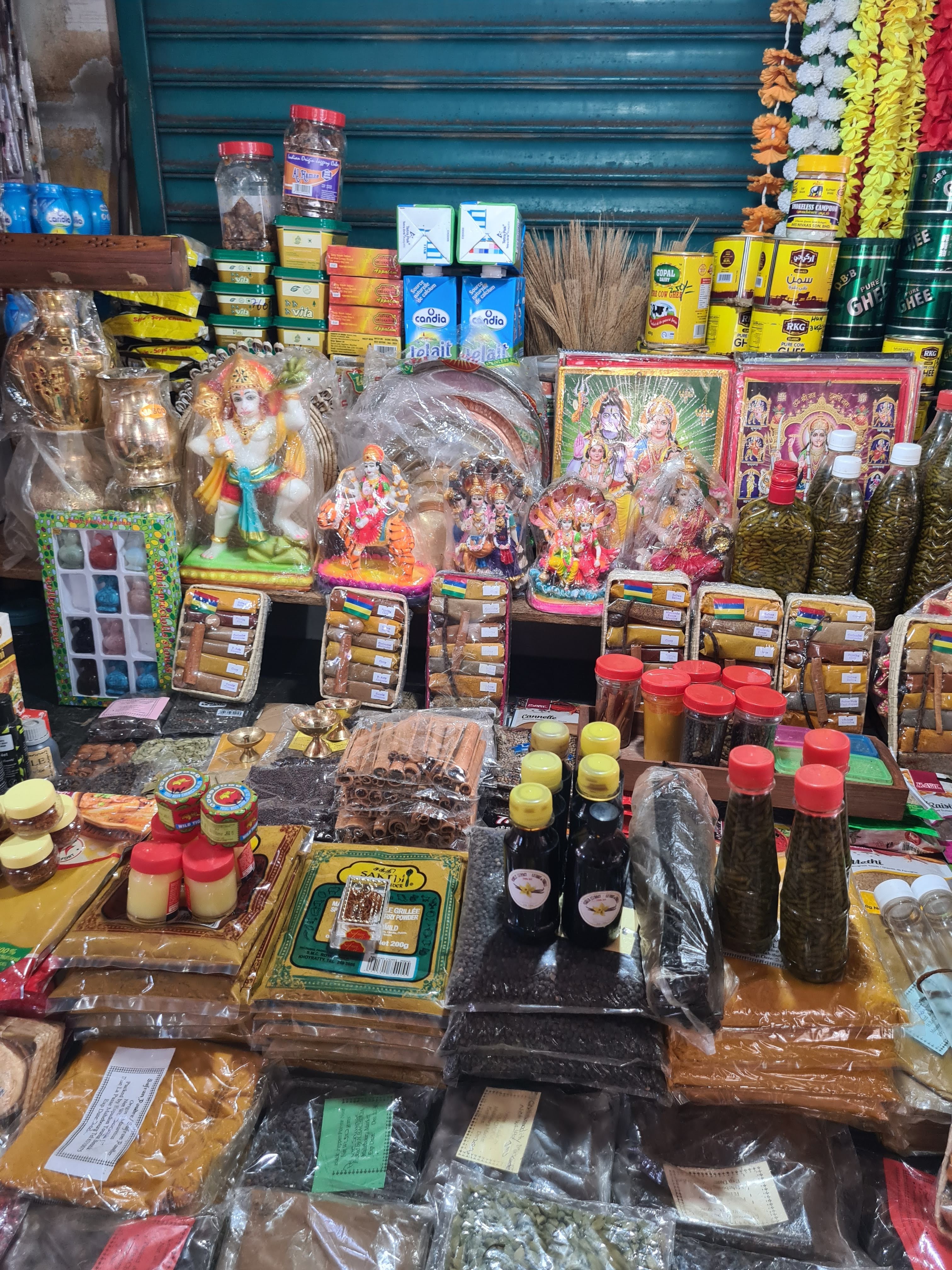
Our hotel was all- inclusive and we found the buffet included a wide variety of dishes, including lots of Indian curries, salads, tropical fruit and creole specialities. We ate there a lot, but also tried some other restaurants, street food and of course a few trips to the local market and the supermarket for some Mauritian snacks and drinks.
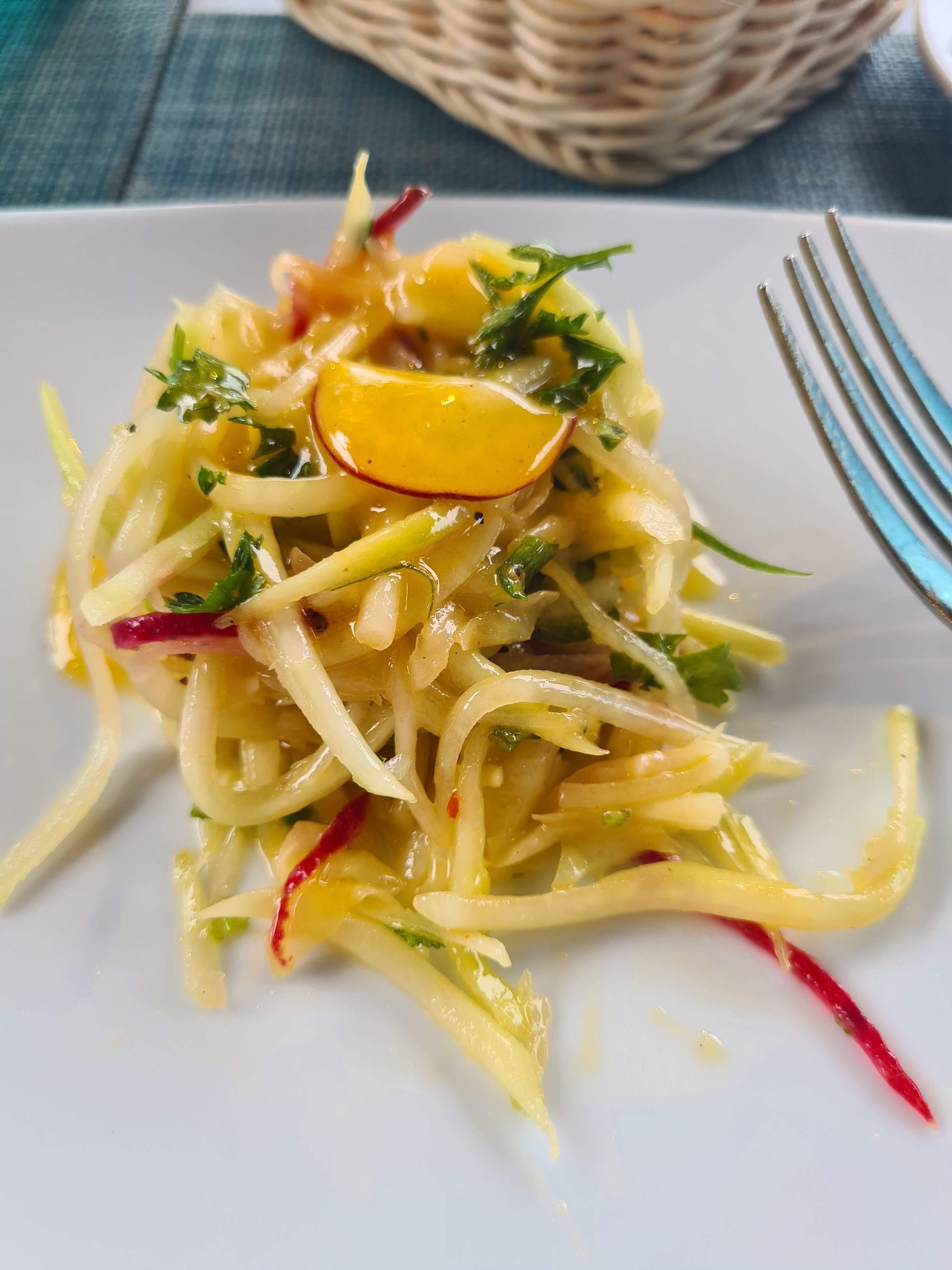
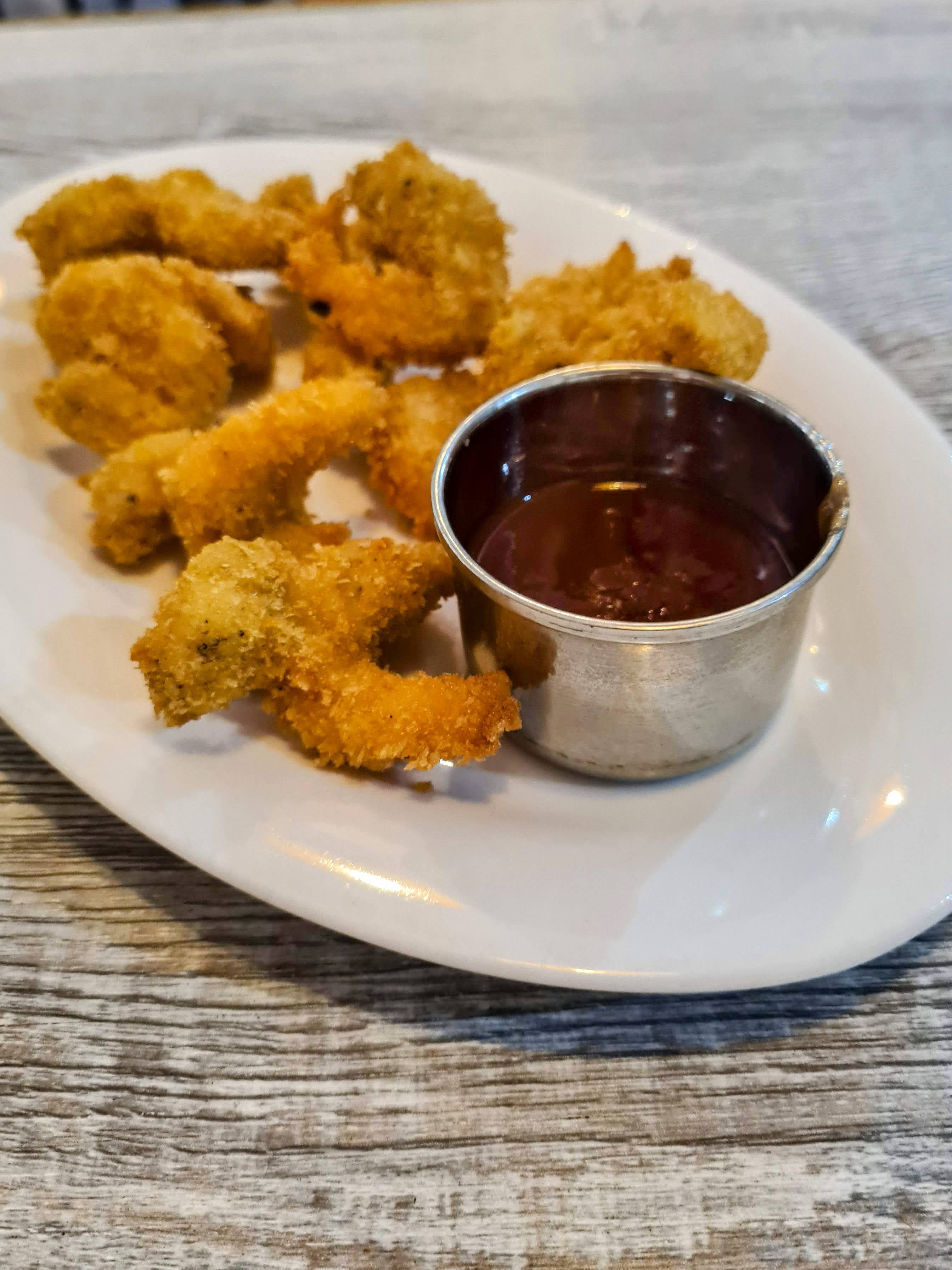
Some street food and snacks from local stalls and restaurants
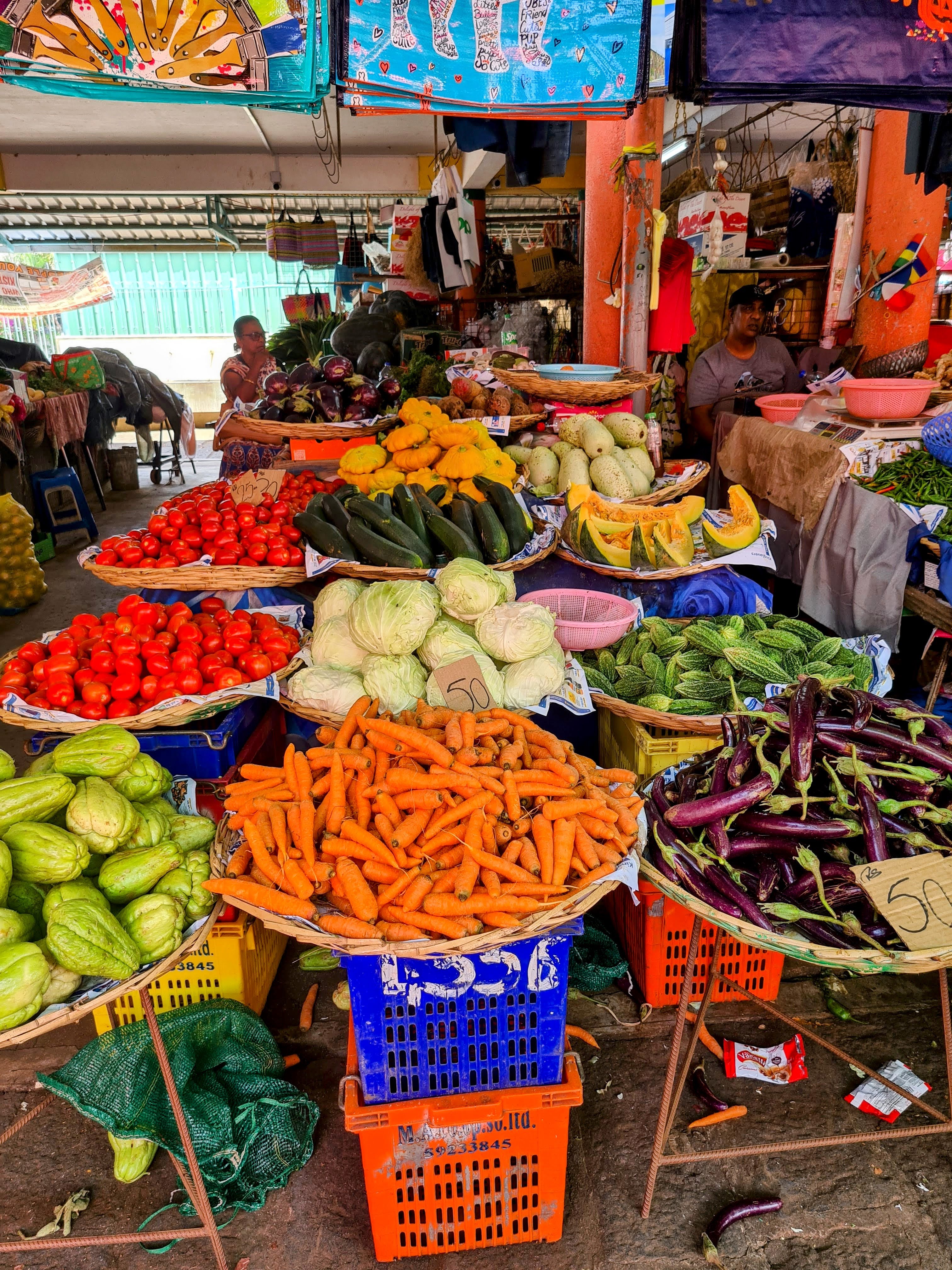
Colourful Shopping at the market
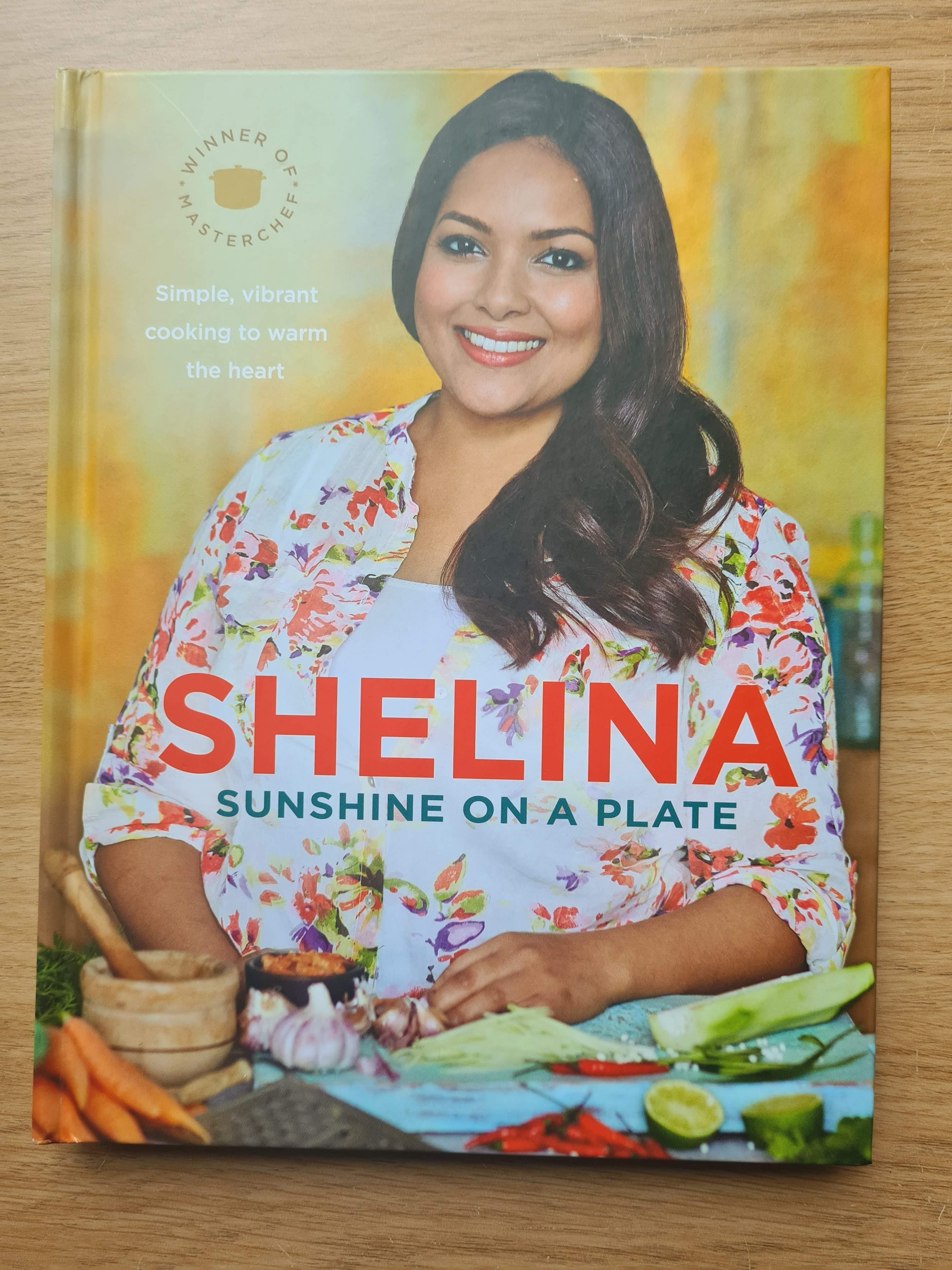
After a trip somewhere new, I enjoy trying to recreate the food I’ve had there, so I was happy to receive this book of Mauritian recipes for Christmas.

The book is full of colourful recipes, some with meat, which I don’t eat, but also plenty of fish and vegetable based dishes, desserts and drinks.

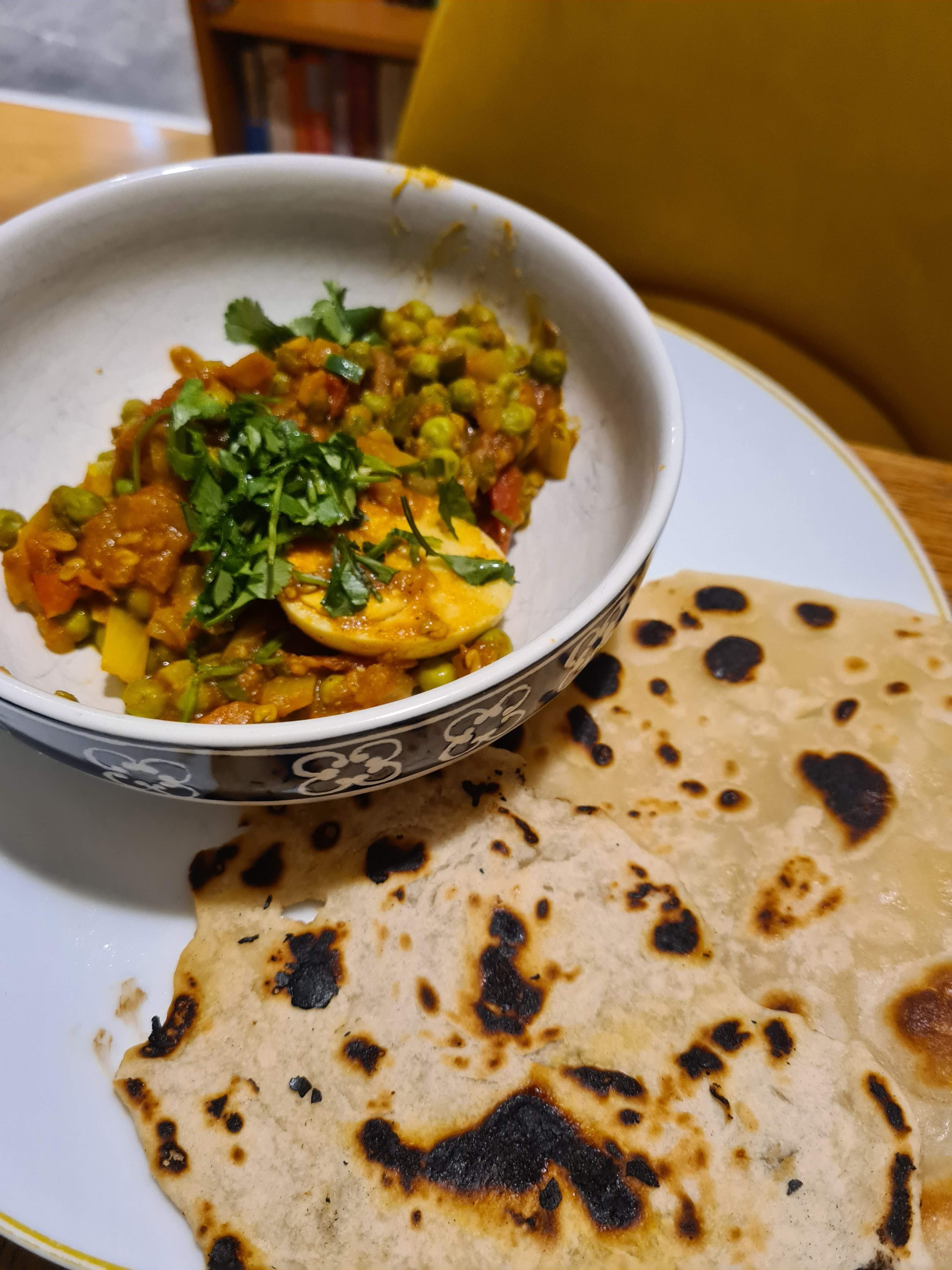
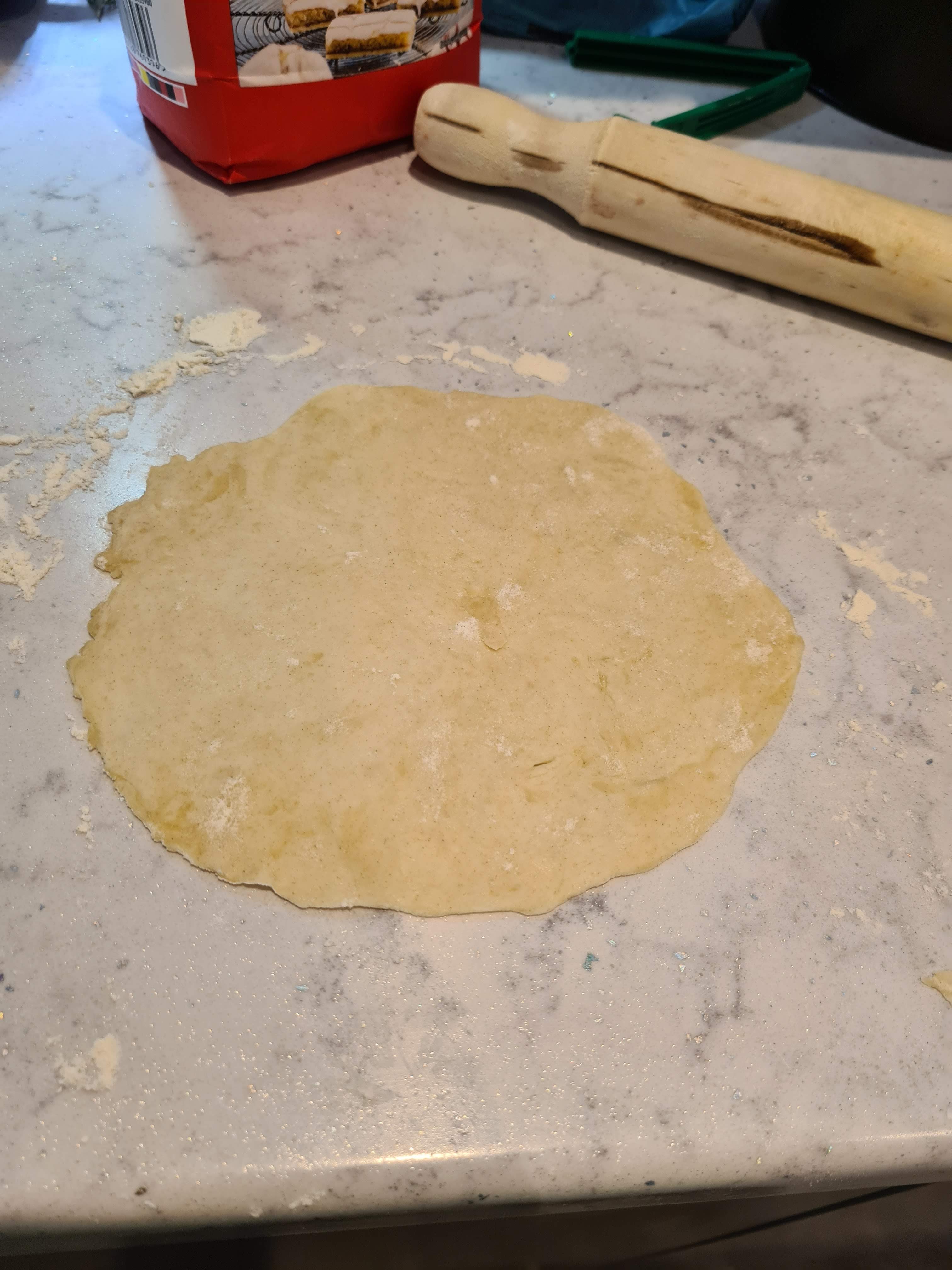
I decided to make cari des oeufs, which is a simple egg and pea curry and also some roti, which I’ve never made from scratch before.

We enjoyed quite a few different curries while we were on holiday and various types of bread. We noticed that bread of all types seemed very popular and even the small local supermarket had a bakery for people to pick up freshly baked baguettes. Maybe that’s because of the French influence, as Mauritius was a French colony from 1715 until 1810 and thirty percent of international visitors are from France.

The egg curry included Mauritian curry powder, a fragrant blend of spices which some people grind and smoke themselves. The book gives instructions for making your own from scratch if you have a spice grinder, but also a cheats version using ready ground curry powder with some extra spices. I made the simple version, but I’ve now bought myself a spice grinder so I can try a more authentic version next time.

The recipe made a large amount of curry powder, so I saved the rest in a jar and have been adding it to all our curries. It’s definitely made them more interesting than using a standard curry powder.

The curry base of spices, onions, chilli and tomatoes, cooking before the peas and eggs were added.

I hadn’t realised it’s so easy to make your own roti with just flour, oil, salt and water. I’ve made them several times since and experimented with wholemeal and spelt flour to give a different flavour and texture.

The recipe included 1tbsp of salt for 300g flour, which seemed like far too much to me. I’m not sure if that’s a mistake or if they are supposed to be salty, but I reduced it to 1 tsp.
The finished dish, served with the roti

We really enjoyed this curry. Have you been to Mauritius? What foods did you enjoy?
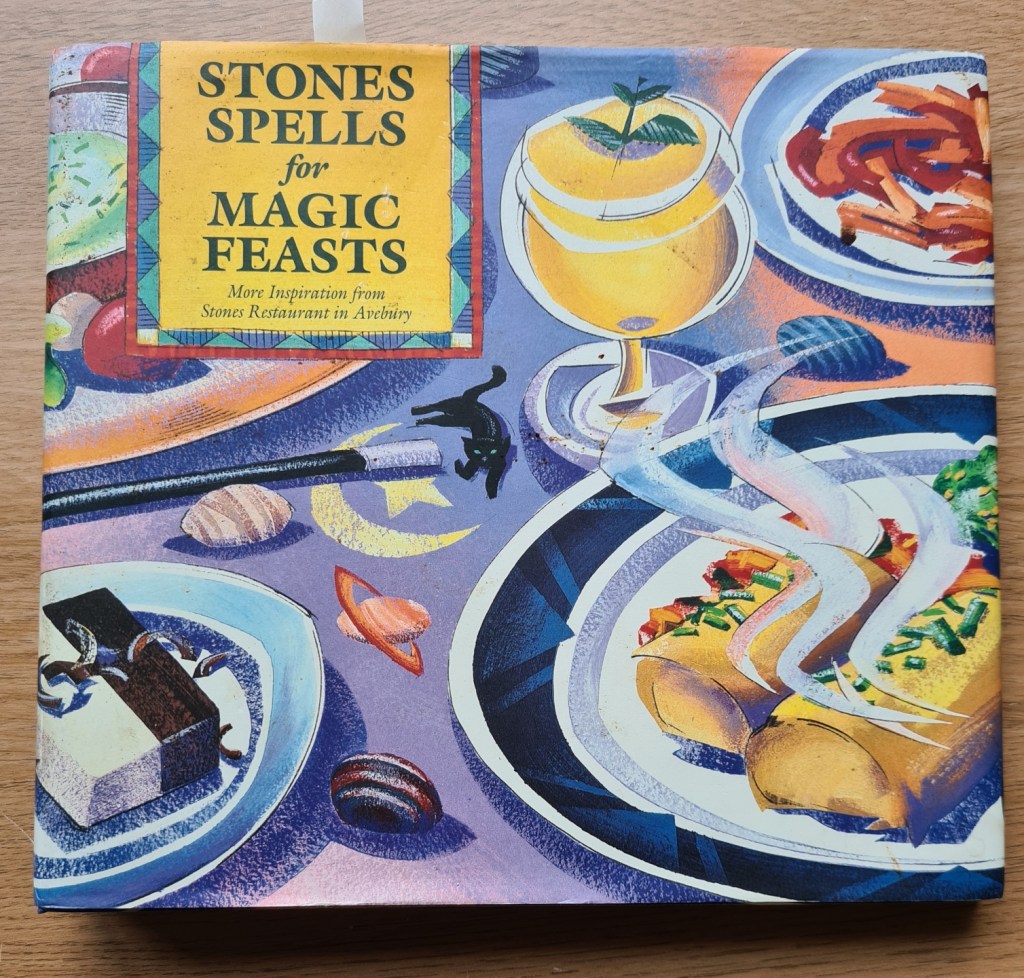
Cooking from Stones Spells for Magic Feasts

Cookbook Challenge Part 13

Cover of cookbook 'Stones Spells for Magic Feasts'

This is the long delayed next instalment of my cookbook challenge. See this post for the explanation and more about the book I cooked from this time:

https://bexknits.wordpress.com/2023/04/03/cookbook-challenge-reboot/

I cooked this meal months ago now, but I’m only now getting round to writing about it. How do proper bloggers manage it? Do you set yourself a fixed time to sit down and write? Or just tap something into your phone when the mood takes you? Let me know!

I chose to make a starter and main course from the Stones Spells for Magic Feasts cookbook. The main course I chose was quite heavy, so I decided to go for a light starter with some bitter and acidic notes.

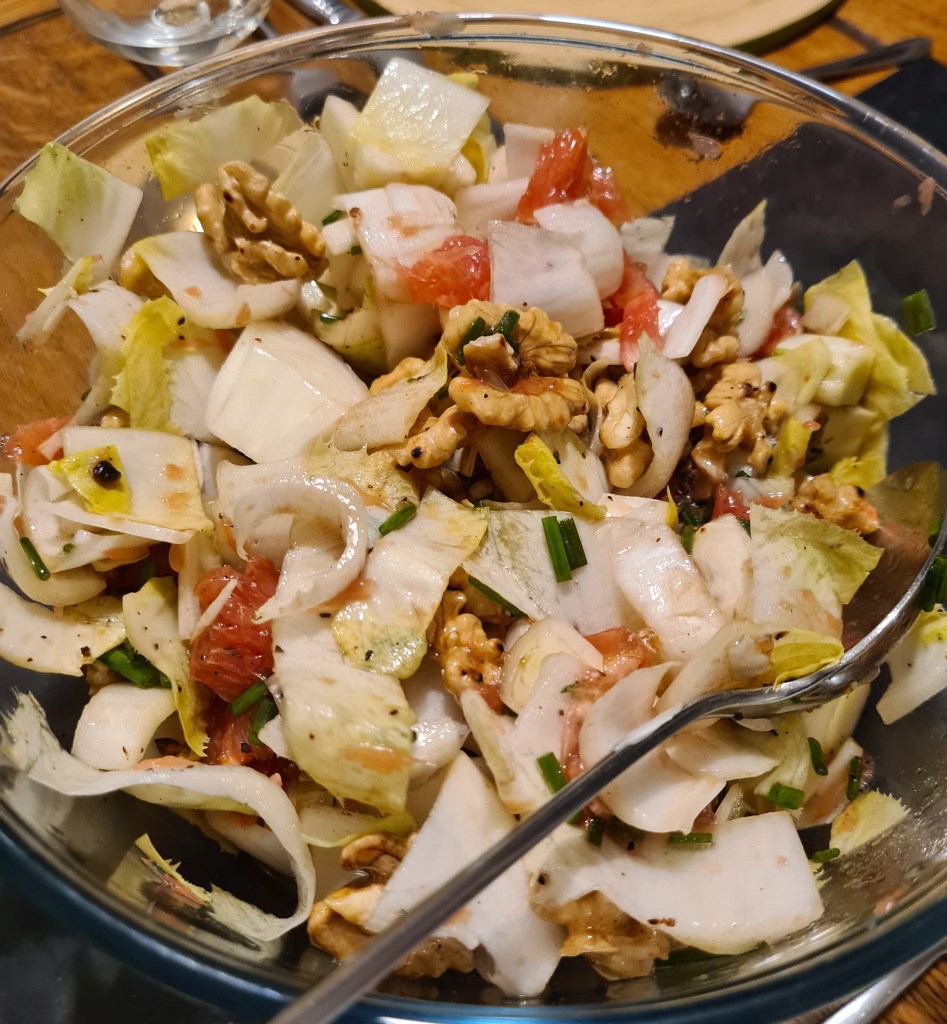
Chicory, Grapefruit and Walnut Salad:

A salad with chicory, grapefruit and walnuts

This recipe would look good with some fancy red or pink chicory, but all that was available at the time was the white and green kind. I think it’s a bit less bitter than the red one, but I’ve never tried both colours side by side – perhaps that should be a future experiment!

The recipe is very simple and involves nothing more than slicing the chicory and grapefruit, toasting some walnuts and mixing them together with a balsamic, lemon and chive dressing.

The finished chicory salad was fresh tasting, with the expected strong contrasting flavours. It was a bit too much for my bitter sensitive son and I think I would have preferred a little sweetness too. I’d probably try oranges instead of grapefruit if I made this again.

So now to the main course, which as you may be able to see from the pictures was not entirely successful!

Broccoli and Cottage Cheese Roly Poly:

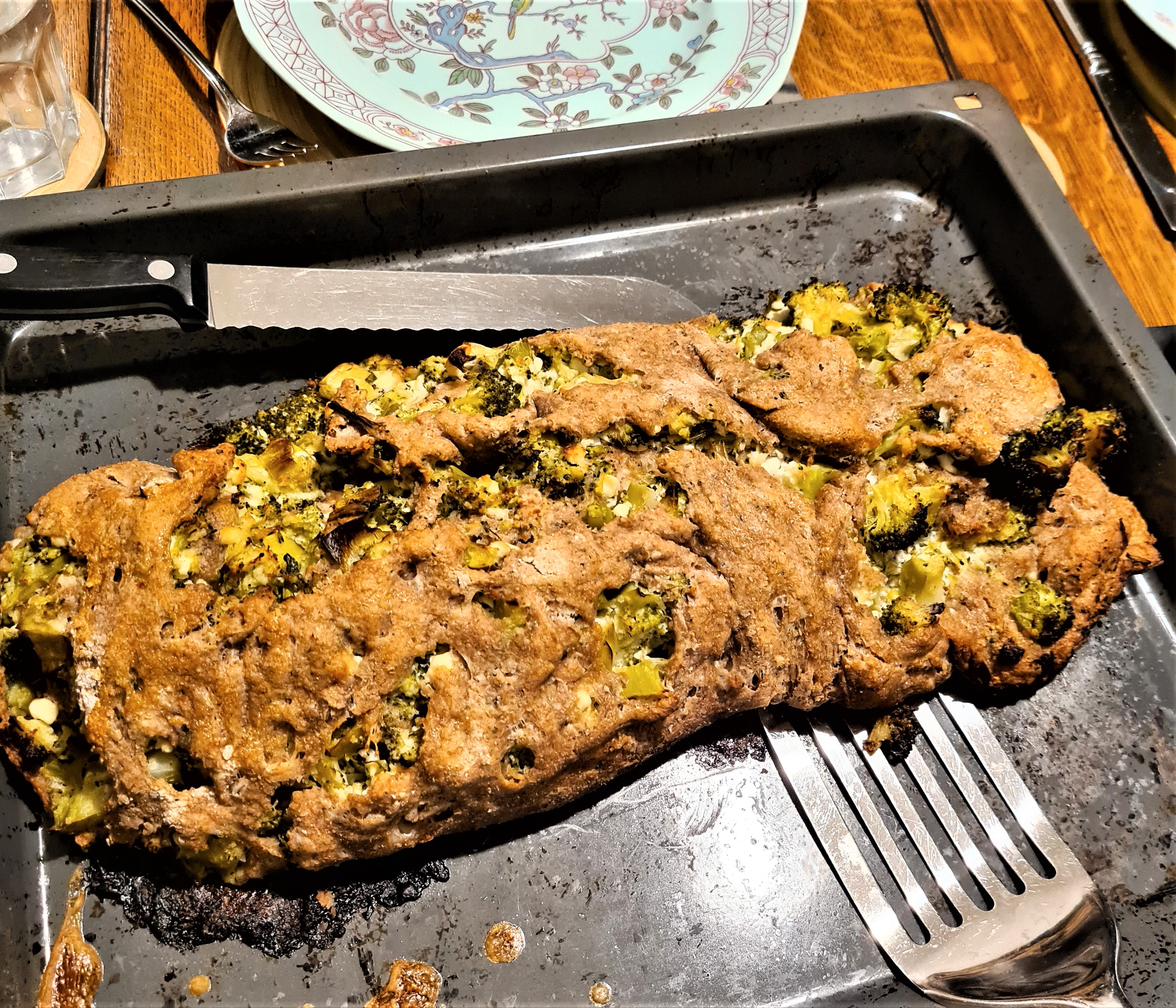
A pie with brocolli sticking out

If you didn’t grow up in the UK then I’m not sure you’ll undertand what a roly poly is supposed to be. Traditionally, it’s a dessert made from suet pastry spread with jam and rolled up like a swiss roll or a roulade, then steamed and served hot, usually with custard. It’s an old fashioned school dinners dessert (pudding) and quite tasty, but stodgy.

The Stones recipe book doesn’t include any photos, just some vague illustrations (for this recipe, some abstract pieces of broccoli), but from the title and instructions, I assume this is meant to be a kind of savoury roulade.

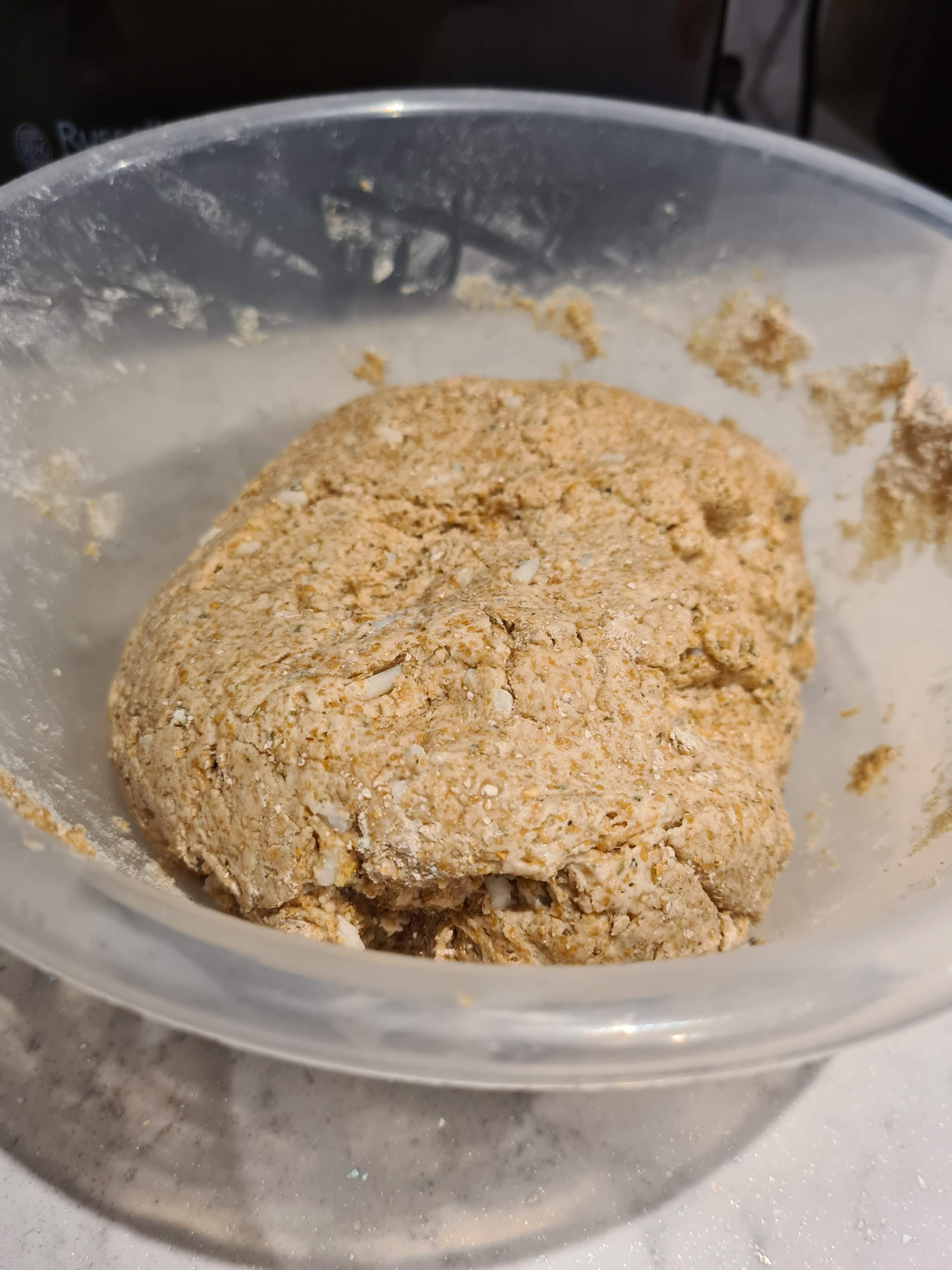
I tried to follow the recipe and instructions for resting and rolling out the dough

A ball of wholemeal pastry
Roleed out wholemeal pastry

As you can see, I did not achieve anything like a roulade. The dough was very soft and fragile and not strong enough to support the broccoli florets, which just poked through and made holes.

Pie with brocolli

I almost gave up, but eventually managed to shape the dough and filling into a sort of flat pie.

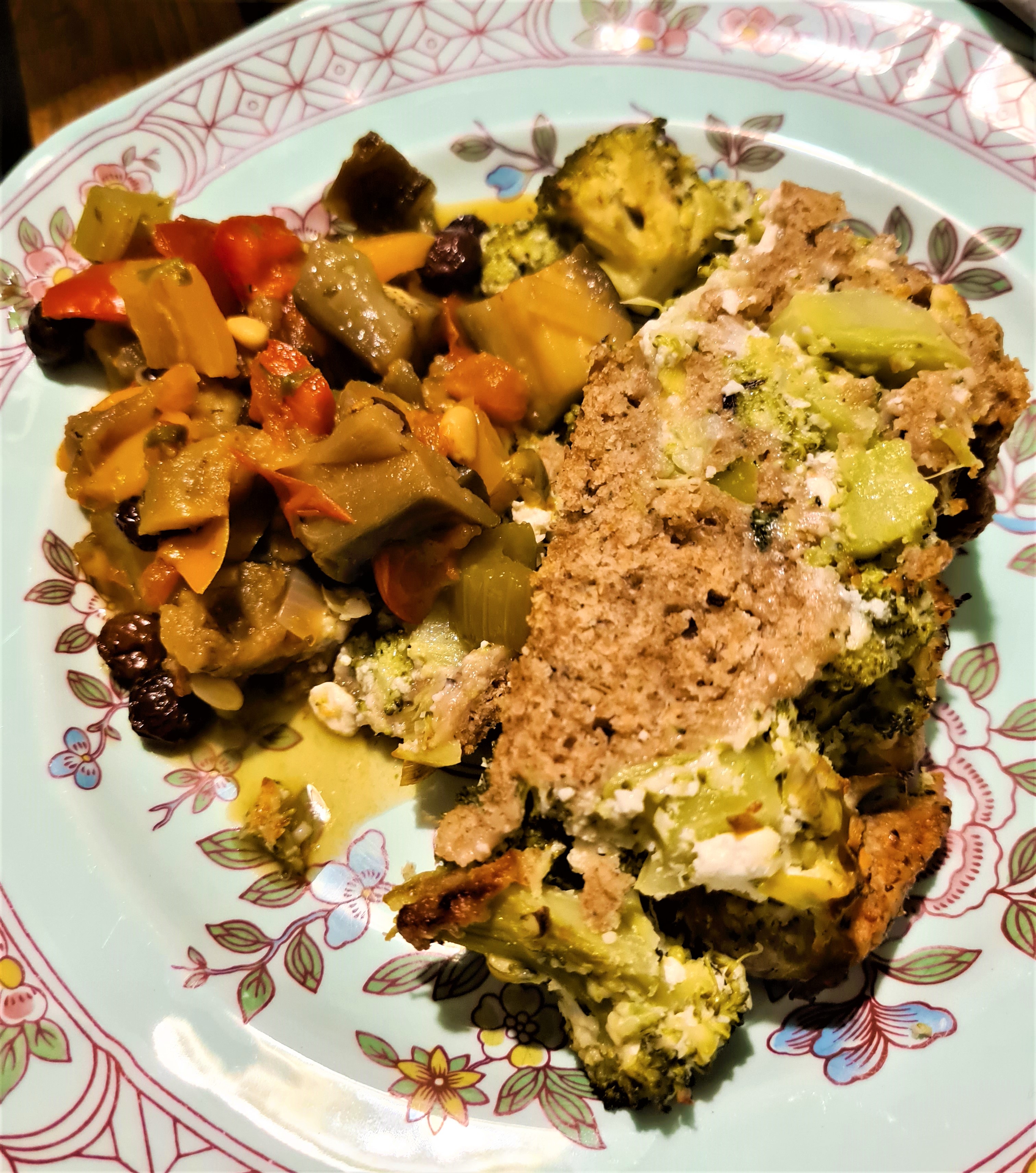
As suggested in the book, I served this with caponata, which is a Sicilian ratatouille containing capers, olives, raisins and pine nuts as well as the usual vegetables. I was glad I made this side dish, because not only was it delicious, it also provided some much needed liquid to go with the roly poly.

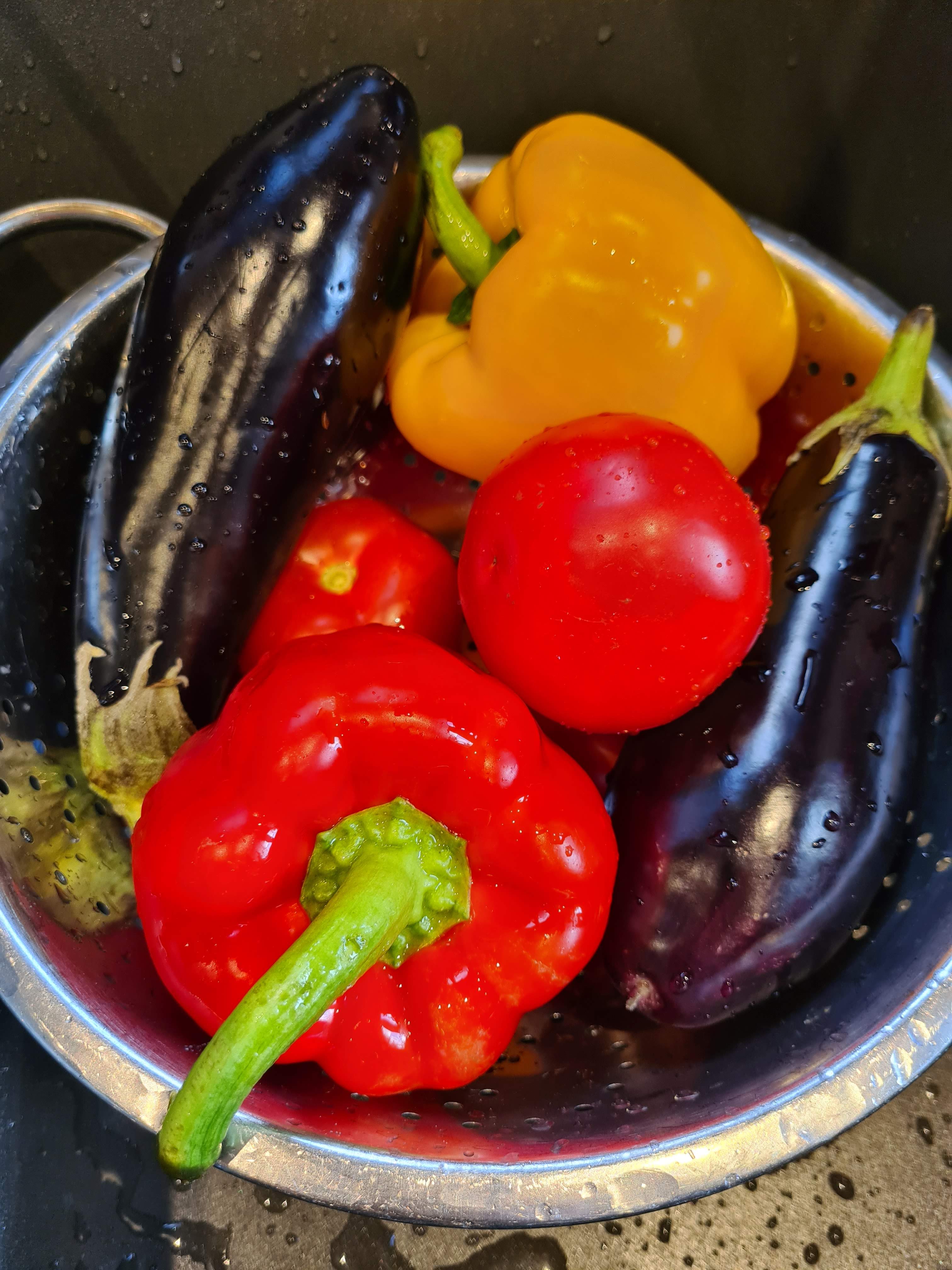
Here are the nice fresh vegetables for the caponata:

Fresh aubergines, peppers and tomatoes in a colander

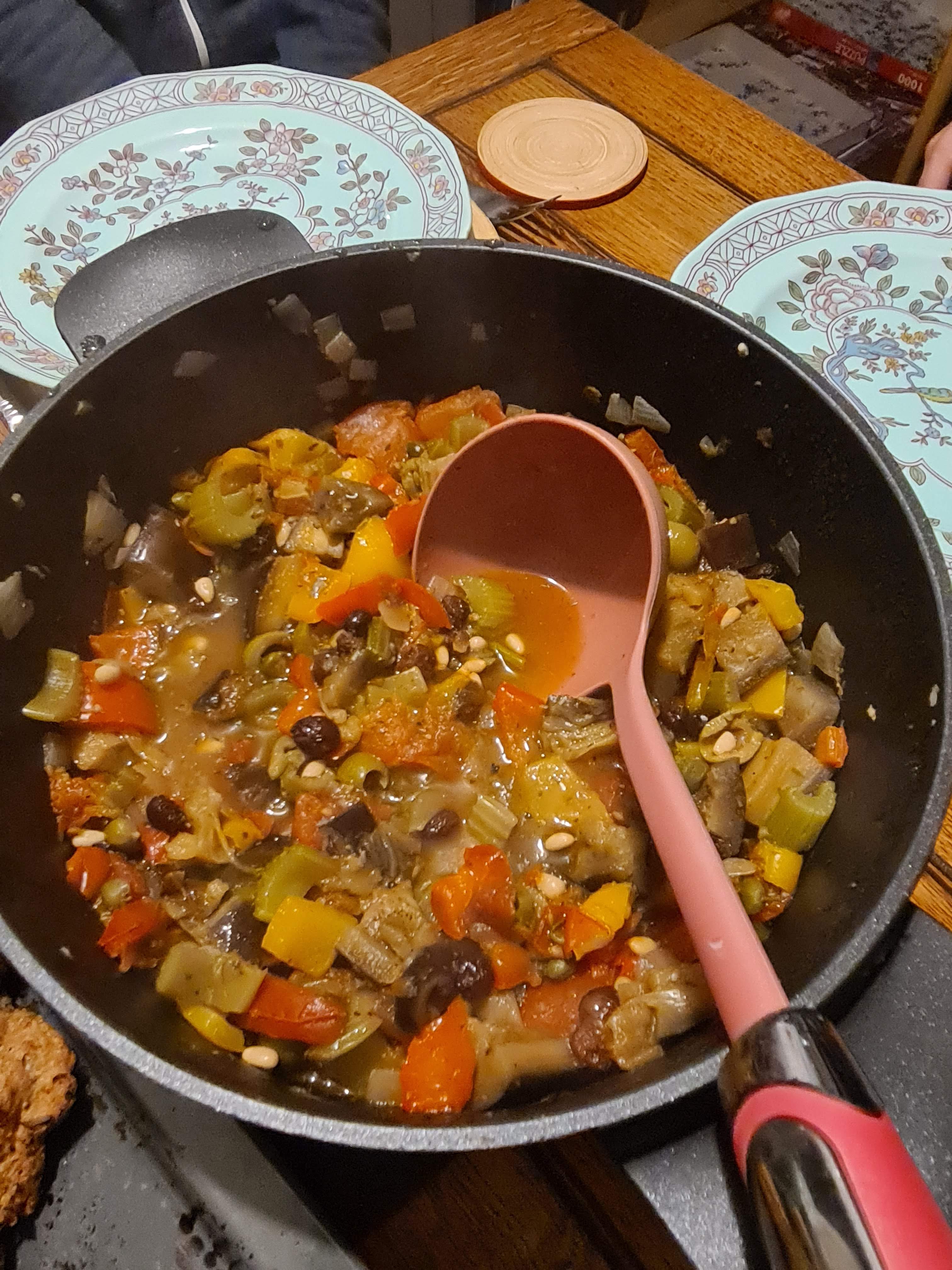
And here is the caponata being cooked, and the finished dish:

Vegetables cooking in a pan
Caponata in a dish with a ladle

The roly poly filling was pretty good, but the pastry, although quite tasty, was hard work to eat. Once baked, the texture was quite substantial and bread-like and the wholemeal flour made it very dense and strongly flavoured. The recipes don’t specify how many they are supposed to serve, but I suppose I should have realised that as it’s a book of ‘feasts’ , they are meant for a large group. This was absolutely enormous and took the five of us a couple of days to finish.

Plate of Brocolli pie with caponata

In spite of the ugly roly poly, this did go down OK with the family and it was all eaten eventually. I would make the caponata again, but probably wouldn’t bother with the rest. I really like the idea of this book, mainly because it reminds me of the stunning Avebury setting, but it’s not one I’ll be cooking from regularly. I don’t think there’s anything really wrong with the recipes, just that vegetarian cookery has moved on.

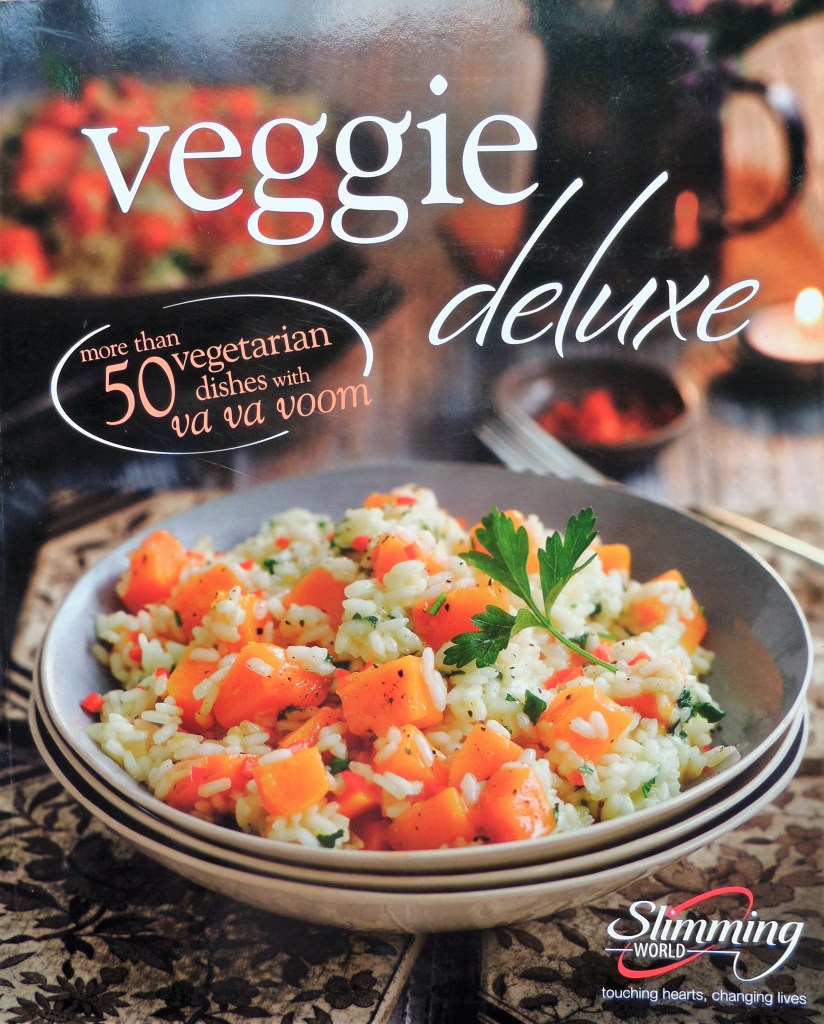
Slimming World Veggie Deluxe

Cookbook challenge part 11

Cookbook number 11 is a Slimming World vegetarian book. I lost 28lb with Slimming World and it wasn’t too painful. The plan is designed around cooking and eating normal meals, so it’s ideal for people who love food. Since loving food is what led to me carrying the extra weight (well, that and having two babies), it definitely worked for me.

If you eat meat there are lots of Slimming World options – you can have steak, roast chicken or even a bacon sandwich. I don’t eat any of those things so it’s useful to have a book full of veggie ideas. This book doesn’t include any desserts, although there are many Slimming World friendly dessert options you could make if you wanted. I decided to have a starter instead this time.

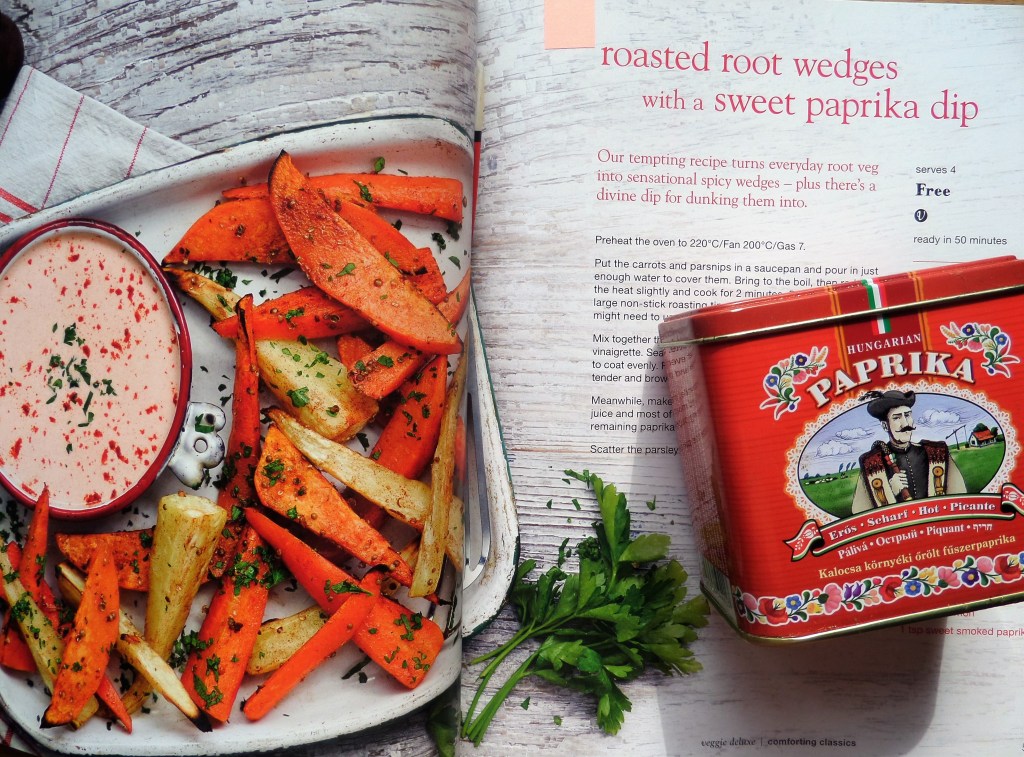
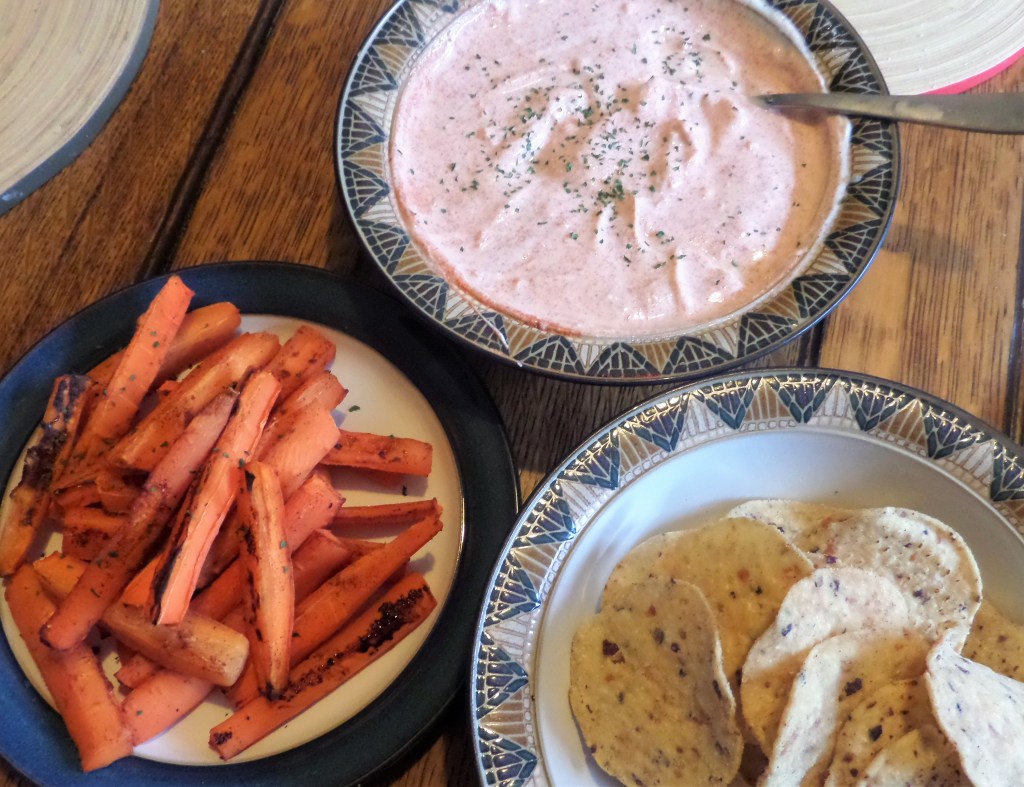
A very straightford creamy dip with roasted root vegetables to start. This was supposed to also have parsnips and sweet potatoes, but I just did carrots because of my sons’ weird aversion to sweet vegetables. The vegetables were roasted with spices, lime juice and fat free vinaigrette. I would never have thought of using vinaigrette in this way but it worked really well.

The dip was made from fat free fromage frais and lots of garlic. It tasted quite creamy – I don’t think you would have guessed it was fat free. This made a large amount of dip, but fortunately everyone liked it and asked to have it again.

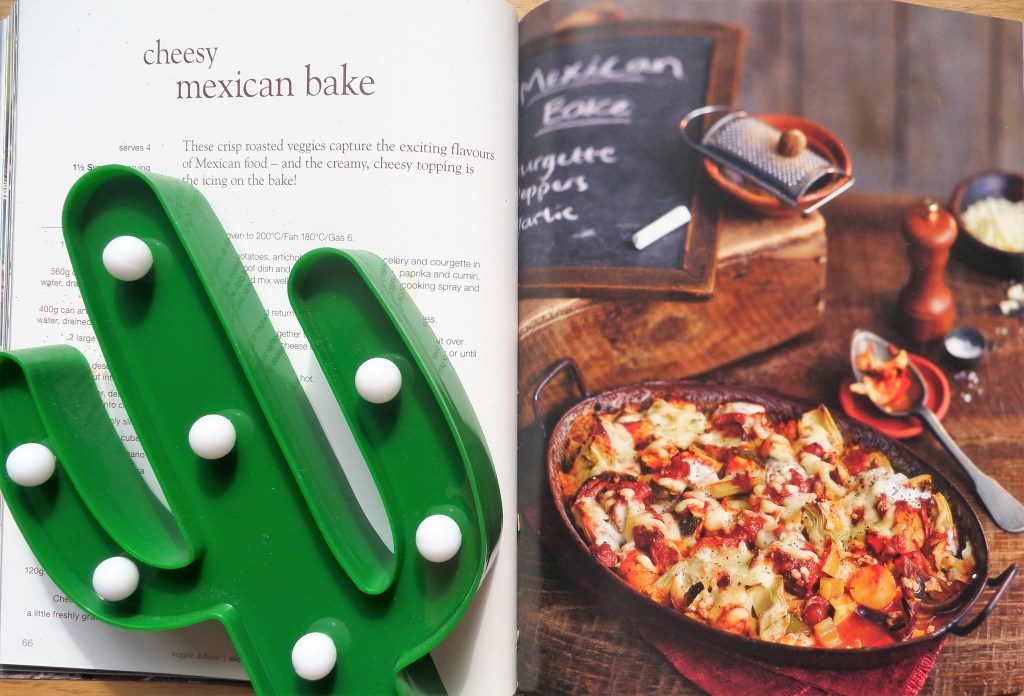
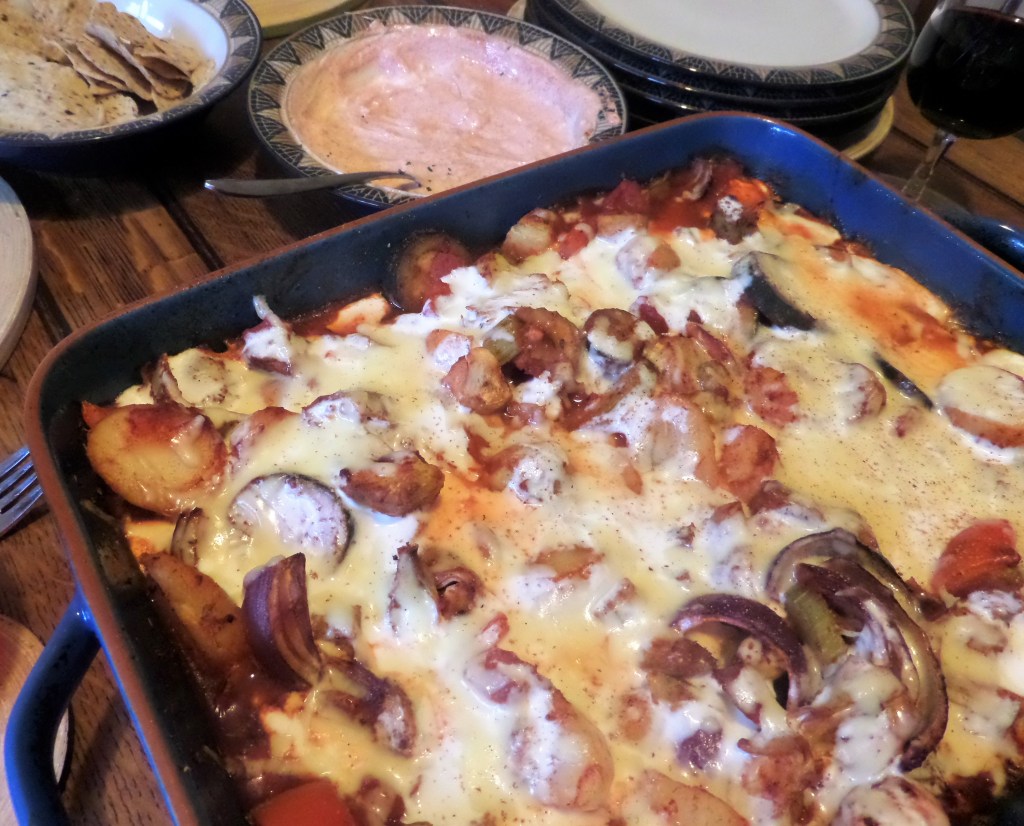
The main course was this cheesy mexican bake. I did realise that this wasn’t going to work for everyone in our house as it includes not only artichoke hearts but also red and yellow pepper, celery and courgette. It does have cheese though, which usually makes everything better. It also uses tinned potatoes, which I always think taste a bit strange, but I think raw ones wouldn’t have cooked before the rest was overdone so I followed the recipe.

As predicted, this was not very popular with my sons. We quite liked it though, so a fifty percent success rate is acceptable. I thought maybe it would be a bit like having nachos, but it wasn’t of course, the sauce was quite runny. It was still tasty and had a bit of spice, although I felt it was improved by adding hot sauce. Many things are improved by hot sauce in my opinion!

If you were cooking for people who are less fussy about particular vegetables then this would make a good meal. It was filling, especially with all the dip as well and the flavours worked well.

I think the next cookbook needs to please everyone, so let’s see what I can do!

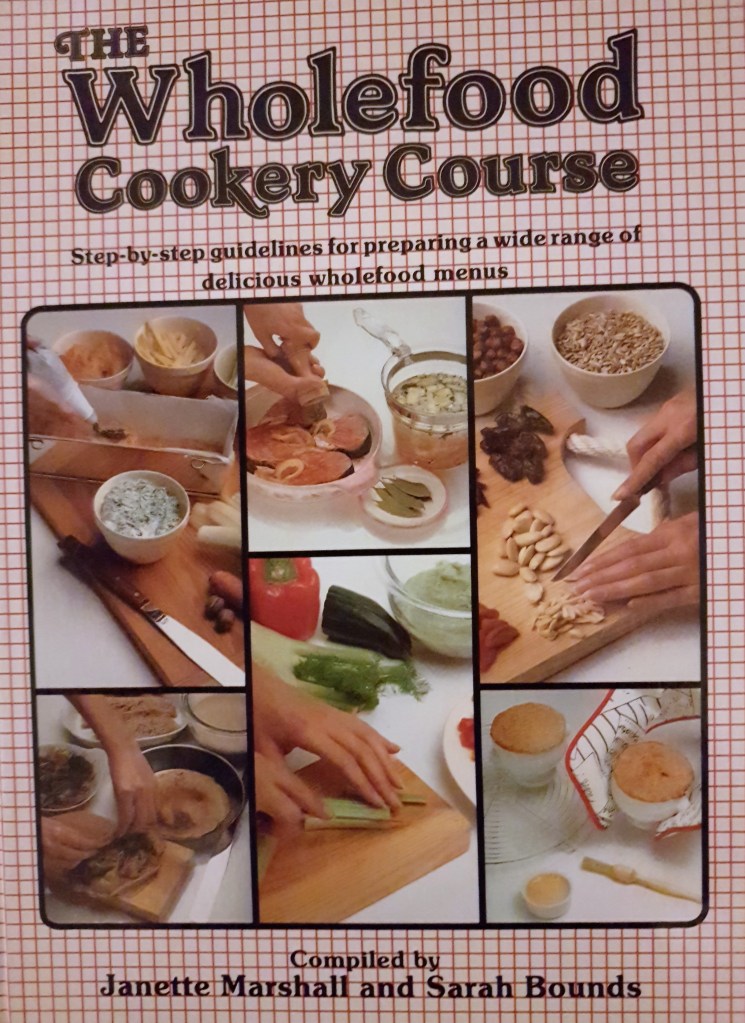
Eighties Cooking: The Wholefood Cookery course

Cookbook Challenge Week 5

See my previous post for more about this book

Today in the UK it’s Mother’s Day, so my dinner is being cooked for me while I sit on the sofa eating chocolates and writing about what I cooked last night. This was the least successful meal so far, and to be honest I think my family would prefer me to stay on the sofa and not make anything else from this book!

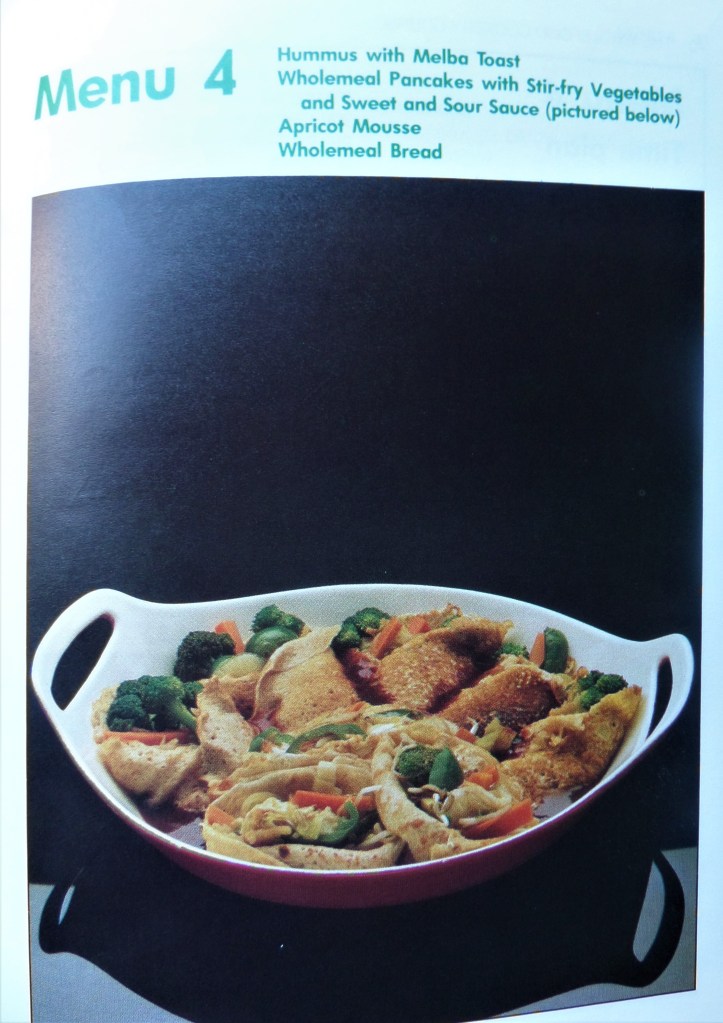
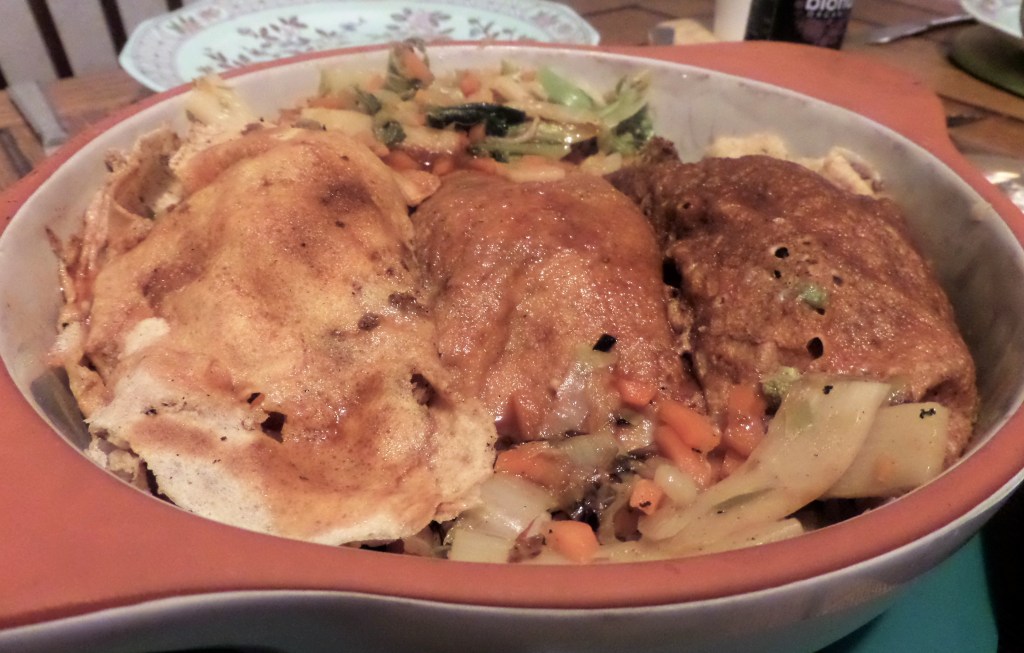
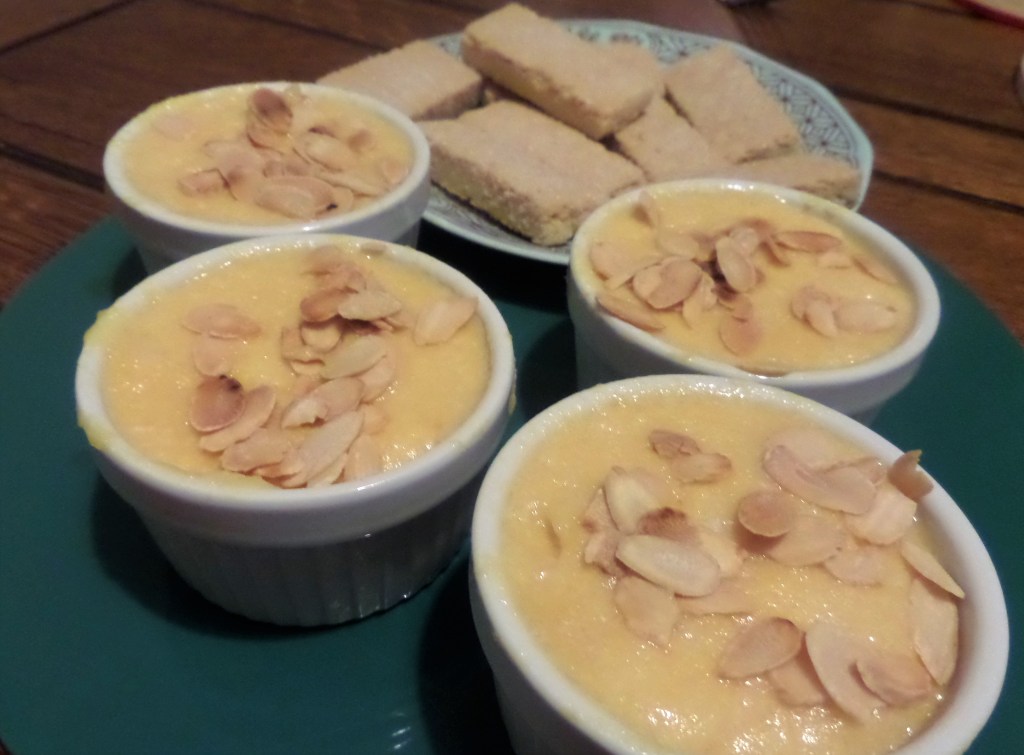
The book contains several menus and the one I picked included wholemeal vegetable pancakes with sweet and sour sauce, followed by apricot mousse. It also suggested making wholemeal melba toast with houmous, but I could not see the point of making a lovely fresh loaf just to slice it up and make dry toast, and anyway it seemed like quite enough high fibre food for one meal. Each menu includes a basic timeplan and is followed by nutritional notes. I was surprised to learn that even if I had made the full menu it would still not quite meet the recommended daily fibre allowance and most people are not eating anywhere near the guideline amounts.

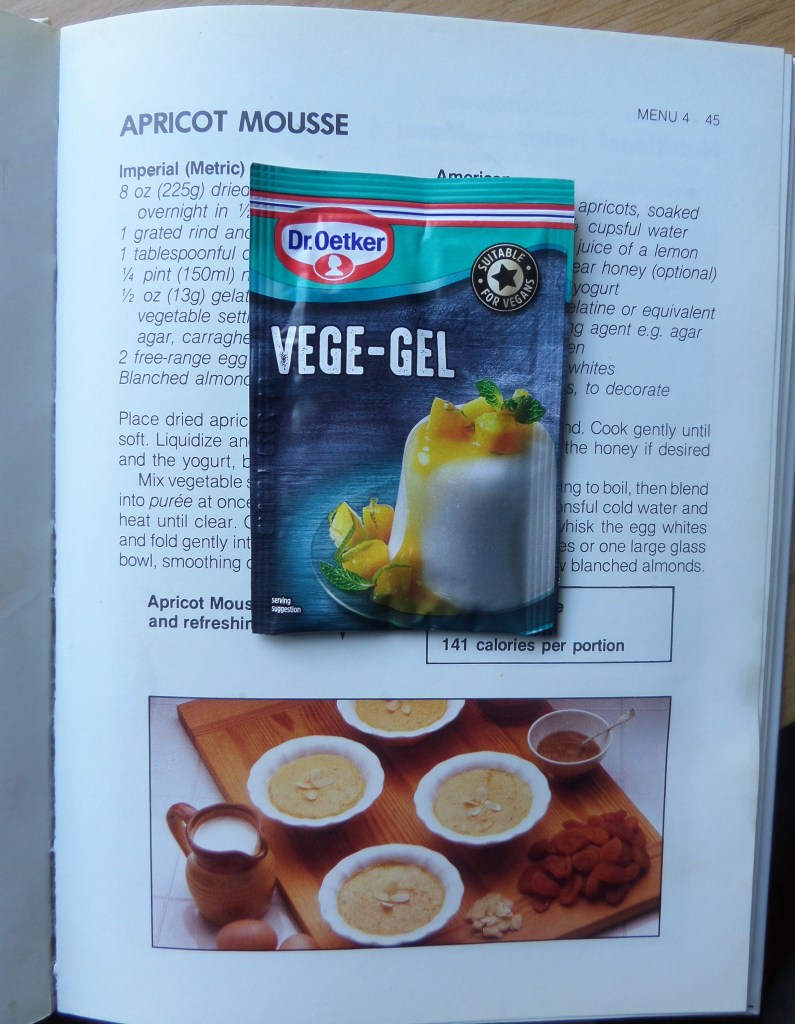
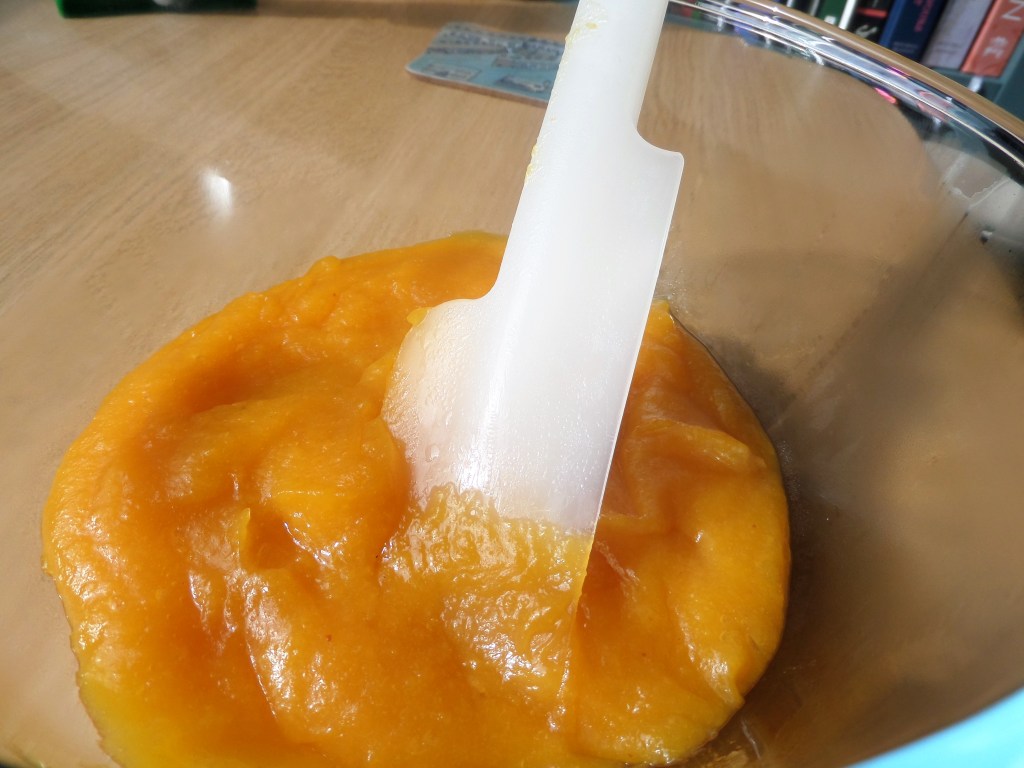
I made the mousse earlier in the day as I needed to cook and puree the apricots (which had been soaked overnight), and having learnt from my mango ice cream experience I wanted to allow time for it to cool and set.

The apricot puree – pretty colour isn’t it? My dried apricots contained sulphur dioxide to keep the colour. Organic ones would be brown, but those are the ones to use if you are worried about allergies or sensitivities.

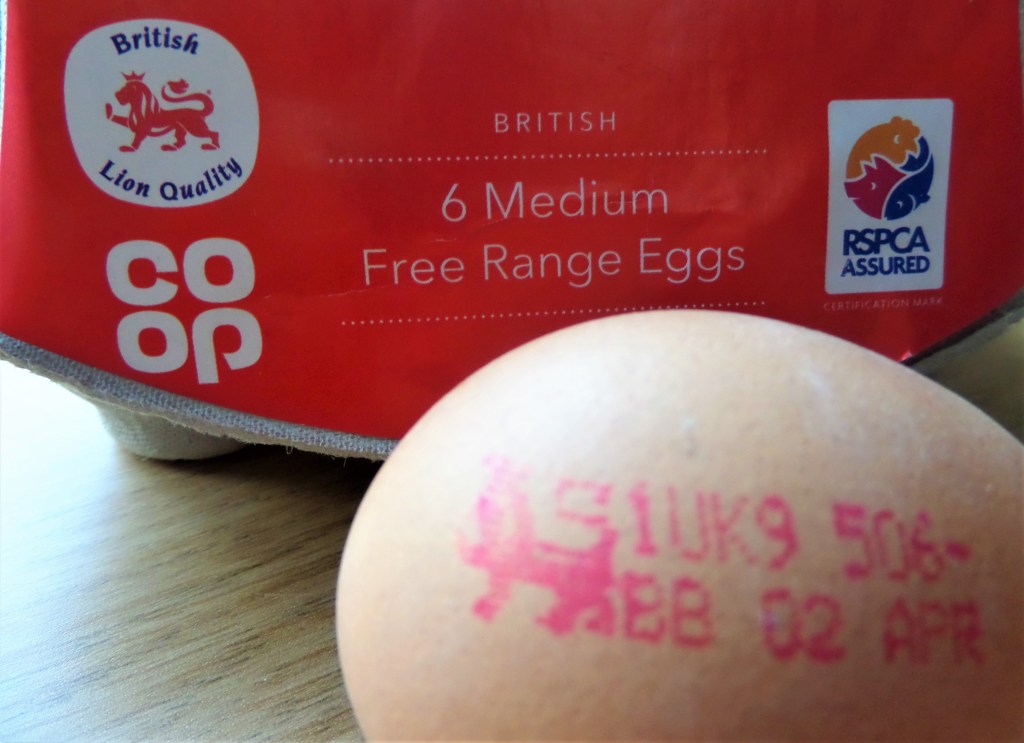
The recipe includes two stiffly beaten egg whites which are folded in at the end. Now, this book predates the UK ‘salmonella in eggs’ scandal of 1988, in which the Junior Health Minister Edwina Currie stated that most British eggs were contaminated with salmonella. This caused a huge scandal, a 60% reduction in egg sales and led to her resignation. Even though the statement was not actually quite correct, for years afterwards recipes warned that children, the elderly and pregnant women should not eat raw or lightly cooked eggs. Fortunately chicken farming has improved since then and in 2017 the Food Standards Agency advice was updated to say that raw eggs with the Lion mark are safe again for most people.

Here is the Lion mark on the egg box and stamped on the egg so we know it’s safe.

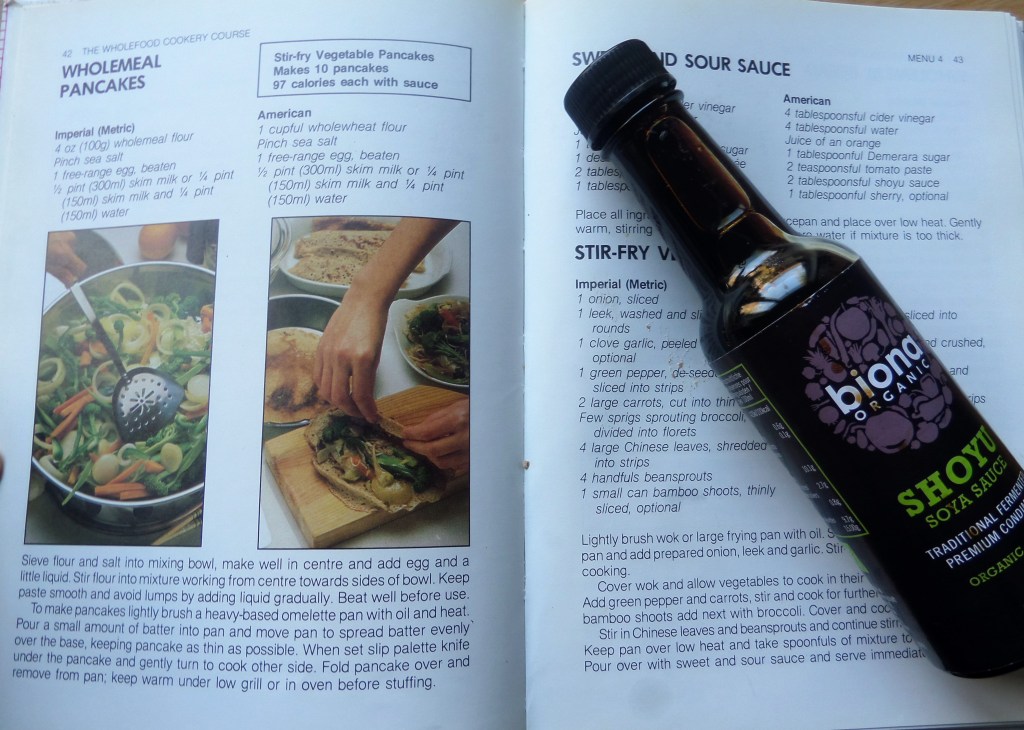
The vegetable stir fry included a large amount of veg (which I shredded in my food processor) but no seasoning apart from one optional clove of garlic. The sweet and sour sauce did contain salt from the shoyu, but I knew a big pile of plain vegetables was not going to go down well, so I cooked them in flavoured oil and also added a green chilli, a pinch of salt and some 5 Spice seasoning. The vegetables were fine, but the main problem with this recipe was that I really can’t make pancakes! I admit that is a problem with the cook rather than the recipe itself, but I had to make two batches before I had enough that were whole enough to wrap around the filling.

If you’ve read previous cookbook challenge posts, you may have noticed that I like to try and pair some wine with the recipes. This time it was a Gewurztraminer from the Alsace region – slightly sweet with some tropical fruit notes and often paired with spicy food and desserts including dried fruit. It was probably the best part of this meal!

I can’t say I really enjoyed cooking this. It was extremely hot work to cook all the pancakes and them keep them warm while I cooked the stir fry and the whole thing generated a lot of washing up.

The food was not bad, but not particularly good either. My sons thought the stir fry was OK, but did not think it went well with pancakes – even though they like pancakes they would have preferred rice or noodles with this. Son two also found the sauce far too acidic even though I added extra sugar. The mousse had a good apricot flavour but was a bit intense – my eldest son ate it but didn’t ask for any more and the younger one did not like it at all.

On reflection, I don’t think I’ll be revisiting this book. It seems very much of its time, whereas now Instagram is full of posts showing far more appealing and tasty looking dishes. Healthy cooking has definitely moved on and that’s for the best. Which healthy recipe books do you recommend?