Exploring Mauritian Cuisine: A Culinary Adventure

Cookbook Challenge Part 14: Sunshine on a Plate by Shelina Permalloo
Last November, we went on a long awaited holiday to Mauritius. It was our first time there and one of the things we were most looking forward to was trying some Mauritian food.

Mauritian food reflects the country’s varied cultural mix and includes culinary traditions from India, China, Africa and France. When you travel around the island, it’s easy to see how the cuisine is inspired by the sunny weather, relaxing atmosphere and colourful produce.


Our hotel was all- inclusive and we found the buffet included a wide variety of dishes, including lots of Indian curries, salads, tropical fruit and creole specialities. We ate there a lot, but also tried some other restaurants, street food and of course a few trips to the local market and the supermarket for some Mauritian snacks and drinks.
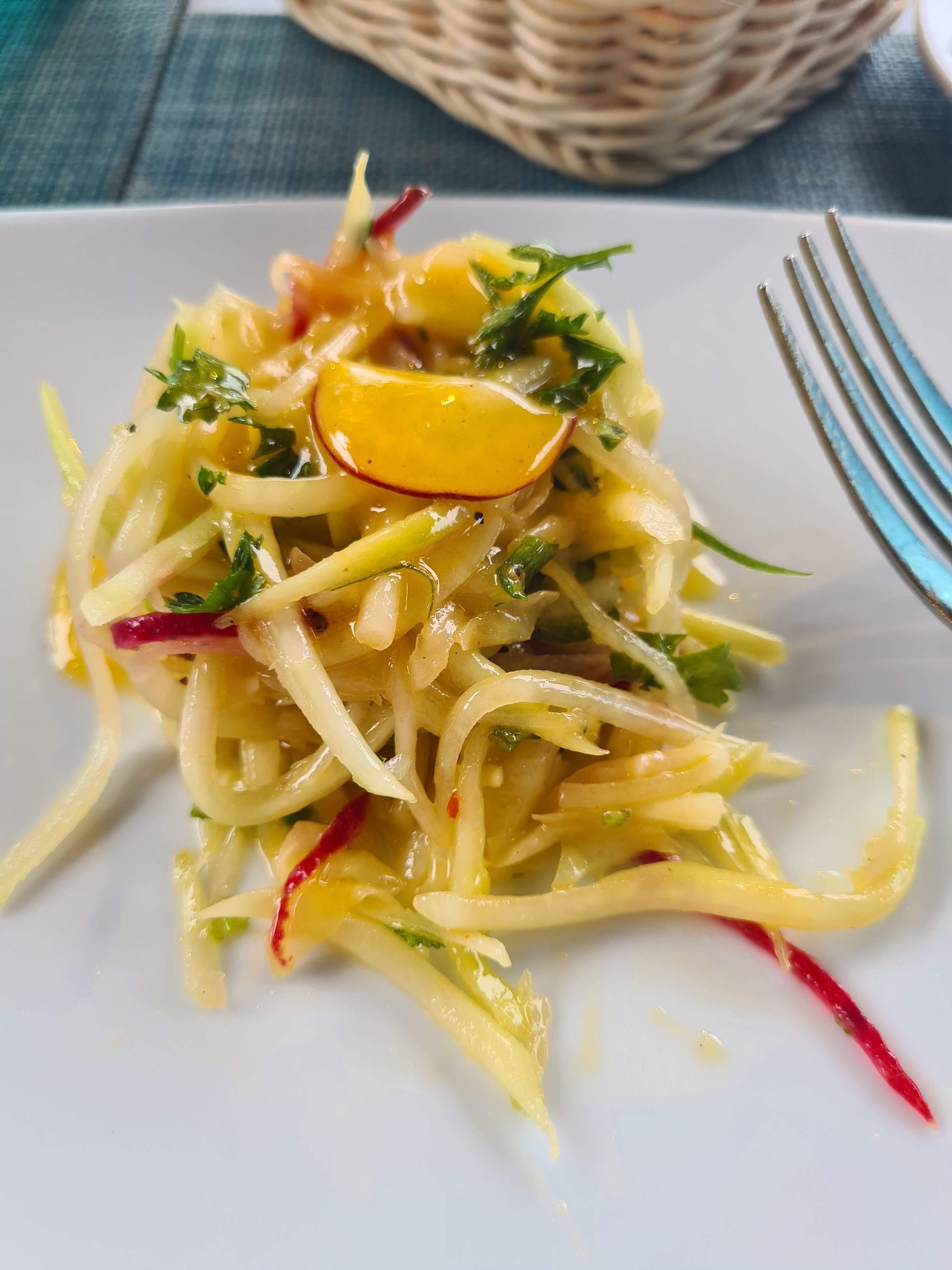
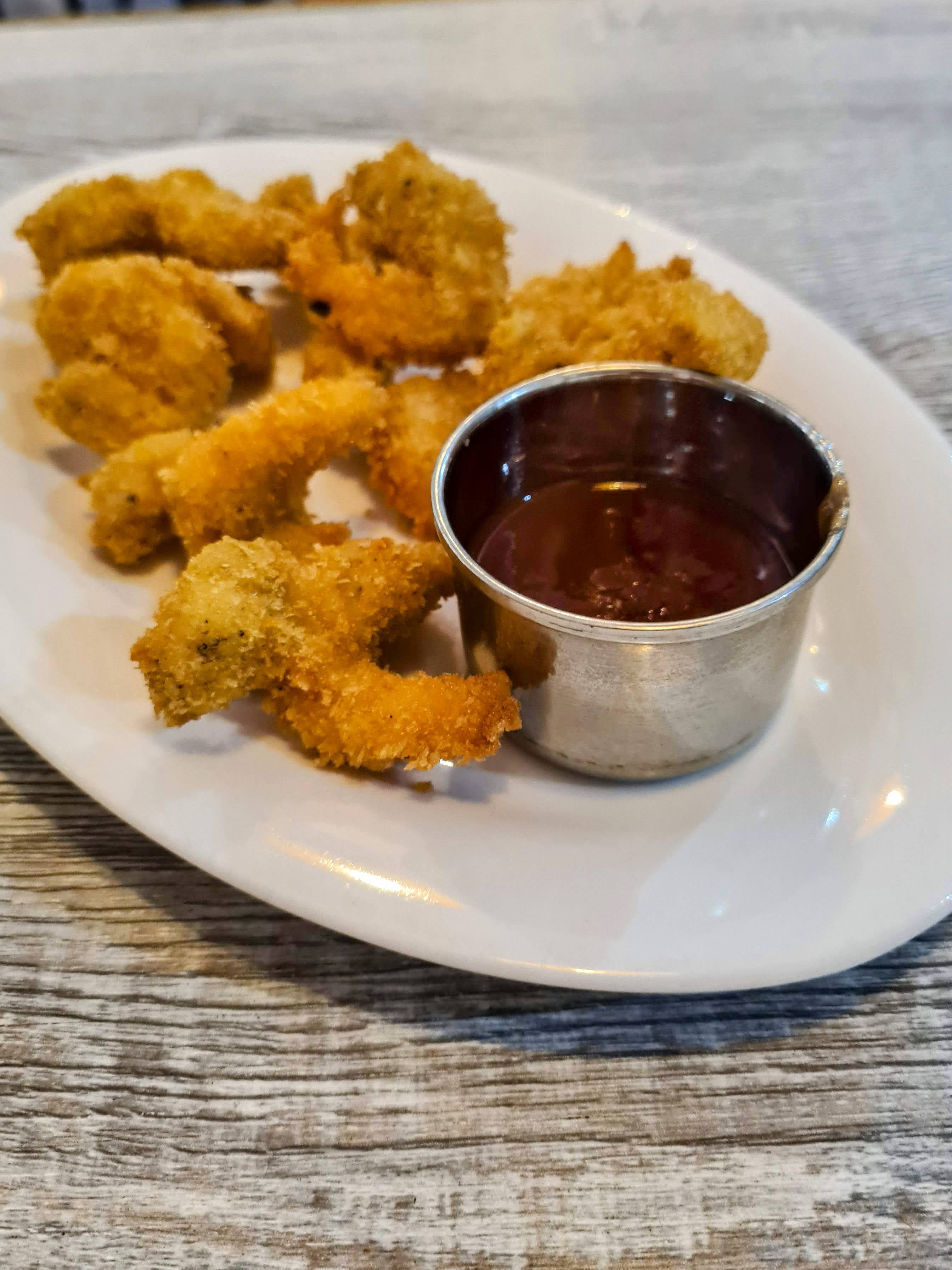
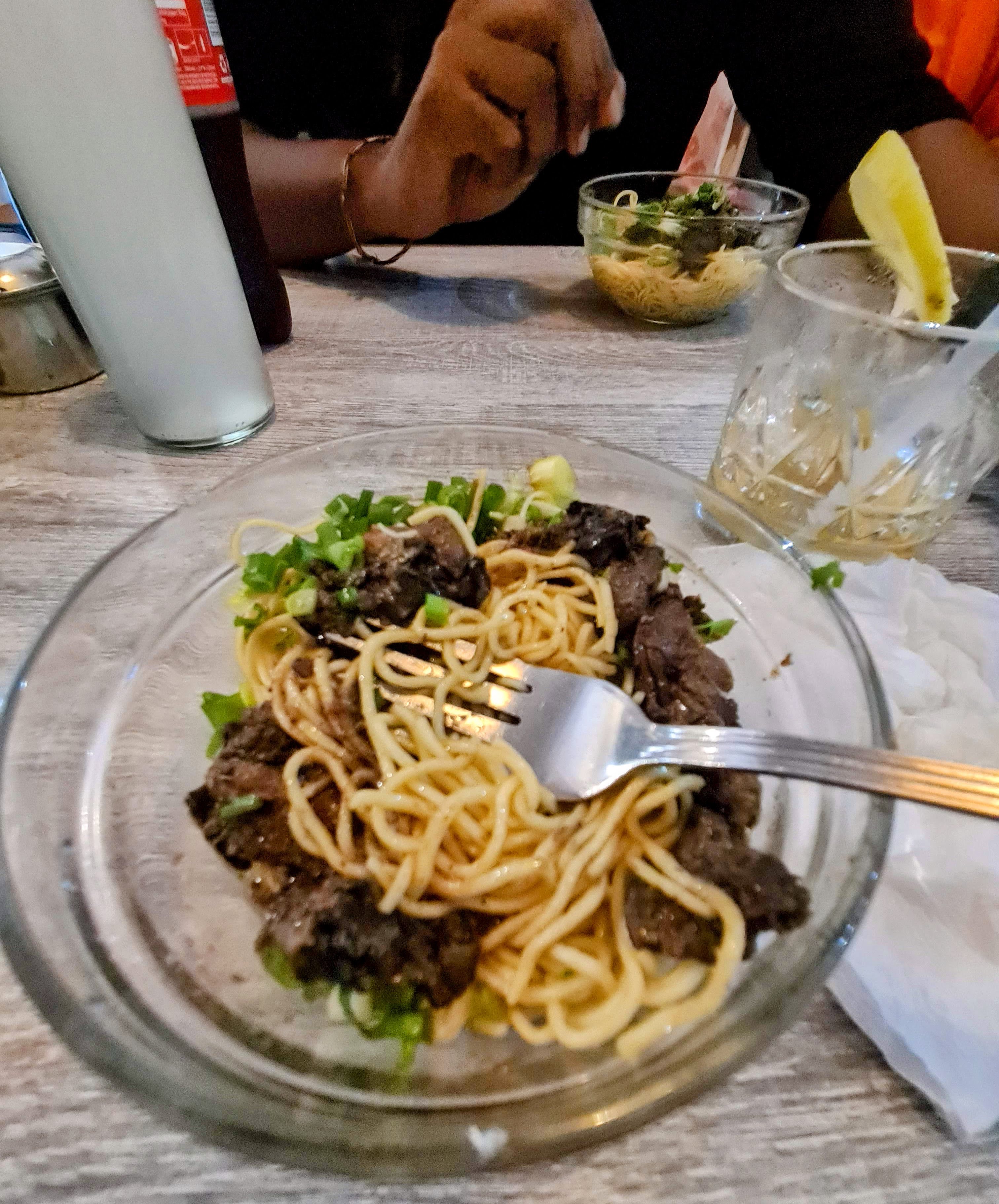
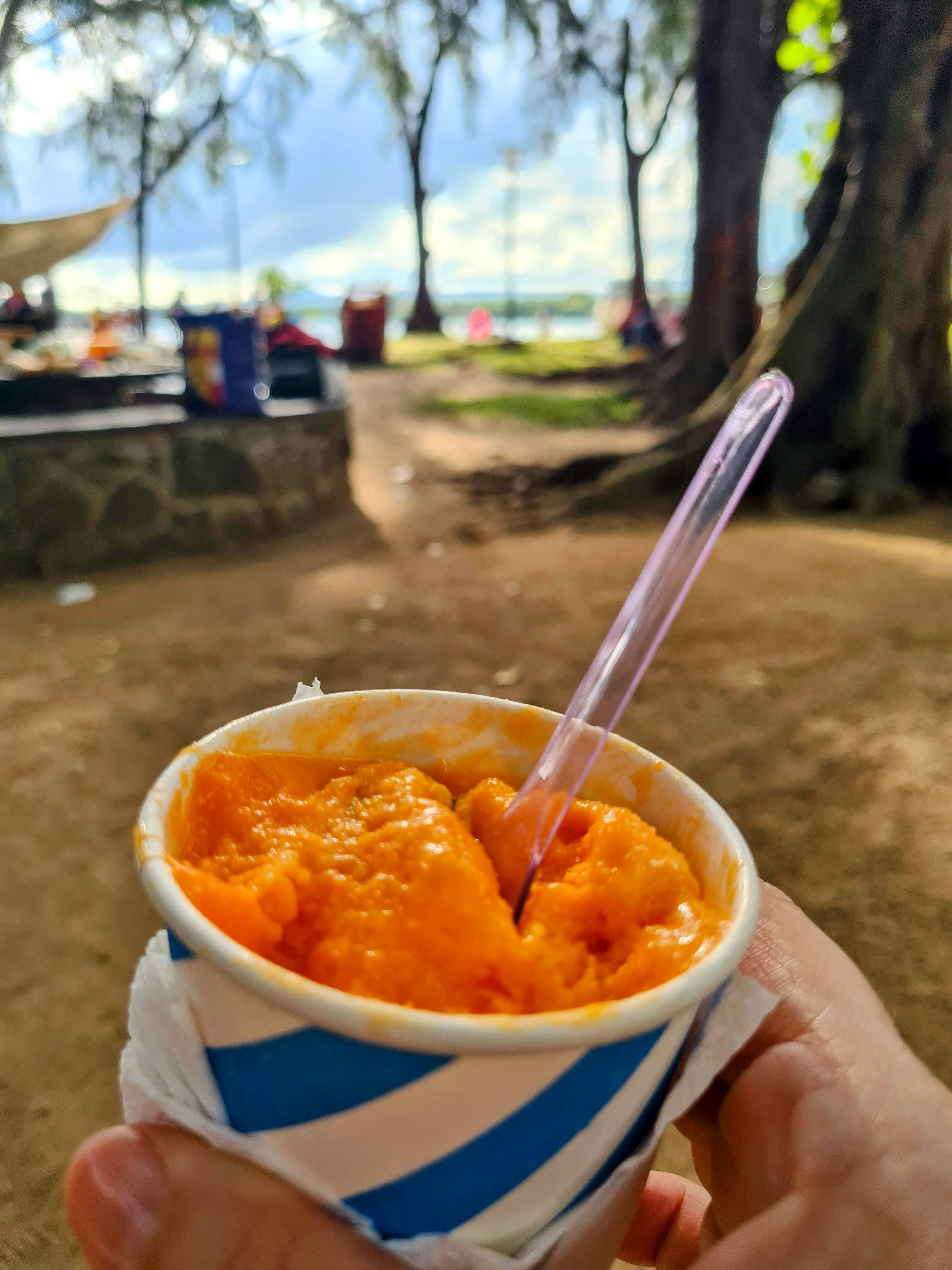
Some street food and snacks from local stalls and restaurants
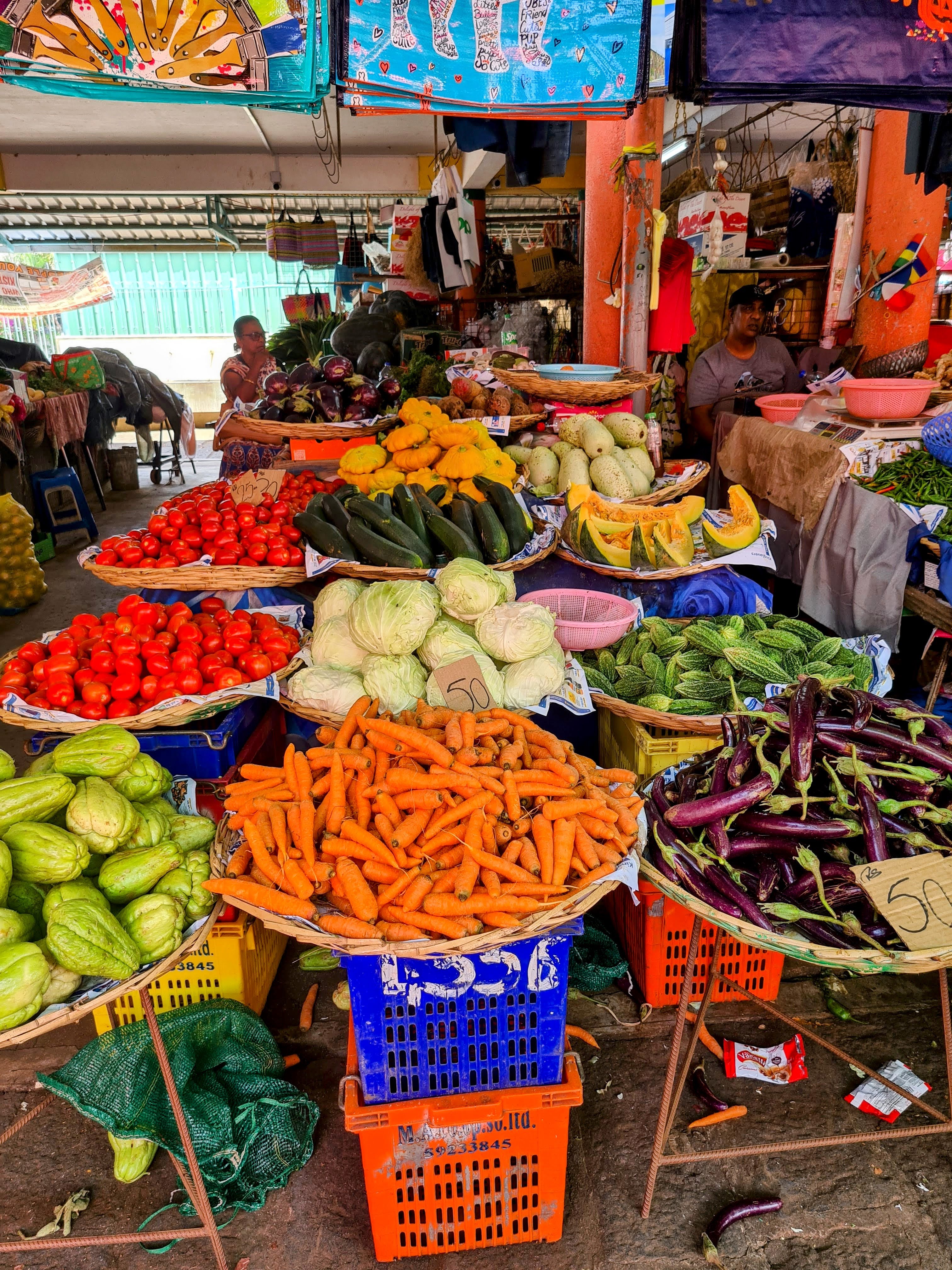
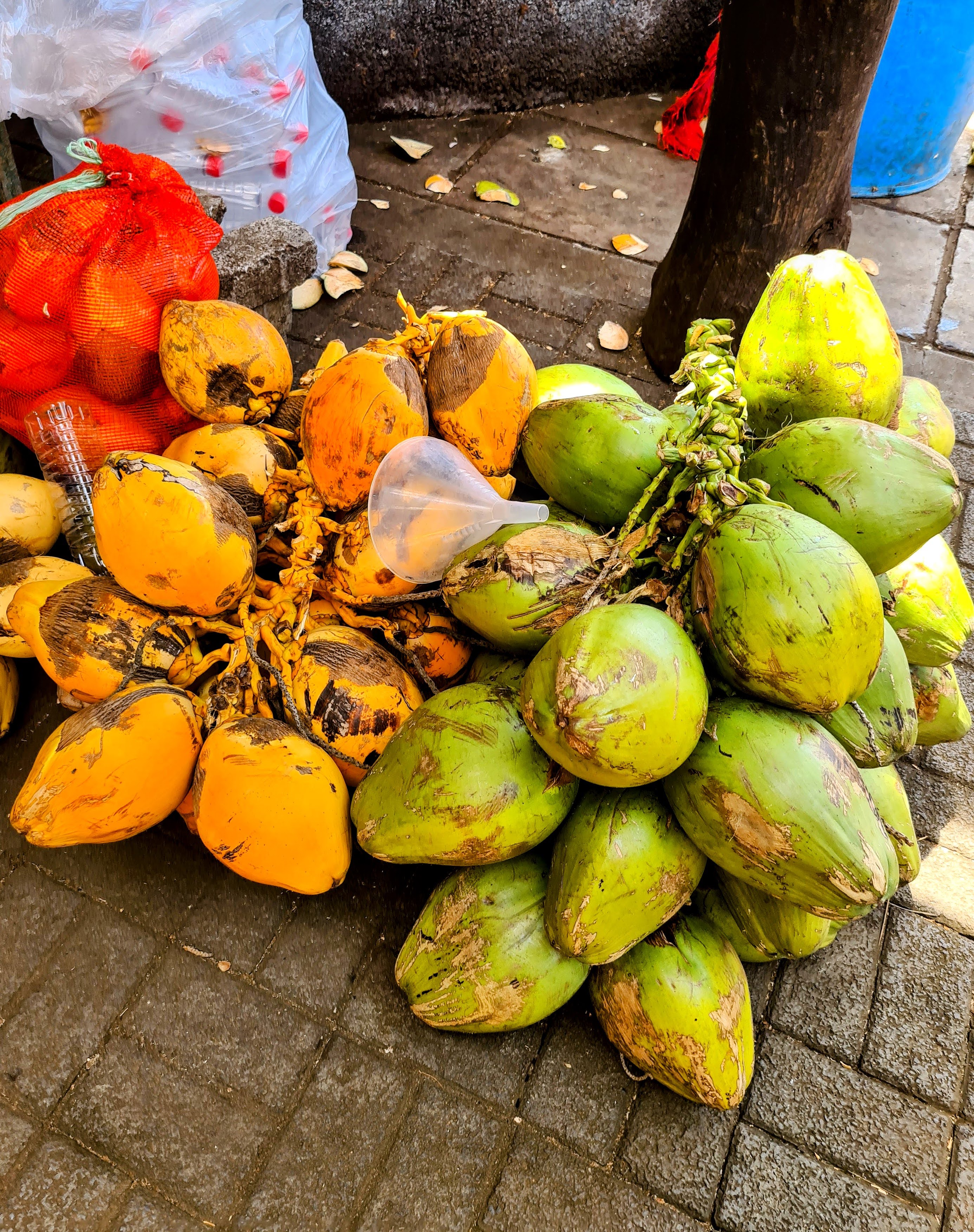
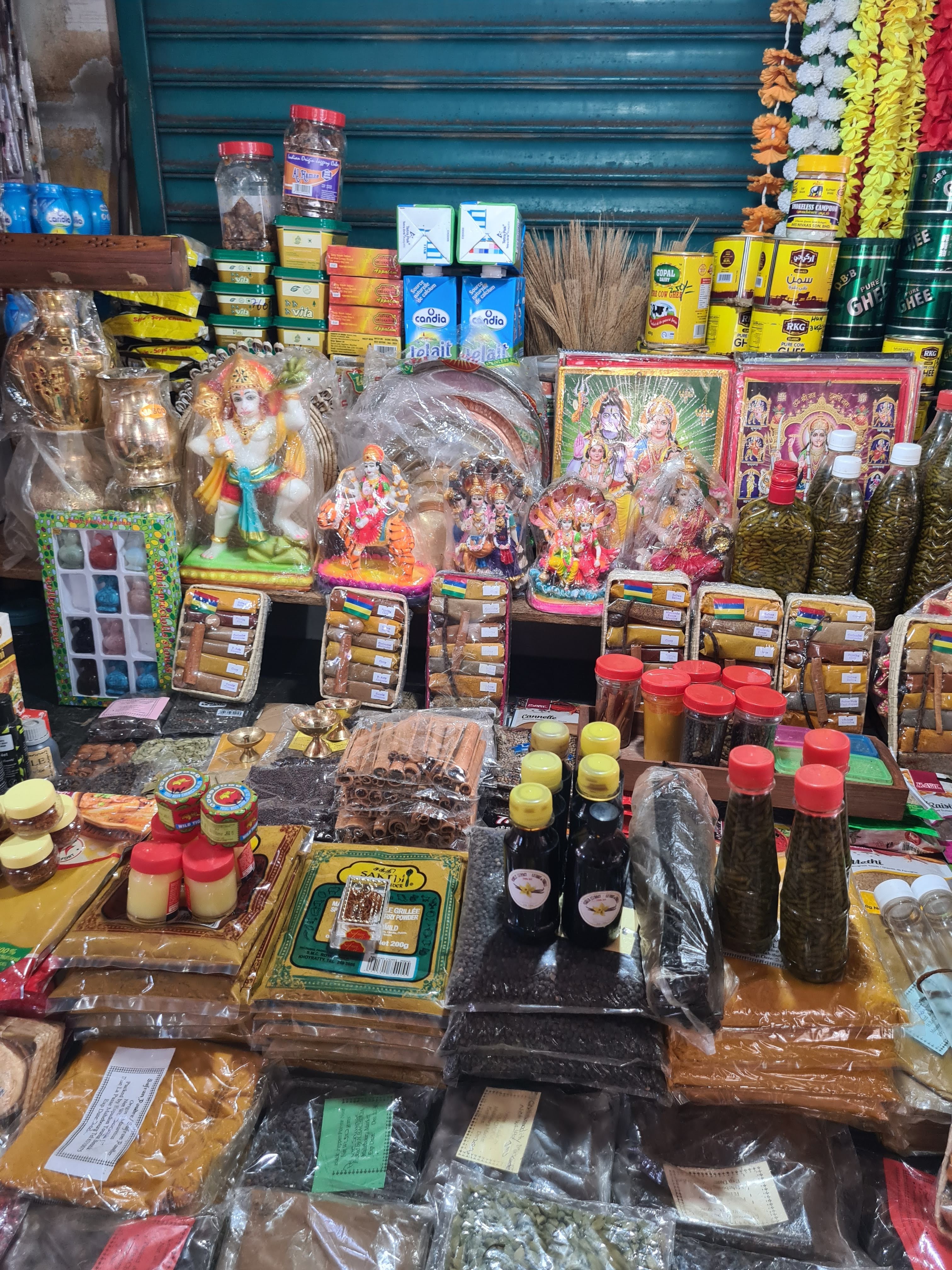
Colourful Shopping at the market
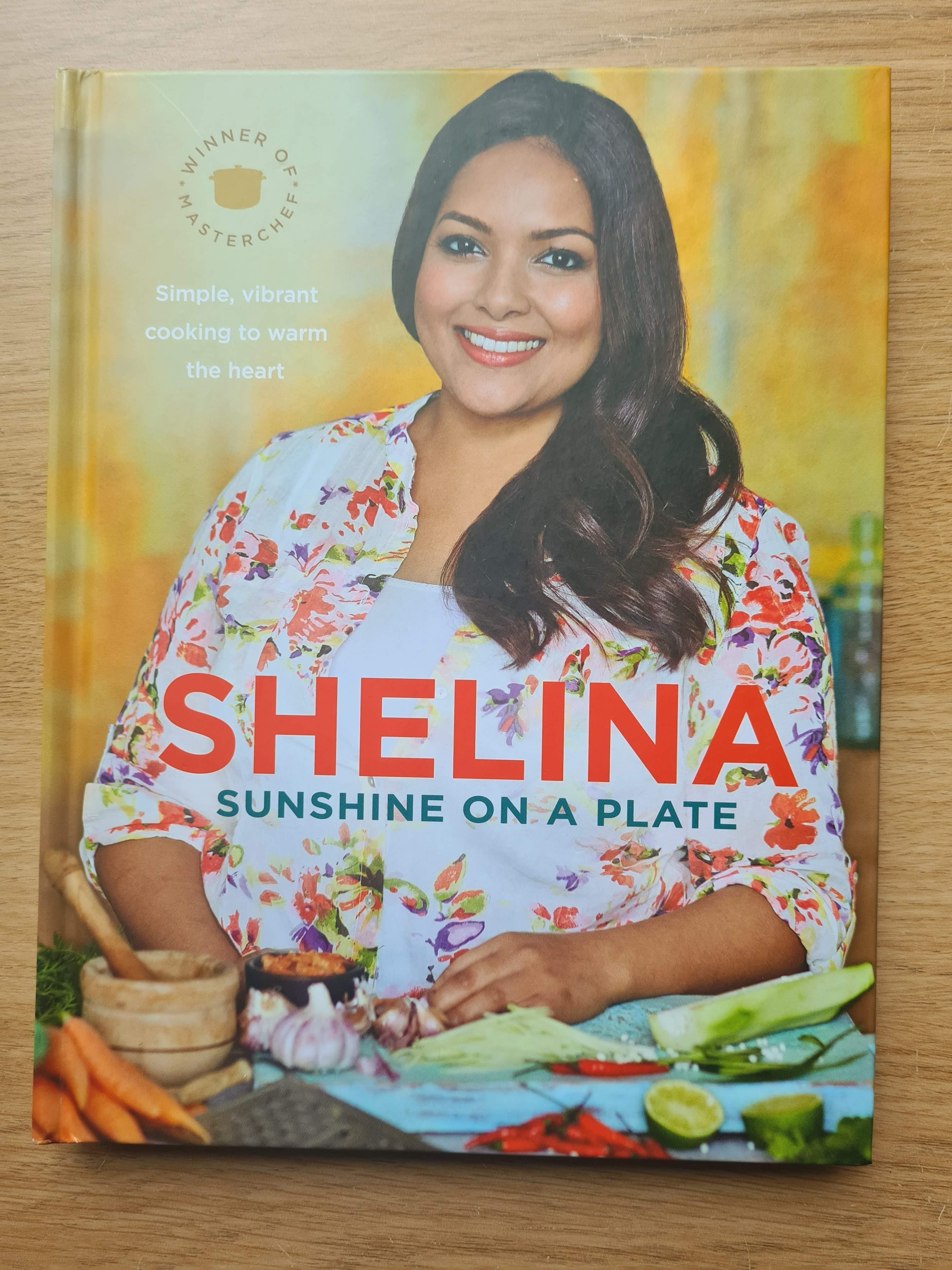
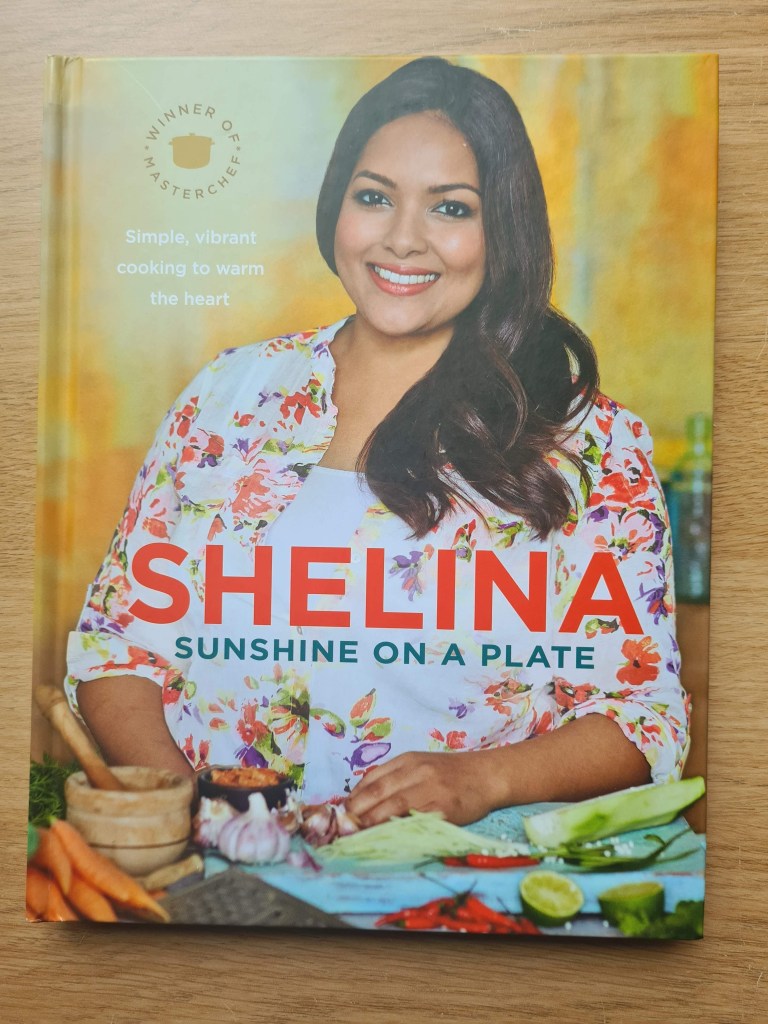
After a trip somewhere new, I enjoy trying to recreate the food I’ve had there, so I was happy to receive this book of Mauritian recipes for Christmas.

The book is full of colourful recipes, some with meat, which I don’t eat, but also plenty of fish and vegetable based dishes, desserts and drinks.

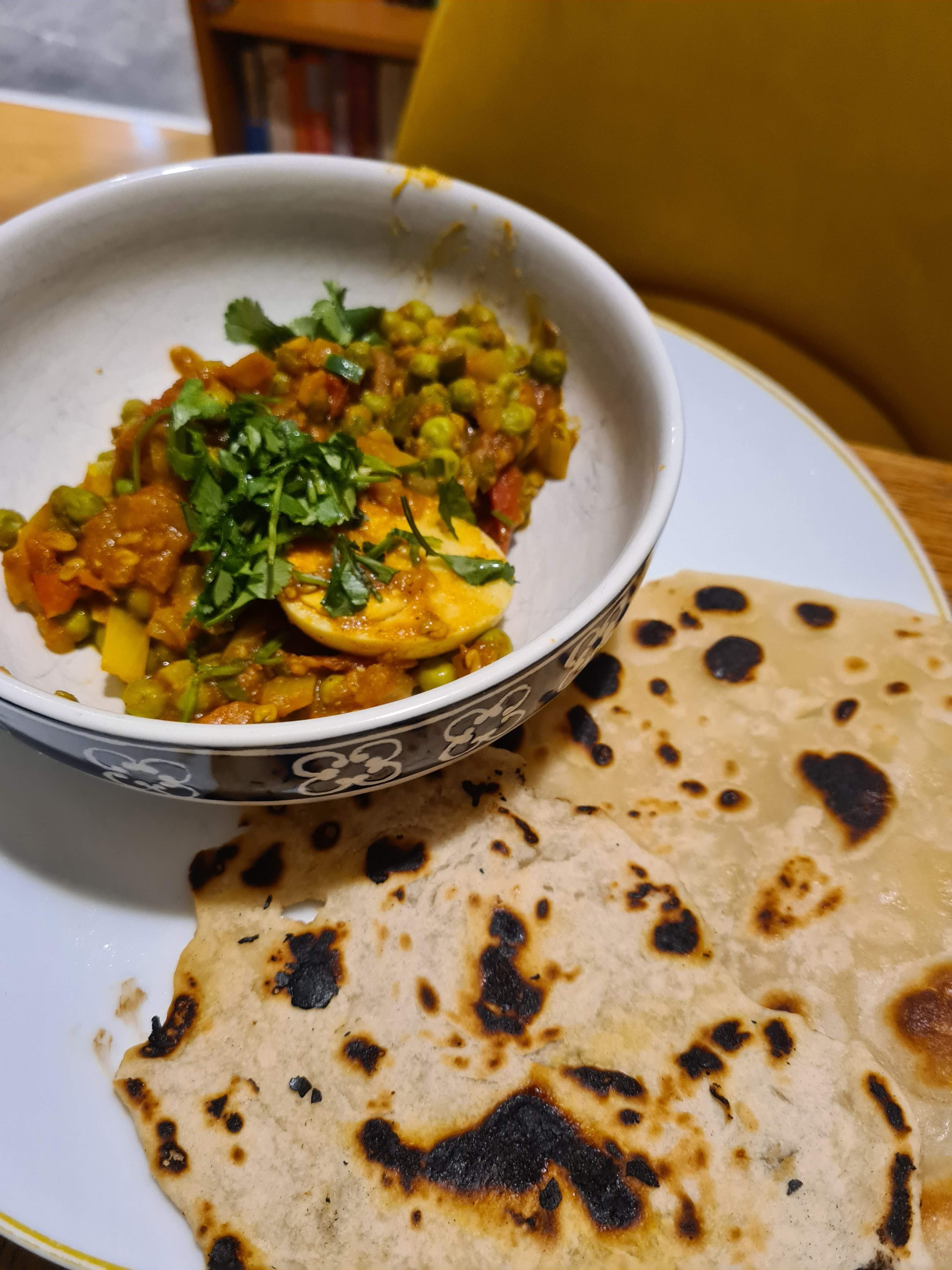
I decided to make cari des oeufs, which is a simple egg and pea curry and also some roti, which I’ve never made from scratch before.

We enjoyed quite a few different curries while we were on holiday and various types of bread. We noticed that bread of all types seemed very popular and even the small local supermarket had a bakery for people to pick up freshly baked baguettes. Maybe that’s because of the French influence, as Mauritius was a French colony from 1715 until 1810 and thirty percent of international visitors are from France.

The egg curry included Mauritian curry powder, a fragrant blend of spices which some people grind and smoke themselves. The book gives instructions for making your own from scratch if you have a spice grinder, but also a cheats version using ready ground curry powder with some extra spices. I made the simple version, but I’ve now bought myself a spice grinder so I can try a more authentic version next time.

The recipe made a large amount of curry powder, so I saved the rest in a jar and have been adding it to all our curries. It’s definitely made them more interesting than using a standard curry powder.

The curry base of spices, onions, chilli and tomatoes, cooking before the peas and eggs were added.

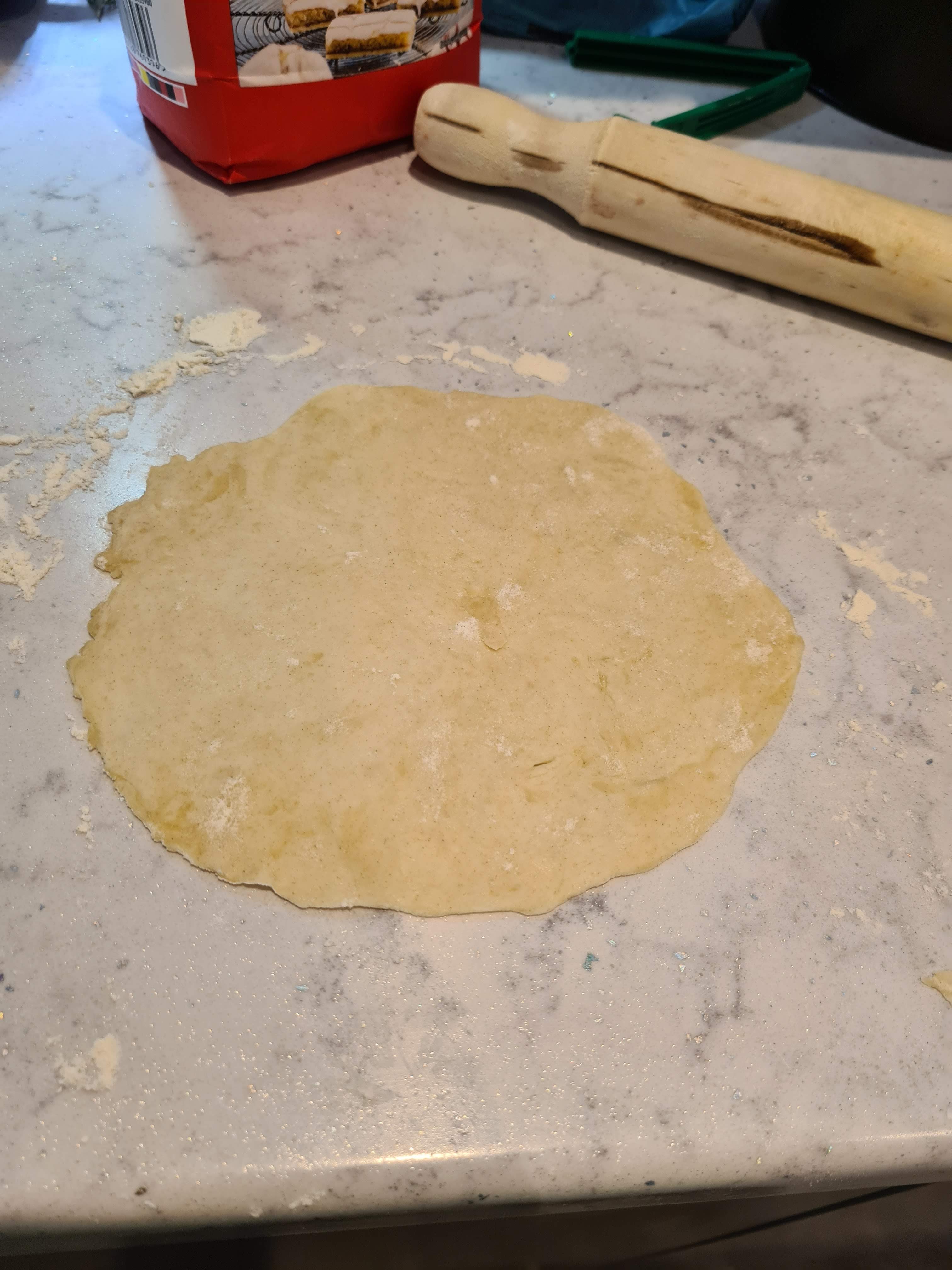
I hadn’t realised it’s so easy to make your own roti with just flour, oil, salt and water. I’ve made them several times since and experimented with wholemeal and spelt flour to give a different flavour and texture.

The recipe included 1tbsp of salt for 300g flour, which seemed like far too much to me. I’m not sure if that’s a mistake or if they are supposed to be salty, but I reduced it to 1 tsp.
The finished dish, served with the roti

We really enjoyed this curry. Have you been to Mauritius? What foods did you enjoy?
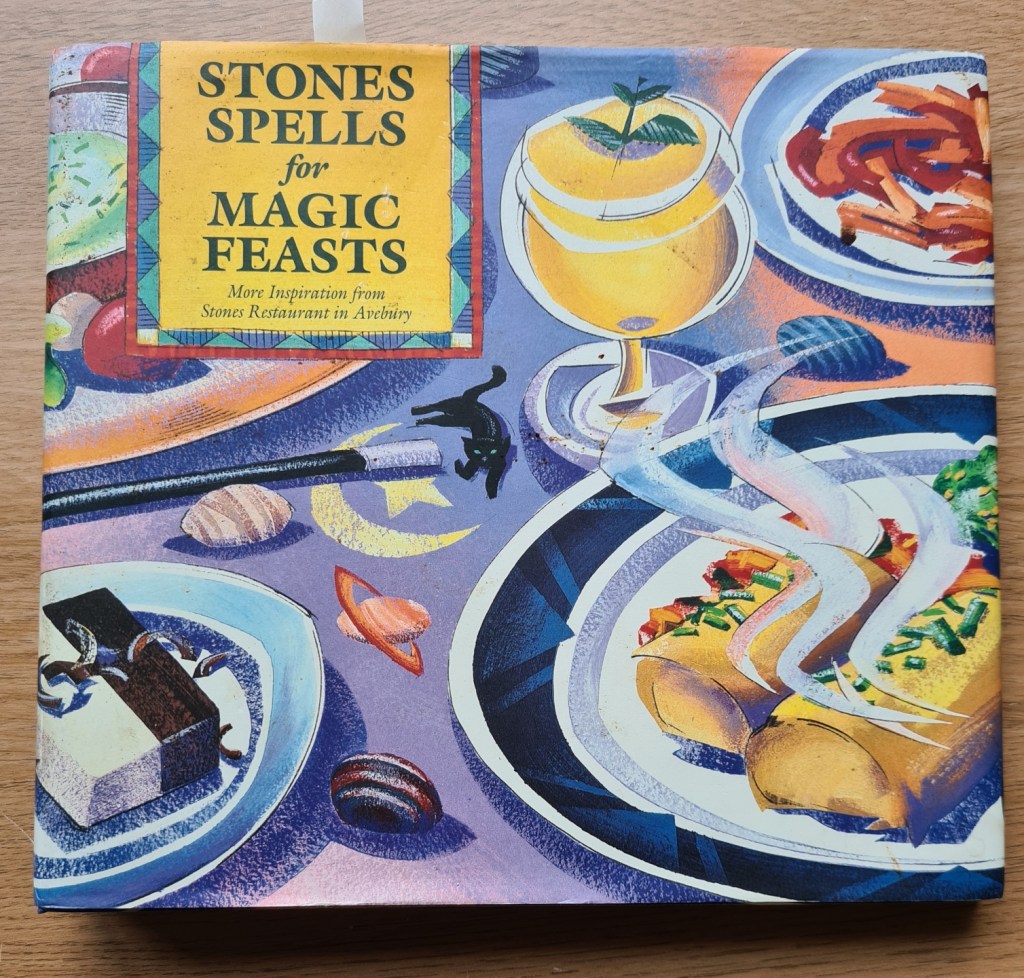
Cooking from Stones Spells for Magic Feasts

Cookbook Challenge Part 13

Cover of cookbook 'Stones Spells for Magic Feasts'

This is the long delayed next instalment of my cookbook challenge. See this post for the explanation and more about the book I cooked from this time:

https://bexknits.wordpress.com/2023/04/03/cookbook-challenge-reboot/

I cooked this meal months ago now, but I’m only now getting round to writing about it. How do proper bloggers manage it? Do you set yourself a fixed time to sit down and write? Or just tap something into your phone when the mood takes you? Let me know!

I chose to make a starter and main course from the Stones Spells for Magic Feasts cookbook. The main course I chose was quite heavy, so I decided to go for a light starter with some bitter and acidic notes.

Chicory, Grapefruit and Walnut Salad:

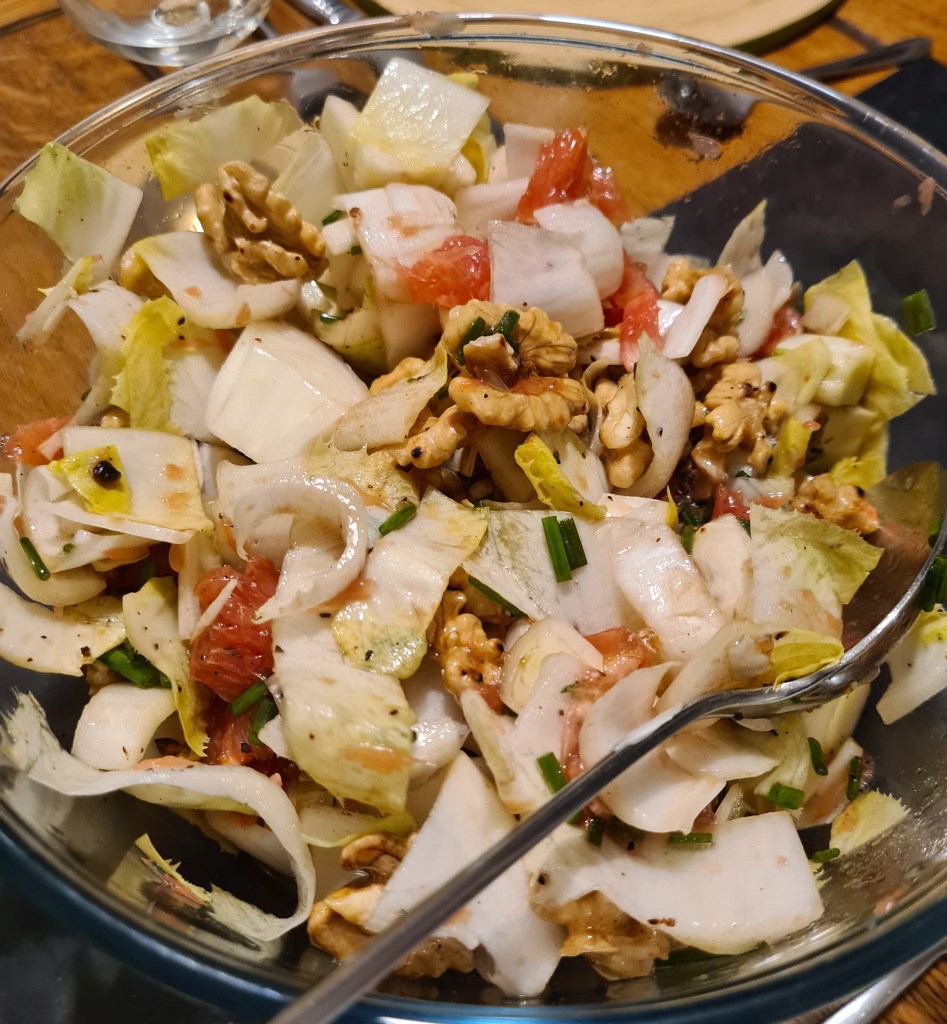
A salad with chicory, grapefruit and walnuts

This recipe would look good with some fancy red or pink chicory, but all that was available at the time was the white and green kind. I think it’s a bit less bitter than the red one, but I’ve never tried both colours side by side – perhaps that should be a future experiment!

The recipe is very simple and involves nothing more than slicing the chicory and grapefruit, toasting some walnuts and mixing them together with a balsamic, lemon and chive dressing.

The finished chicory salad was fresh tasting, with the expected strong contrasting flavours. It was a bit too much for my bitter sensitive son and I think I would have preferred a little sweetness too. I’d probably try oranges instead of grapefruit if I made this again.

So now to the main course, which as you may be able to see from the pictures was not entirely successful!

Broccoli and Cottage Cheese Roly Poly:

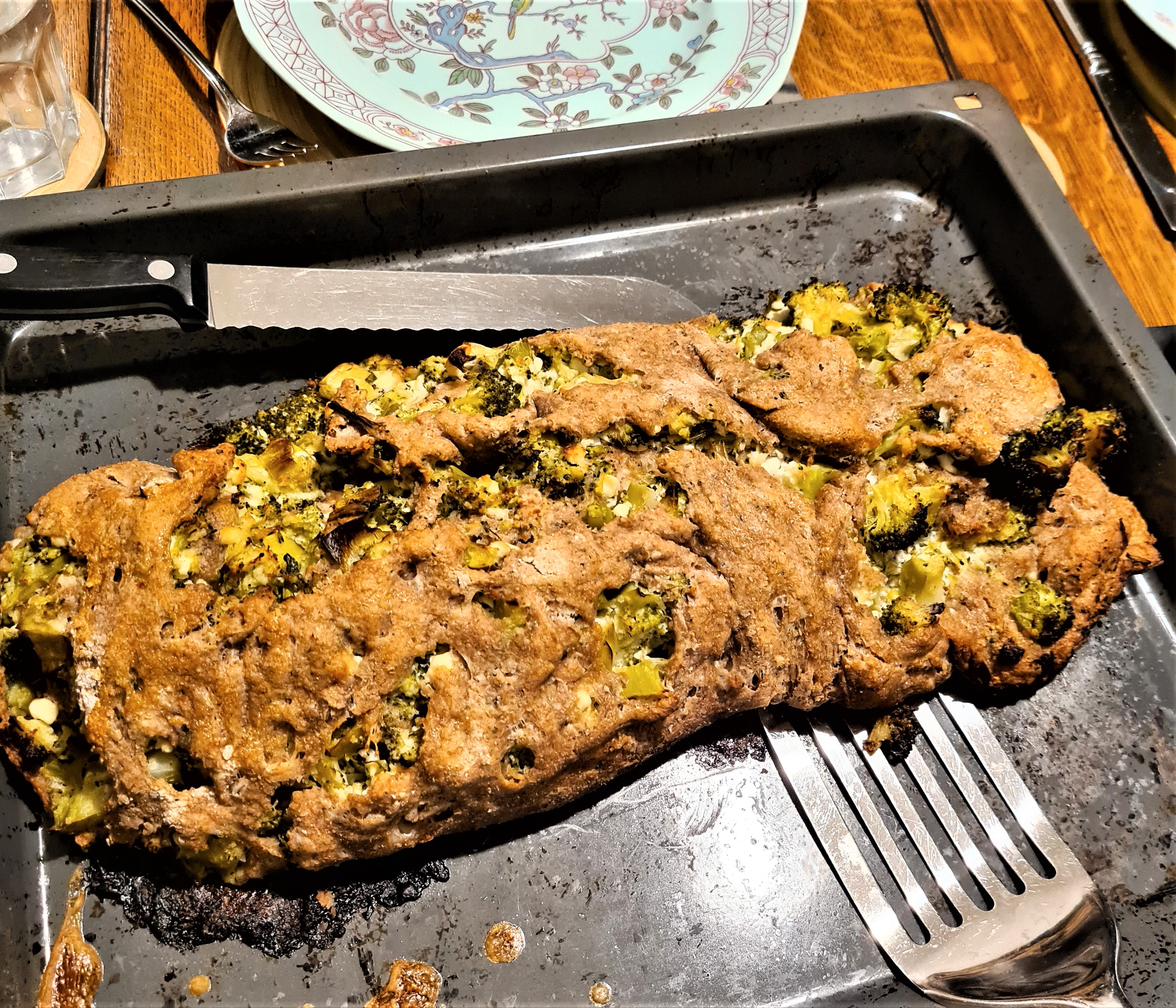
A pie with brocolli sticking out

If you didn’t grow up in the UK then I’m not sure you’ll undertand what a roly poly is supposed to be. Traditionally, it’s a dessert made from suet pastry spread with jam and rolled up like a swiss roll or a roulade, then steamed and served hot, usually with custard. It’s an old fashioned school dinners dessert (pudding) and quite tasty, but stodgy.

The Stones recipe book doesn’t include any photos, just some vague illustrations (for this recipe, some abstract pieces of broccoli), but from the title and instructions, I assume this is meant to be a kind of savoury roulade.

I tried to follow the recipe and instructions for resting and rolling out the dough

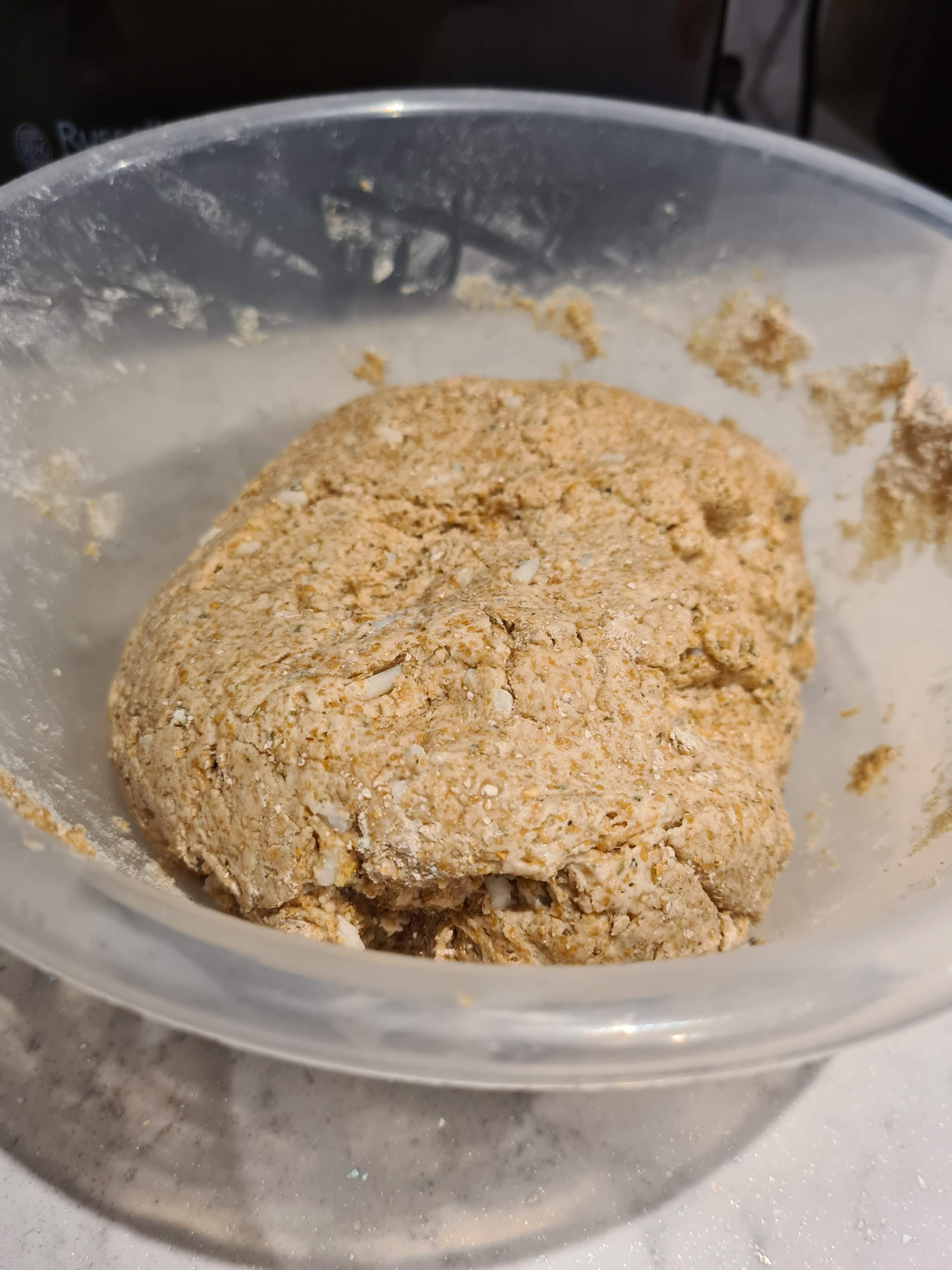
A ball of wholemeal pastry
Roleed out wholemeal pastry

As you can see, I did not achieve anything like a roulade. The dough was very soft and fragile and not strong enough to support the broccoli florets, which just poked through and made holes.

Pie with brocolli

I almost gave up, but eventually managed to shape the dough and filling into a sort of flat pie.

As suggested in the book, I served this with caponata, which is a Sicilian ratatouille containing capers, olives, raisins and pine nuts as well as the usual vegetables. I was glad I made this side dish, because not only was it delicious, it also provided some much needed liquid to go with the roly poly.

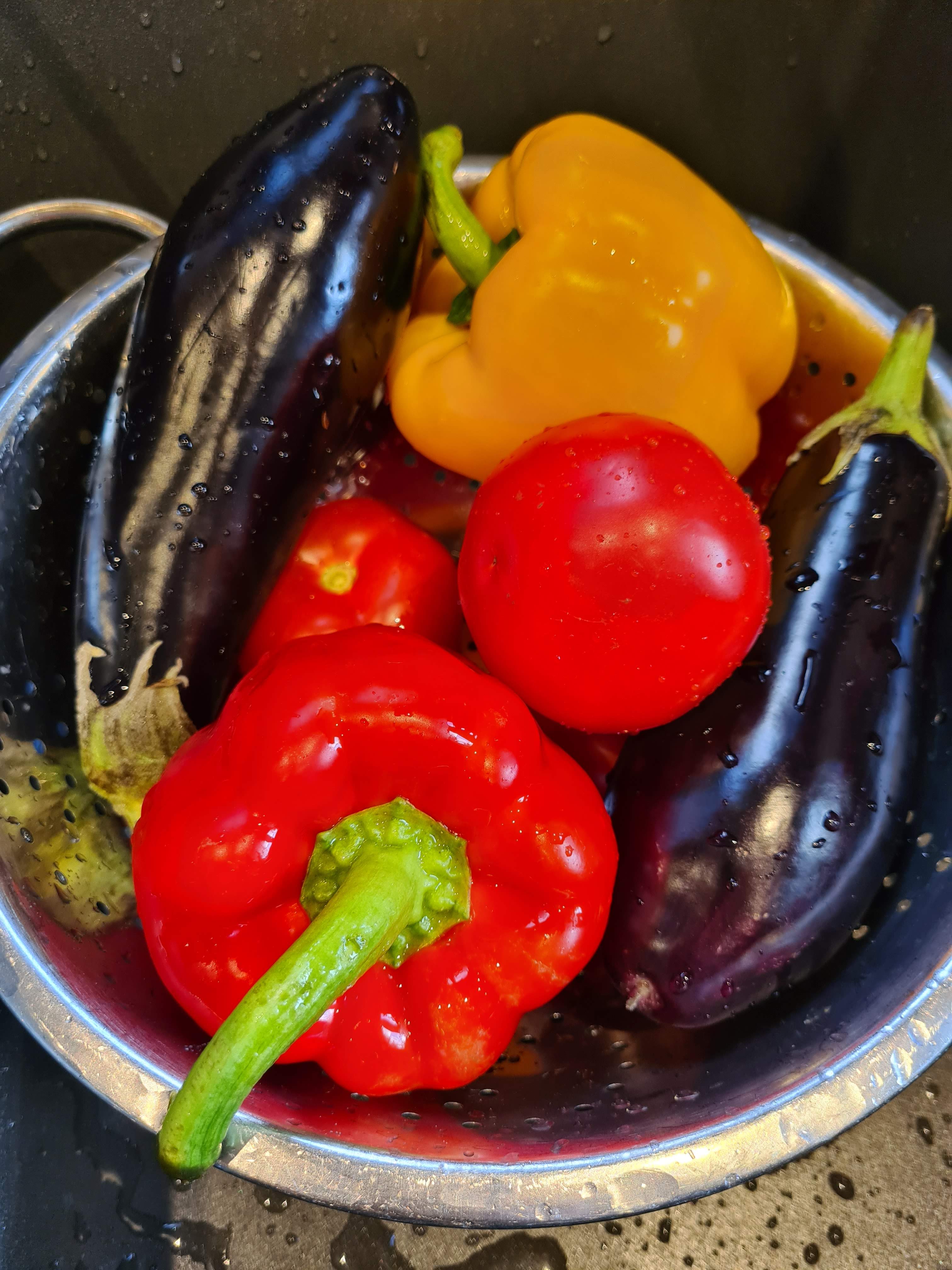
Here are the nice fresh vegetables for the caponata:

Fresh aubergines, peppers and tomatoes in a colander

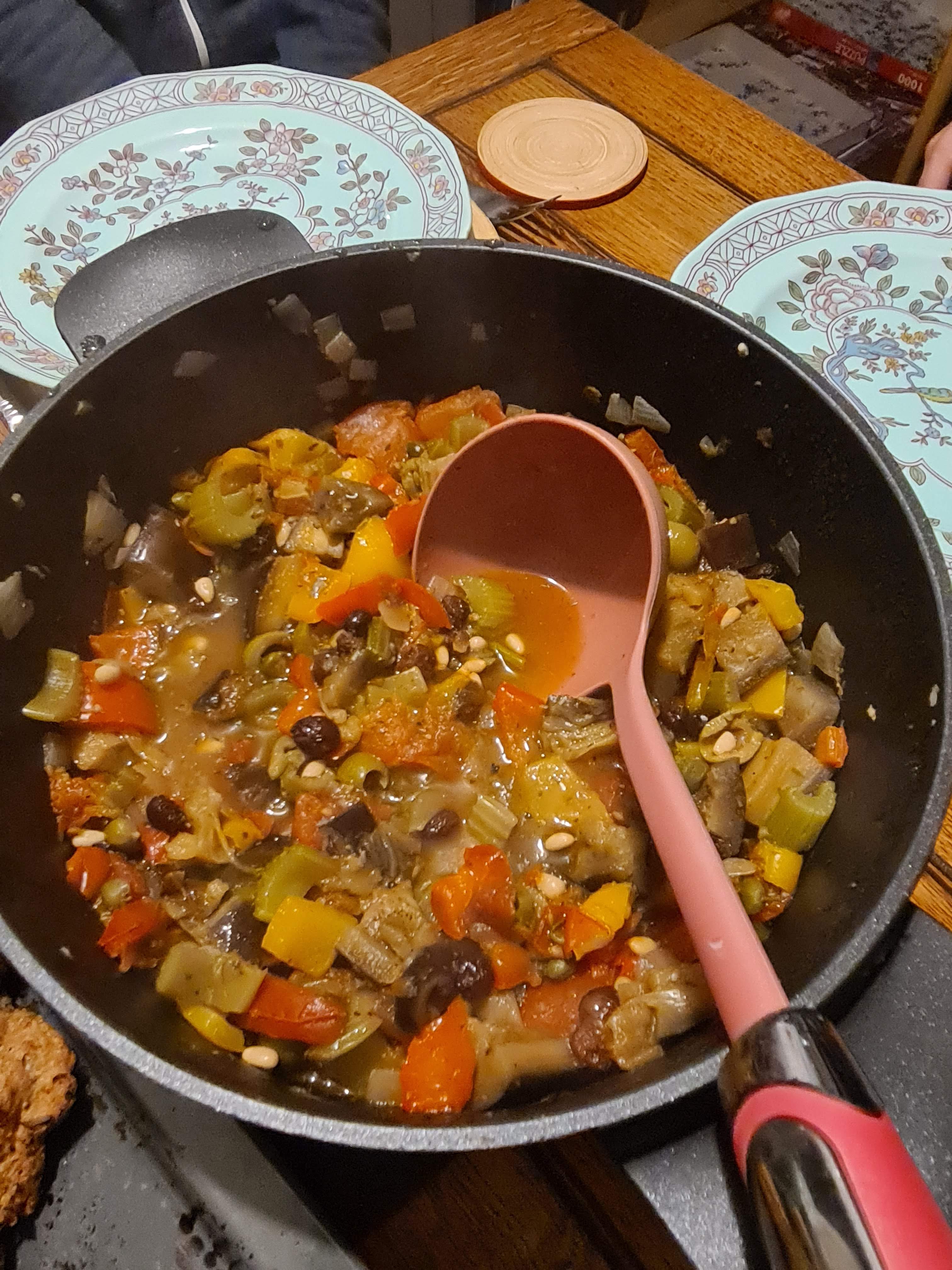
And here is the caponata being cooked, and the finished dish:

Vegetables cooking in a pan
Caponata in a dish with a ladle

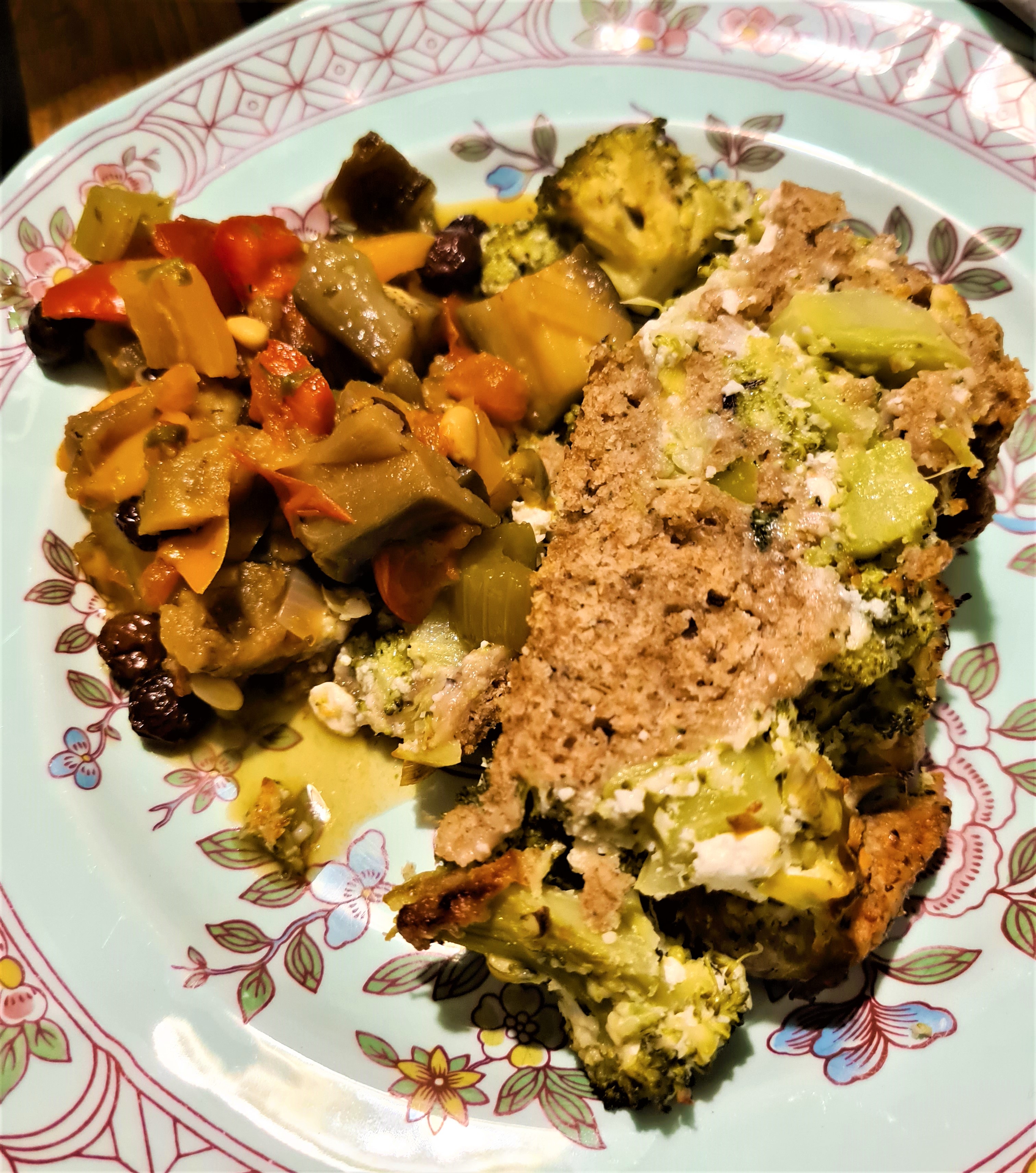
The roly poly filling was pretty good, but the pastry, although quite tasty, was hard work to eat. Once baked, the texture was quite substantial and bread-like and the wholemeal flour made it very dense and strongly flavoured. The recipes don’t specify how many they are supposed to serve, but I suppose I should have realised that as it’s a book of ‘feasts’ , they are meant for a large group. This was absolutely enormous and took the five of us a couple of days to finish.

Plate of Brocolli pie with caponata

In spite of the ugly roly poly, this did go down OK with the family and it was all eaten eventually. I would make the caponata again, but probably wouldn’t bother with the rest. I really like the idea of this book, mainly because it reminds me of the stunning Avebury setting, but it’s not one I’ll be cooking from regularly. I don’t think there’s anything really wrong with the recipes, just that vegetarian cookery has moved on.

Use Your Cookbooks

Cookbook Challenge reboot

Are you a recipe book collector like me? How often do you actually use your cookbooks ?

In 2019 I started a project to try and cook a meal from every recipe book I own. It was fun and I managed twelve meals from different books. I think that was a pretty good effort, although it was still only a small part of my collection.

You can read a bit more about why I originally started this in this post: Cookbook Challenge Introduction

After 2019, life got in the way and I stopped blogging. Work, a global pandemic and a bereavement all limited my ability to focus.

A couple of weeks ago I suddenly had the urge to log into the blog again. It didn’t look too bad, so since I was there I thought I may as well carry on. This time I have an even bigger collection of books, some of them bought for me with the expectation that I might actually cook something and write about it. I have a new kitchen too, with more fridge and oven space, some pan drawers and a fancy tap.

The first decision was which book to cook from. I was thinking of using one I recently inherited from my Mum, but seeing her notes in the margins was too much. I’ll come back to those another time. Instead I picked this book, mainly because of the colourful cover which I hadn’t opened for some time.

Years ago at Avebury in Wiltshire, just next to the famous stone circle, there was a vegetarian restaurant that served the kind of substantial vegetarian dishes popular in the nineties. This was when vegan meat substitutes and Quorn were still niche products. You could get soya mince and veggie burgers, but most vegetarian meals were made up of, well, vegetables, maybe some cheese, and bulked up with plenty of carbs.

The restaurant owners published three books as far as I know, all out of print now. This one is from 1995. The restaurant closed in 2000 but the building is now a cafe serving coffee, cakes and light lunches for the stone circle visitors.

If you’ve never been to Avebury, you should. It’s better than Stonehenge I think – bigger and you can wander amongst the stones and even touch them if you like. The photo is from what must have originally been a long avenue leading to the circle. Even with crowds of visitors (out of shot here), it’s dramatic and mysterious.

Oh yes, I have to write about what I actually cooked – follow along for the update!

Will you be inspired to use your cookbooks too?

Forever Summer by Nigella Lawson

Cookbook Challenge Part 12

I am not very good at winter. I don’t like cold, or damp, or dark evenings and I miss green leaves and colourful flowers and bare feet. At the point when I finally had to admit that summer was really over, this felt like a good book to revisit. As soon as I opened it I wondered why I hadn’t thought of going back to it before – every picture is glowing with light and colour and promises of summer flavours. The blurb says, ‘Forever Summer is all about how to prolong that lazy, warm summer feeling through the darker days of winter’. That’s enough to convince me.

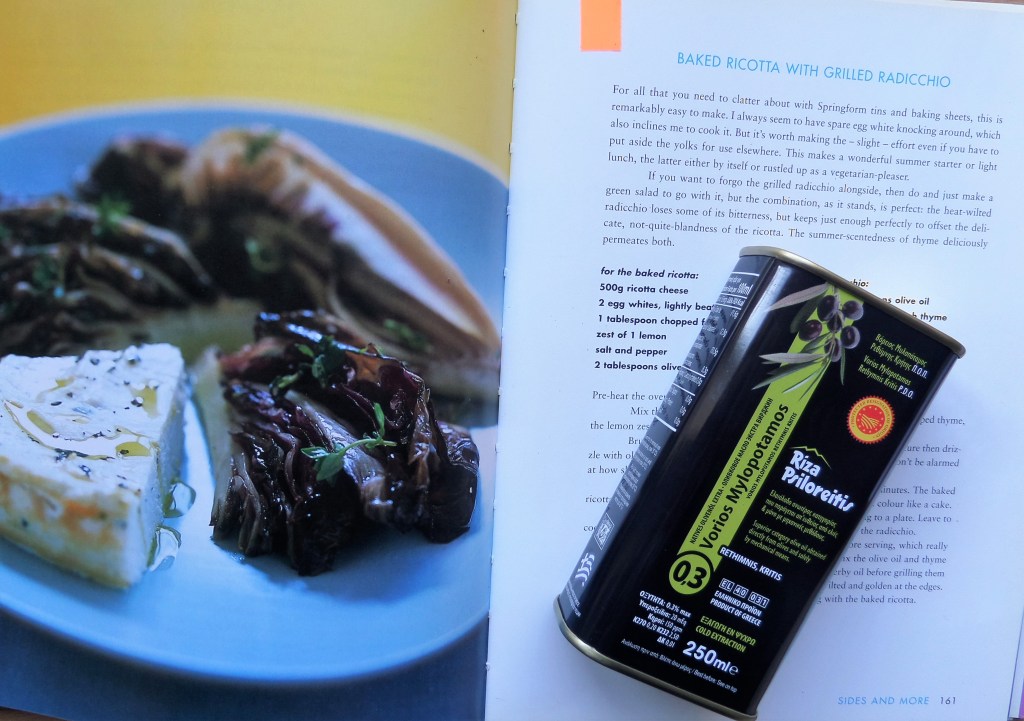
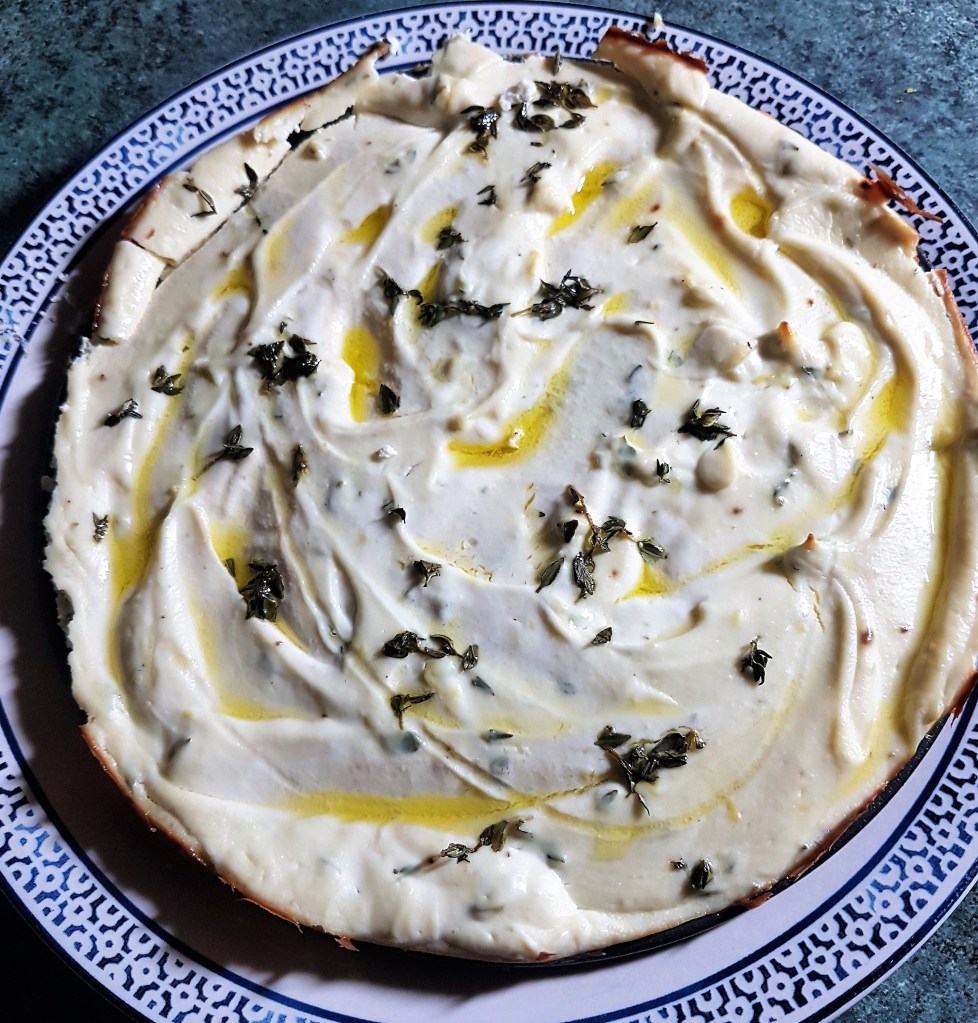
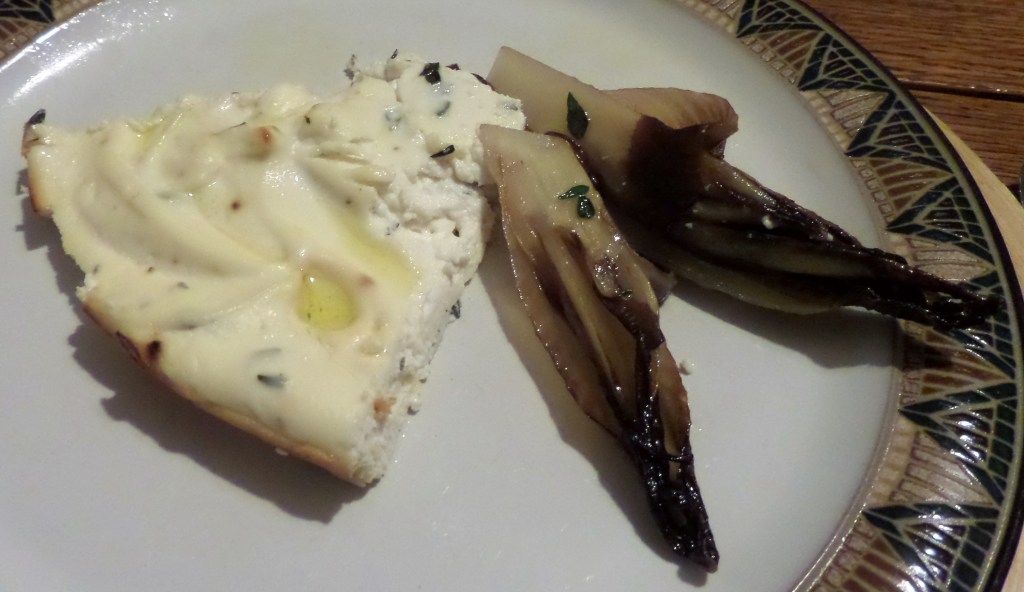
This time I chose a three-course dinner, partly because we had a guest but also because this starter sounded so good that I just really needed to try it. It’s baked ricotta with grilled radicchio.

I used red chicory, which according to Wikipedia is the same thing as radicchio. On Ocado however, radicchio was about three times as expensive, making that decision very easy.

You beat the ricotta with egg whites before baking it with thyme and lemon zest, so it makes a sort of savoury cheesecake. In fact, the appearance reminded me of the cheesecake I made some time ago for cookbook number 3 https://bexknits.wordpress.com/2019/03/17/ottolenghi-simple/

It didn’t taste similar of course – both recipes included thyme, but the effect was completely different. The baked cheese tasted fantastic! It was intensely savoury but slightly tangy and not too heavy.

The grilled chicory we will put down as ‘interesting’. It was a good contrast to the cheese, and the oil, herbs and lemon took away some of the bitterness. My husband, older son and our dinner guest thought it was OK, but it was too strong for me and my equally bitter- sensitive younger son. If I did this again I would just go with a green salad.

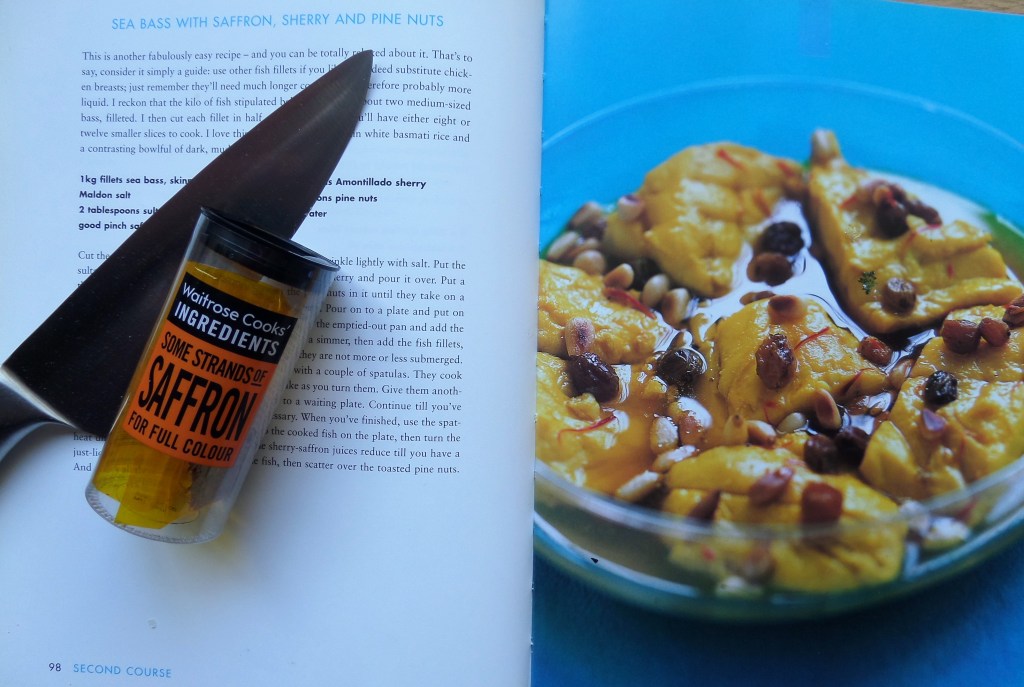
The main course was sea bass with saffron, sherry and pine nuts. I liked the idea of using sultanas with fish, which I don’t think I’ve done before. I bought the fish ready filleted, but I did have to skin it, hence the sharp knife. Apart from the fish- skinning this was really easy, although the fish did fall apart a bit when I lifted it out of the frying pan.

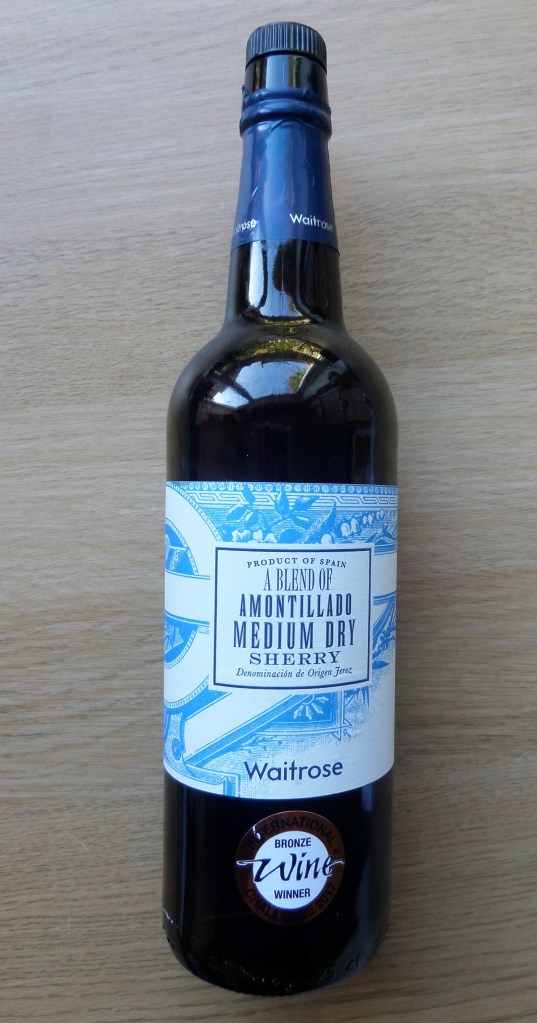
Here’s the sherry I used. It has a lovely slightly nutty flavour and I found it was perfect for sipping whilst cooking.

I served this with basmati rice as suggested, but not the lentils which would have been too much as part of a three course meal I think. We just had some broccoli on the side.

It was quite a nice golden colour, but you can’t really see it well here. I should have put it against a blue background as they did for the book. New blue plates needed!

Everyone liked this one. It had a delicate, slightly exotic flavour and the sultanas balanced the earthy saffron taste. It definitely needed the crunchy pine nuts for contrast.

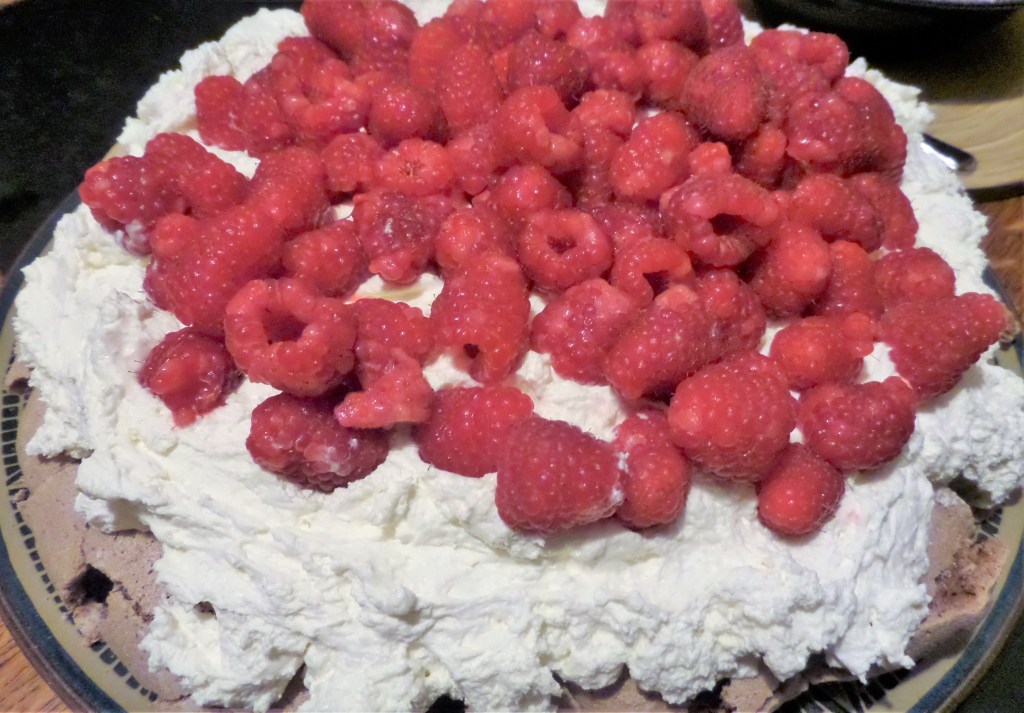
And now dessert, which I had to make earlier in the day as you can’t rush a meringue. This is a chocolate raspberry pavlova and those three words were all the encouragement I needed to make this.

The meringue contains cocoa powder and dark chocolate which needed to be finely chopped. I used the mezzaluna which I usually chop herbs with and that worked quite well, apart from the odd chocolate splinter flying across the kitchen. It’s from Nigella’s kitchenware range as well, so it seemed appropriate to use it here.

The recipe requires six egg whites and I also needed another two for the ricotta, so I bought a carton which was much more convenient than having eight leftover yolks.

The cooled meringue was so light and fragile that it cracked very easily when I transferred it to a plate (with the Bake Off move in which you turn the plate upside down and look scared). The one in the book looks cracked too, so I’m sure it’s fine. I also overwhipped the cream because I still forget how powerful my Kenwood Chef is and I forgot to sprinkle grated chocolate over the top.

None of that mattered though, because this tasted incredible. The meringue was so light and crisp and dotted with little pieces of chocolate that melted in the mouth. The raspberries were just tangy enough to stop the whole thing being too sweet and sickly. Possibly the best dessert yet.

In all a very successful meal. Did it make me feel summery? I’m not sure, but it certainly made me happy.