Cookbook Challenge Part 13
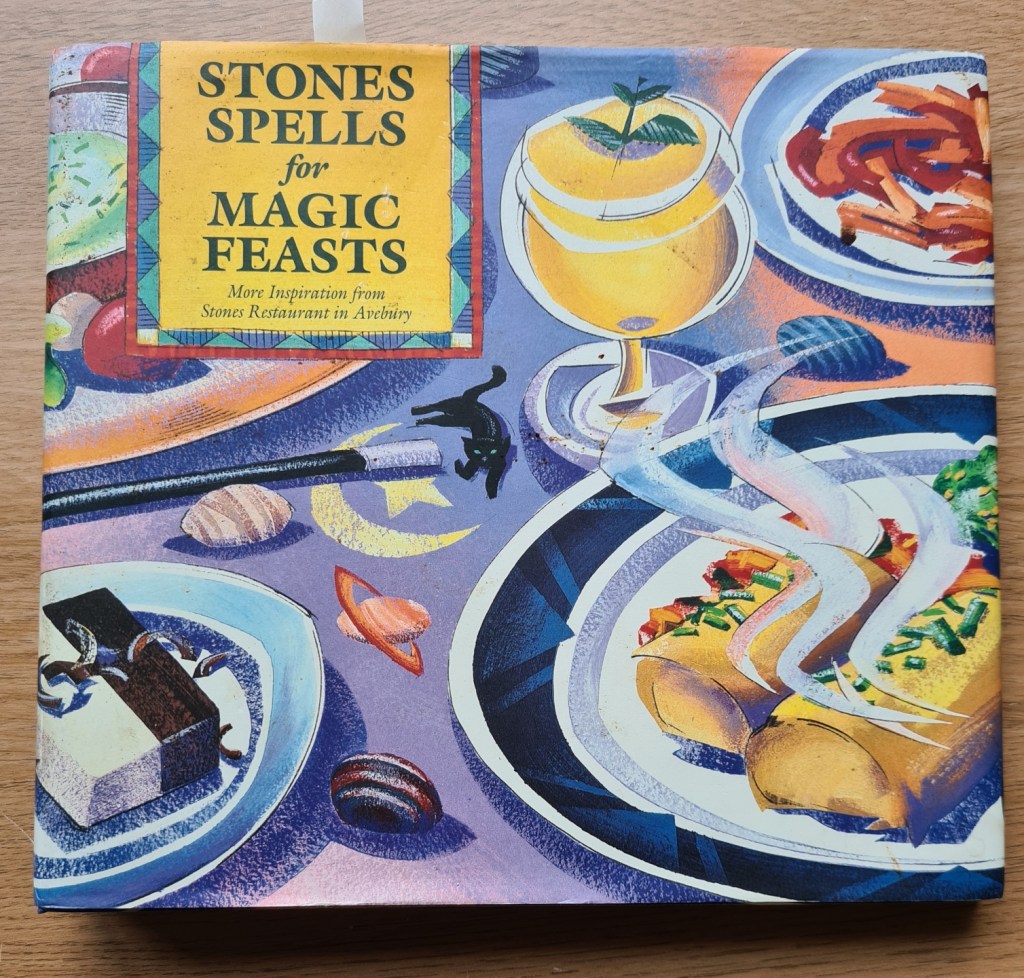
This is the long delayed next instalment of my cookbook challenge. See this post for the explanation and more about the book I cooked from this time:
https://bexknits.wordpress.com/2023/04/03/cookbook-challenge-reboot/
I cooked this meal months ago now, but I’m only now getting round to writing about it. How do proper bloggers manage it? Do you set yourself a fixed time to sit down and write? Or just tap something into your phone when the mood takes you? Let me know!
I chose to make a starter and main course from the Stones Spells for Magic Feasts cookbook. The main course I chose was quite heavy, so I decided to go for a light starter with some bitter and acidic notes.
Chicory, Grapefruit and Walnut Salad:
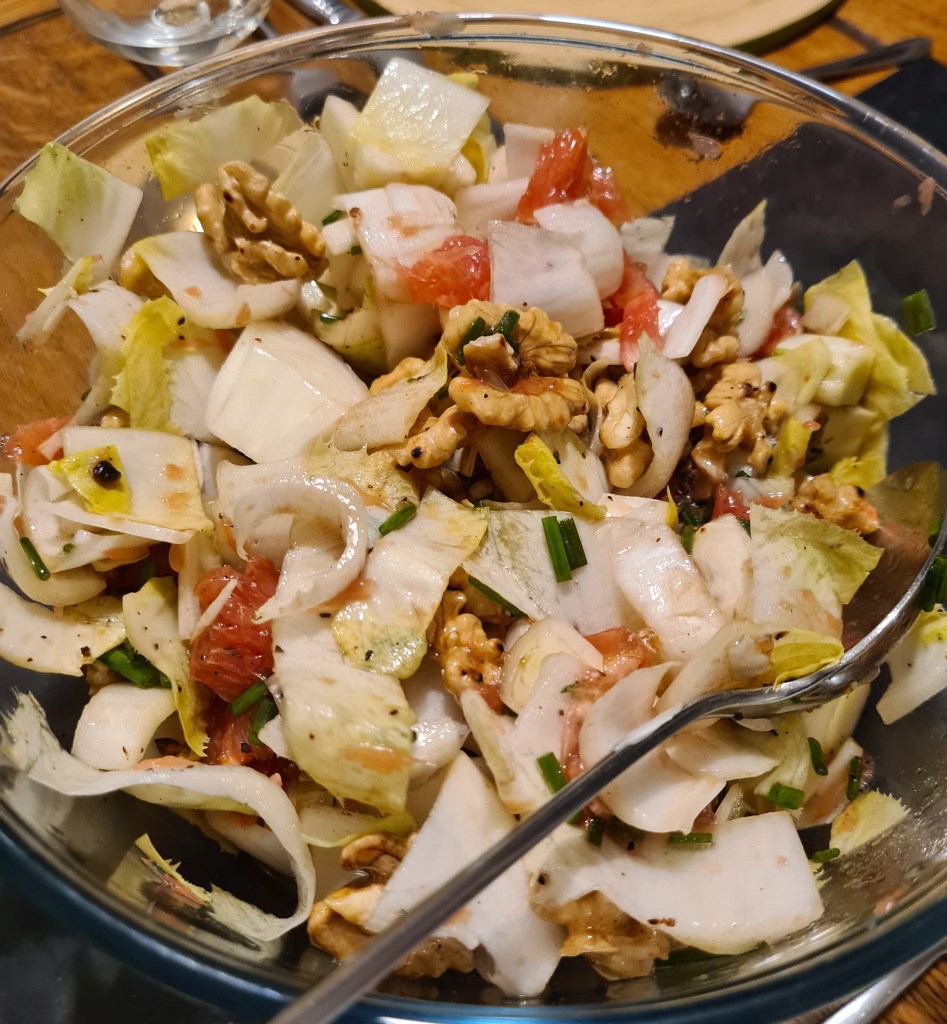
This recipe would look good with some fancy red or pink chicory, but all that was available at the time was the white and green kind. I think it’s a bit less bitter than the red one, but I’ve never tried both colours side by side – perhaps that should be a future experiment!
The recipe is very simple and involves nothing more than slicing the chicory and grapefruit, toasting some walnuts and mixing them together with a balsamic, lemon and chive dressing.
The finished chicory salad was fresh tasting, with the expected strong contrasting flavours. It was a bit too much for my bitter sensitive son and I think I would have preferred a little sweetness too. I’d probably try oranges instead of grapefruit if I made this again.
So now to the main course, which as you may be able to see from the pictures was not entirely successful!
Broccoli and Cottage Cheese Roly Poly:

If you didn’t grow up in the UK then I’m not sure you’ll undertand what a roly poly is supposed to be. Traditionally, it’s a dessert made from suet pastry spread with jam and rolled up like a swiss roll or a roulade, then steamed and served hot, usually with custard. It’s an old fashioned school dinners dessert (pudding) and quite tasty, but stodgy.
The Stones recipe book doesn’t include any photos, just some vague illustrations (for this recipe, some abstract pieces of broccoli), but from the title and instructions, I assume this is meant to be a kind of savoury roulade.
I tried to follow the recipe and instructions for resting and rolling out the dough
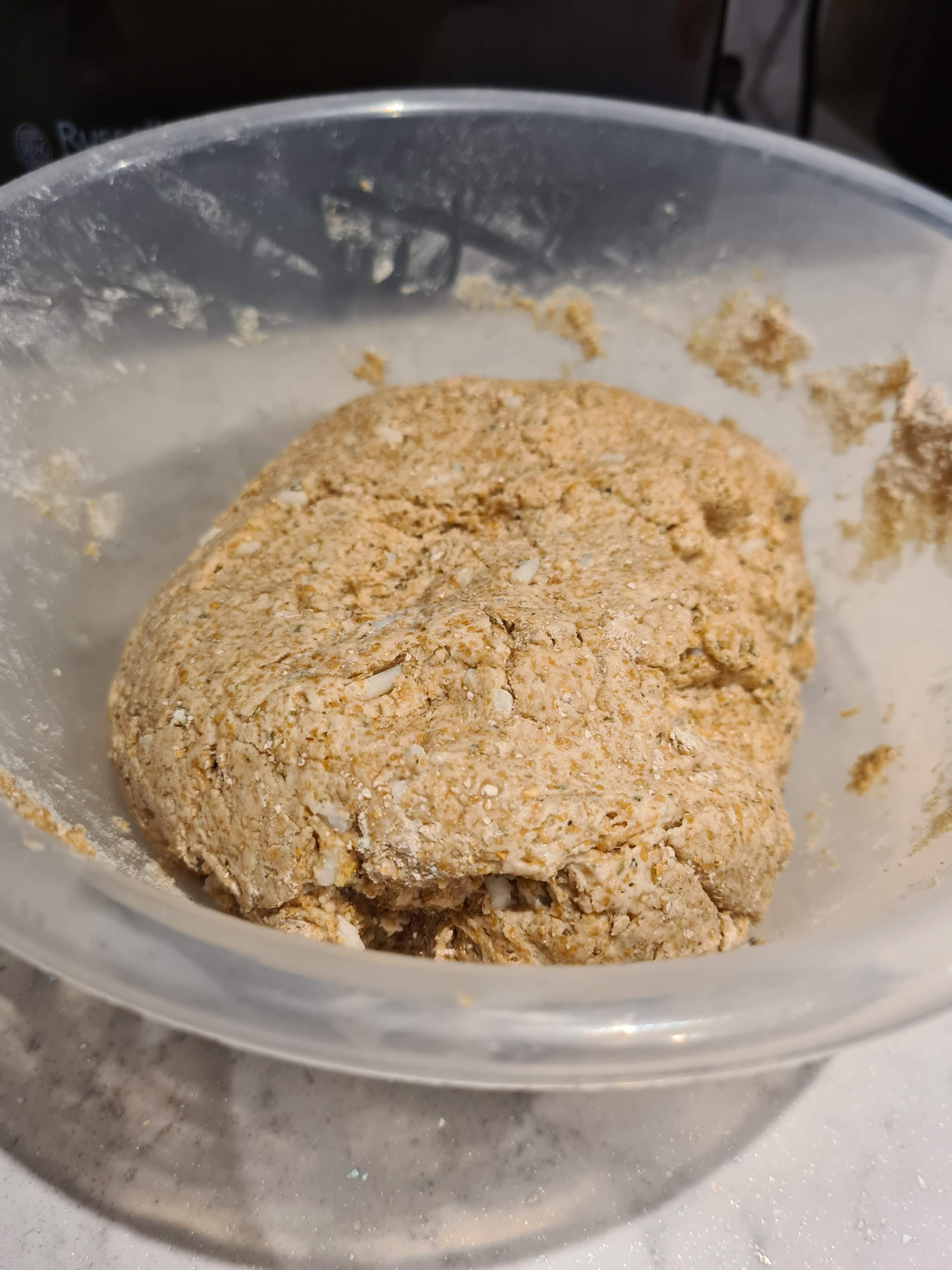

As you can see, I did not achieve anything like a roulade. The dough was very soft and fragile and not strong enough to support the broccoli florets, which just poked through and made holes.
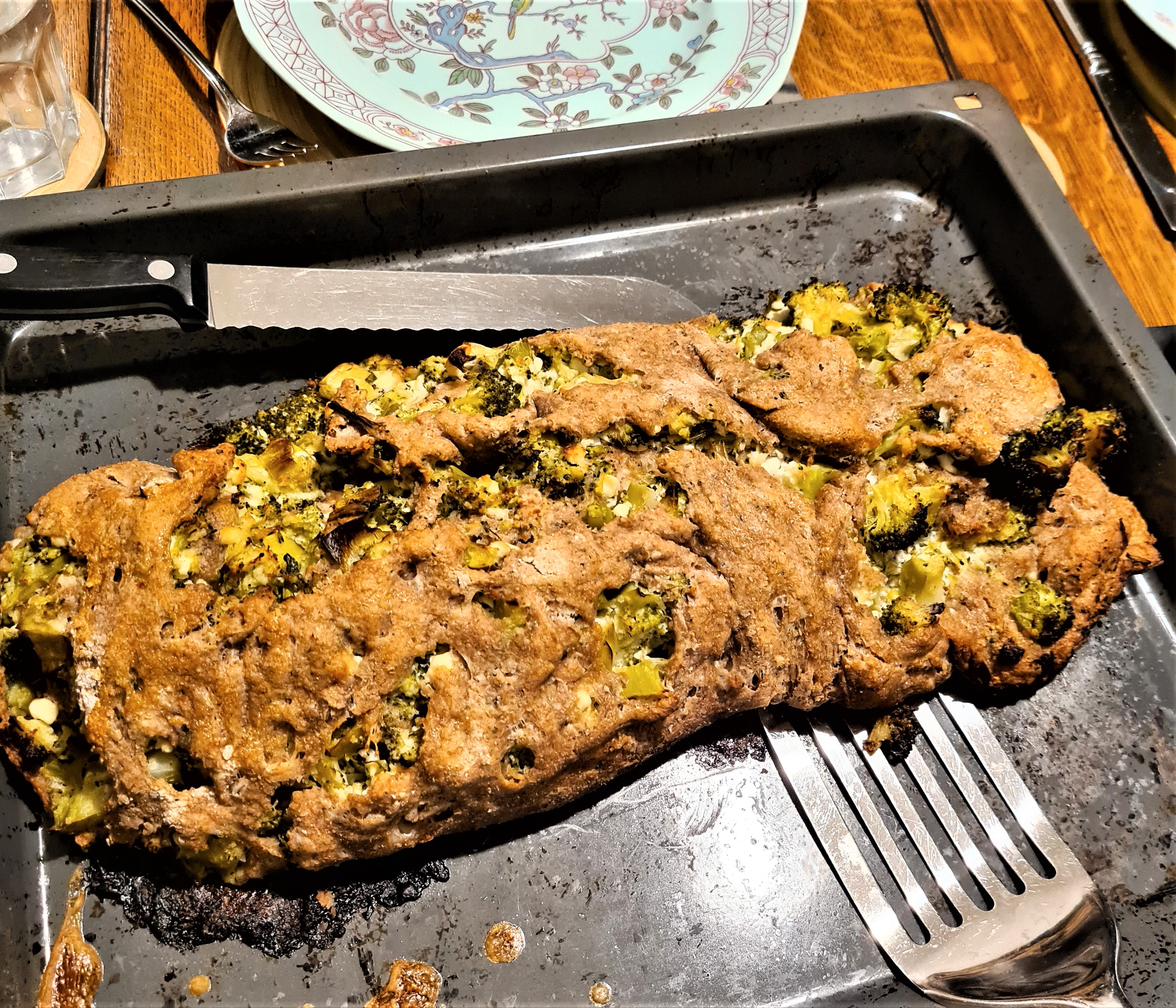
I almost gave up, but eventually managed to shape the dough and filling into a sort of flat pie.
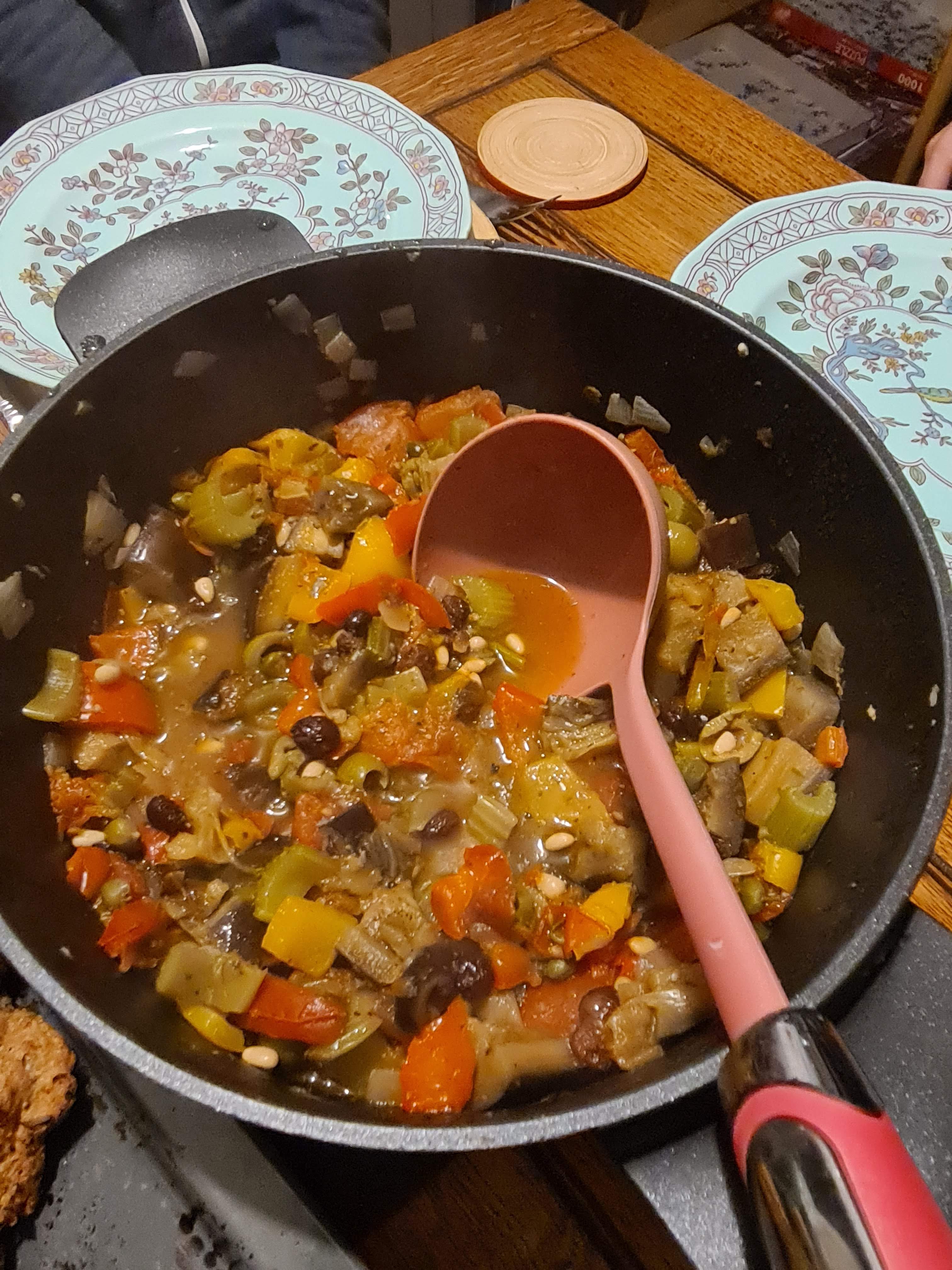
As suggested in the book, I served this with caponata, which is a Sicilian ratatouille containing capers, olives, raisins and pine nuts as well as the usual vegetables. I was glad I made this side dish, because not only was it delicious, it also provided some much needed liquid to go with the roly poly.
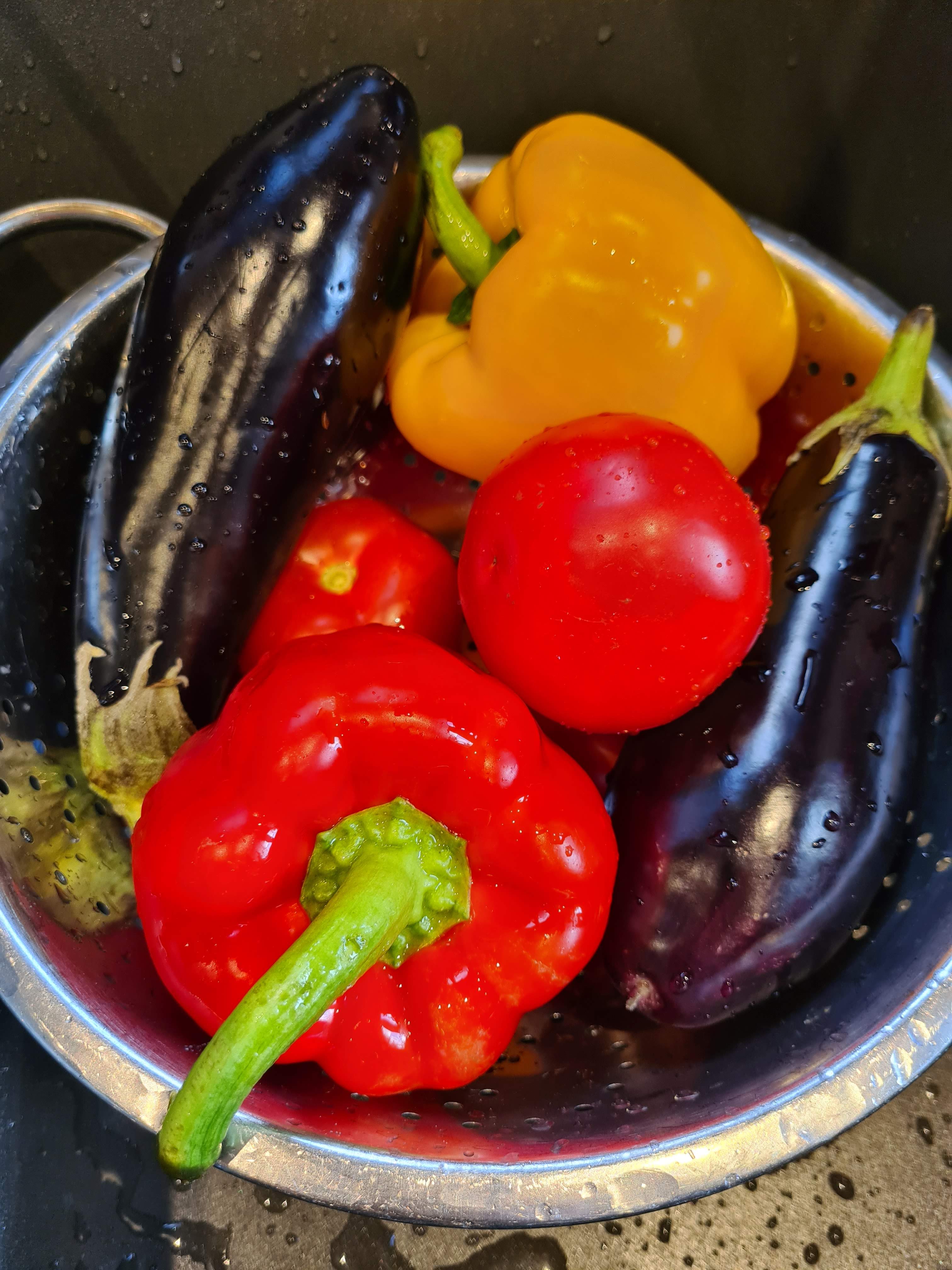
Here are the nice fresh vegetables for the caponata:
And here is the caponata being cooked, and the finished dish:

The roly poly filling was pretty good, but the pastry, although quite tasty, was hard work to eat. Once baked, the texture was quite substantial and bread-like and the wholemeal flour made it very dense and strongly flavoured. The recipes don’t specify how many they are supposed to serve, but I suppose I should have realised that as it’s a book of ‘feasts’ , they are meant for a large group. This was absolutely enormous and took the five of us a couple of days to finish.
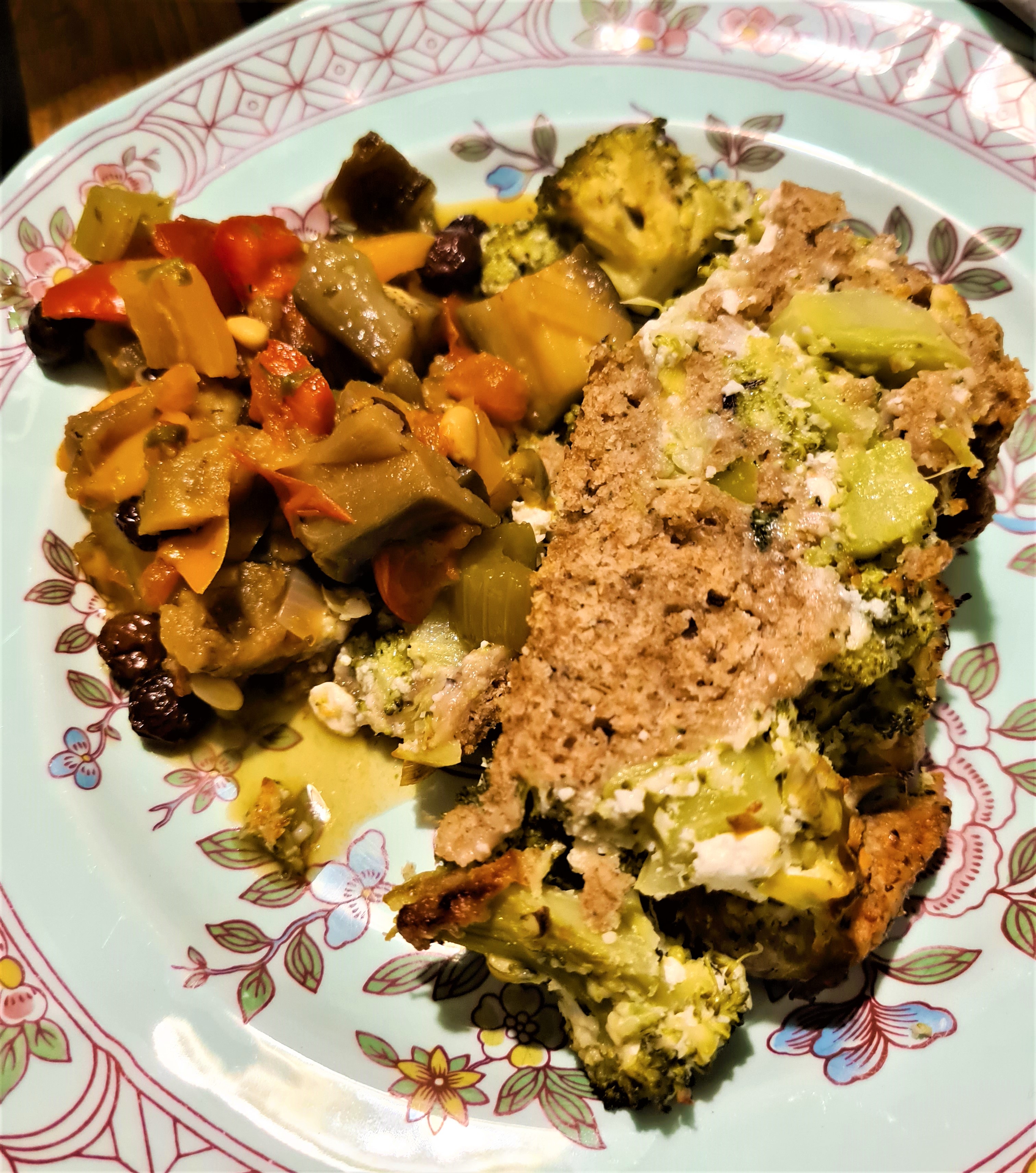
In spite of the ugly roly poly, this did go down OK with the family and it was all eaten eventually. I would make the caponata again, but probably wouldn’t bother with the rest. I really like the idea of this book, mainly because it reminds me of the stunning Avebury setting, but it’s not one I’ll be cooking from regularly. I don’t think there’s anything really wrong with the recipes, just that vegetarian cookery has moved on.

 Apricots In Manchester