Easter Weekend Cooking

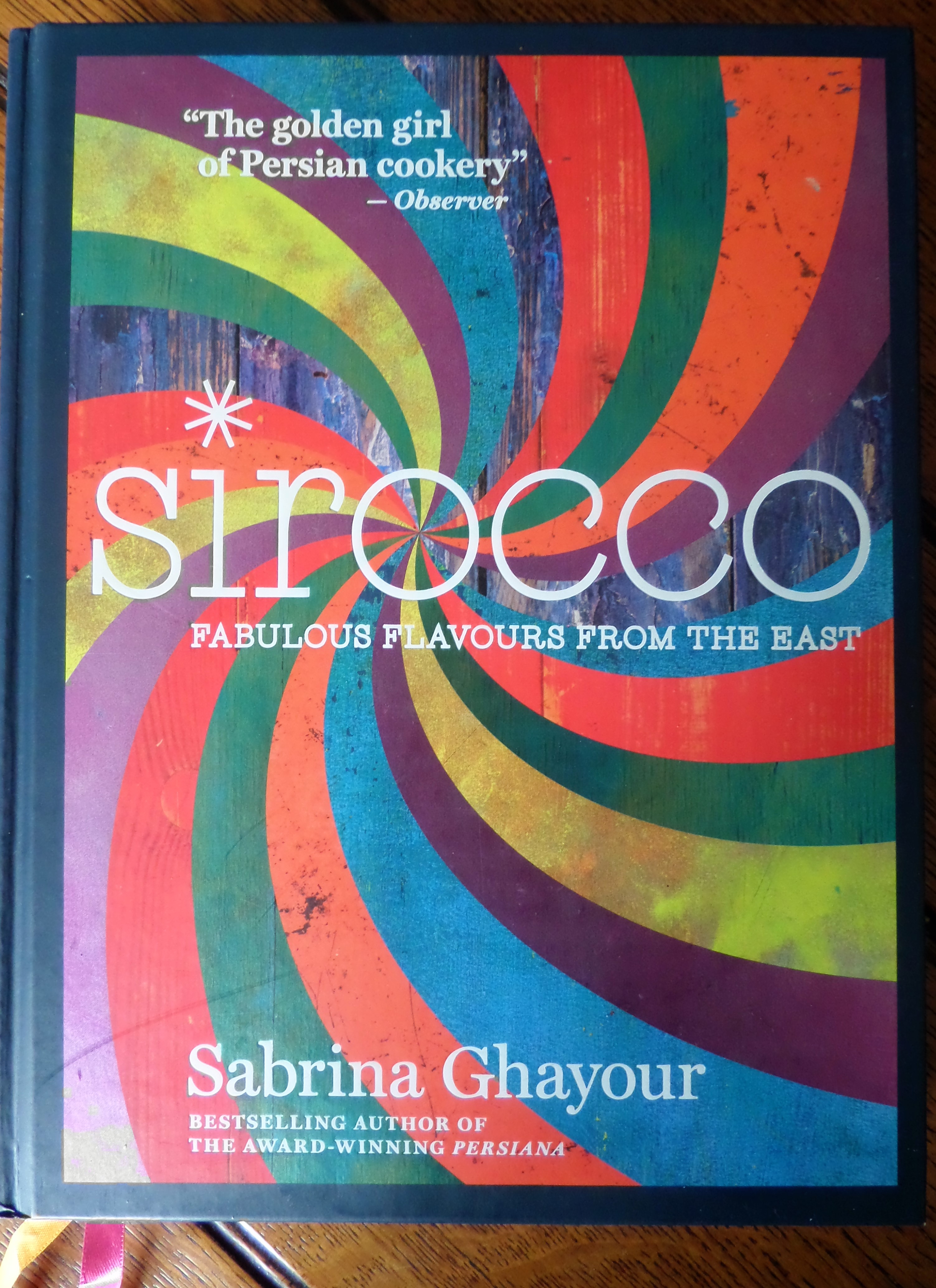
Sirocco by Sabrina Ghayour

Cookbook challenge part 7

This weekend we were away visiting family for the Easter holiday, which meant I was cooking for the next cookbook challenge in my Mother-in -Law’s kitchen down in Wiltshire. As there were going to be a few of the family around over the weekend, I wanted to make a selection of dishes that we could share on the Saturday and still have some leftovers for Sunday lunch. It seemed like a good opportunity to use this book which I have been wanting to try for a while as it just looks so colourful.
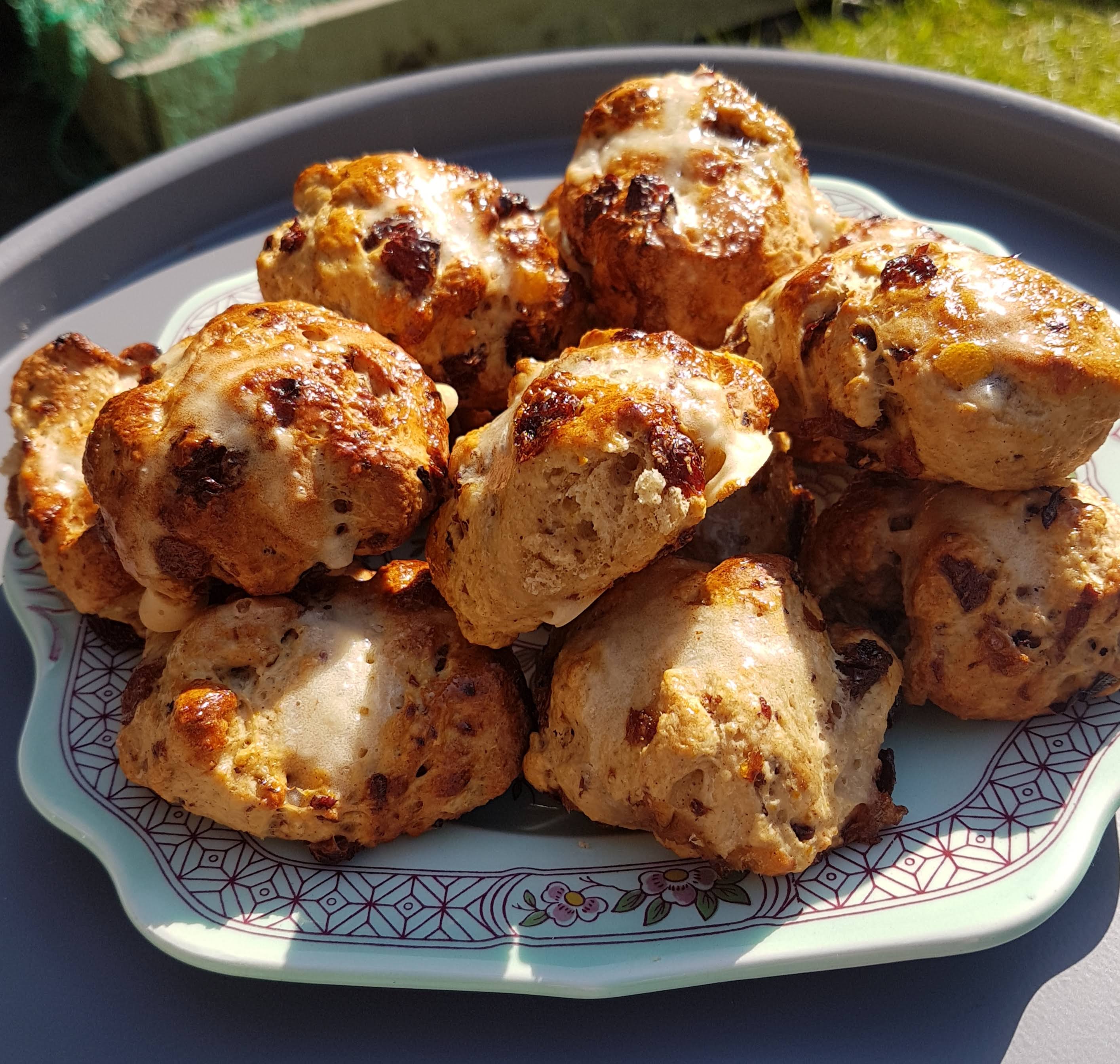
Before we set off on Good Friday, there was time to bake some hot cross buns for breakfast. They came out rather rustic looking, but were still tasty.
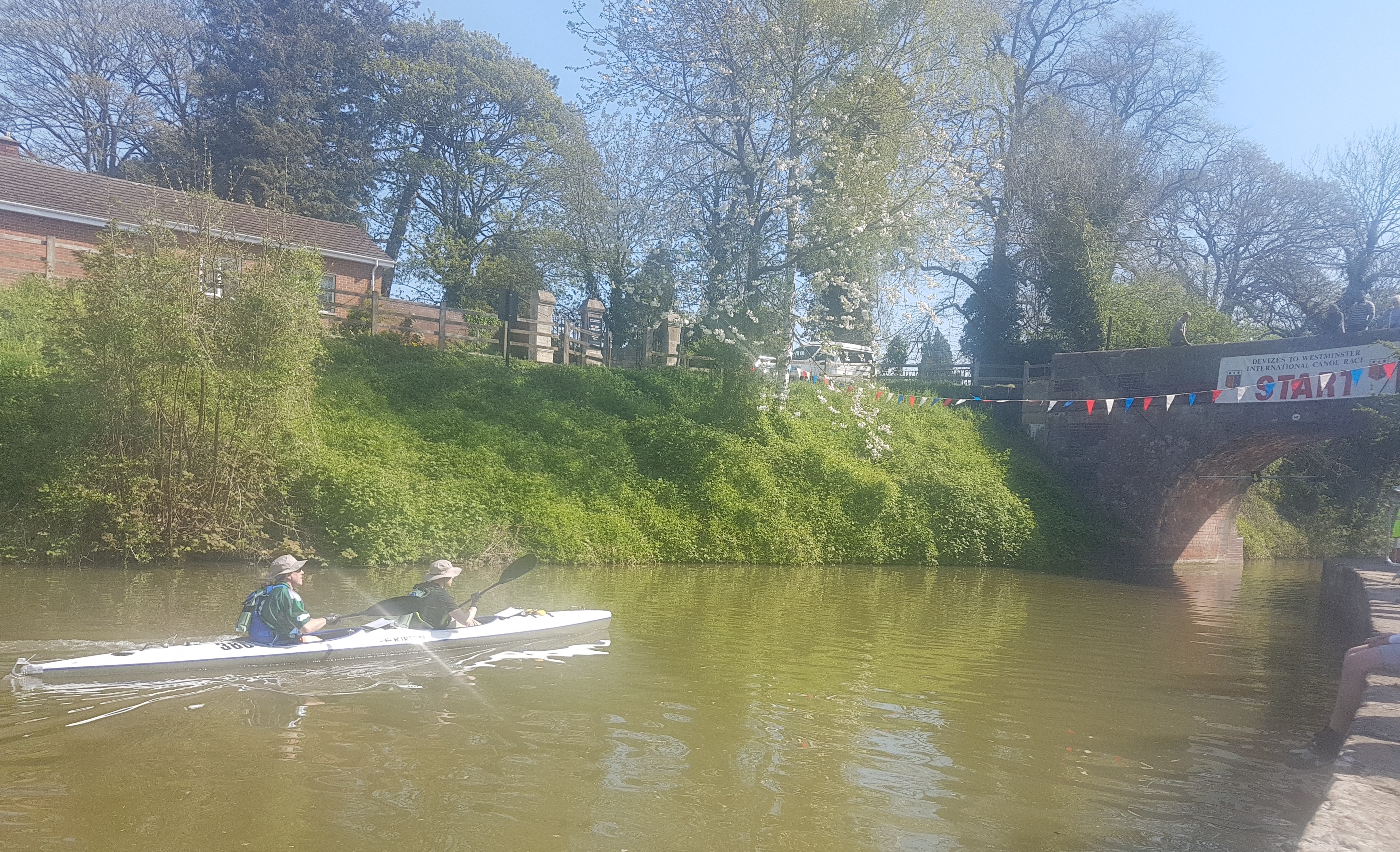
Saturday was a beautiful hot sunny day, so we went into Devizes to watch a few people setting off for the Devizes to Westminster canoe race.
And now, on to the cookbook challenge.

I knew I wanted to make these stuffed baby aubergines as soon as I saw the recipe, but I also knew my sons were never going to eat this, or aubergines in any form in fact. Now that I also had another vegetable loving adult to cook for it seemed a lot more worthwhile.

This recipe is very simple, but the tahini really adds extra depth of flavour and makes it more special. One son tried a tiny piece and then his brother took one look at his face and declined! They were very popular with the rest of us though – no leftovers for Easter Sunday.

I needed something a bit more substantial that everyone would definitely eat, so puff pastry seemed like a reliable choice and these Za’atar and Goats’ Cheese puffs were easy but effective. If I had been able to get ready rolled pastry they would have been even easier, but I had to roll mine out – it didn’t take too long but was more difficult to make the puffs all the same size.
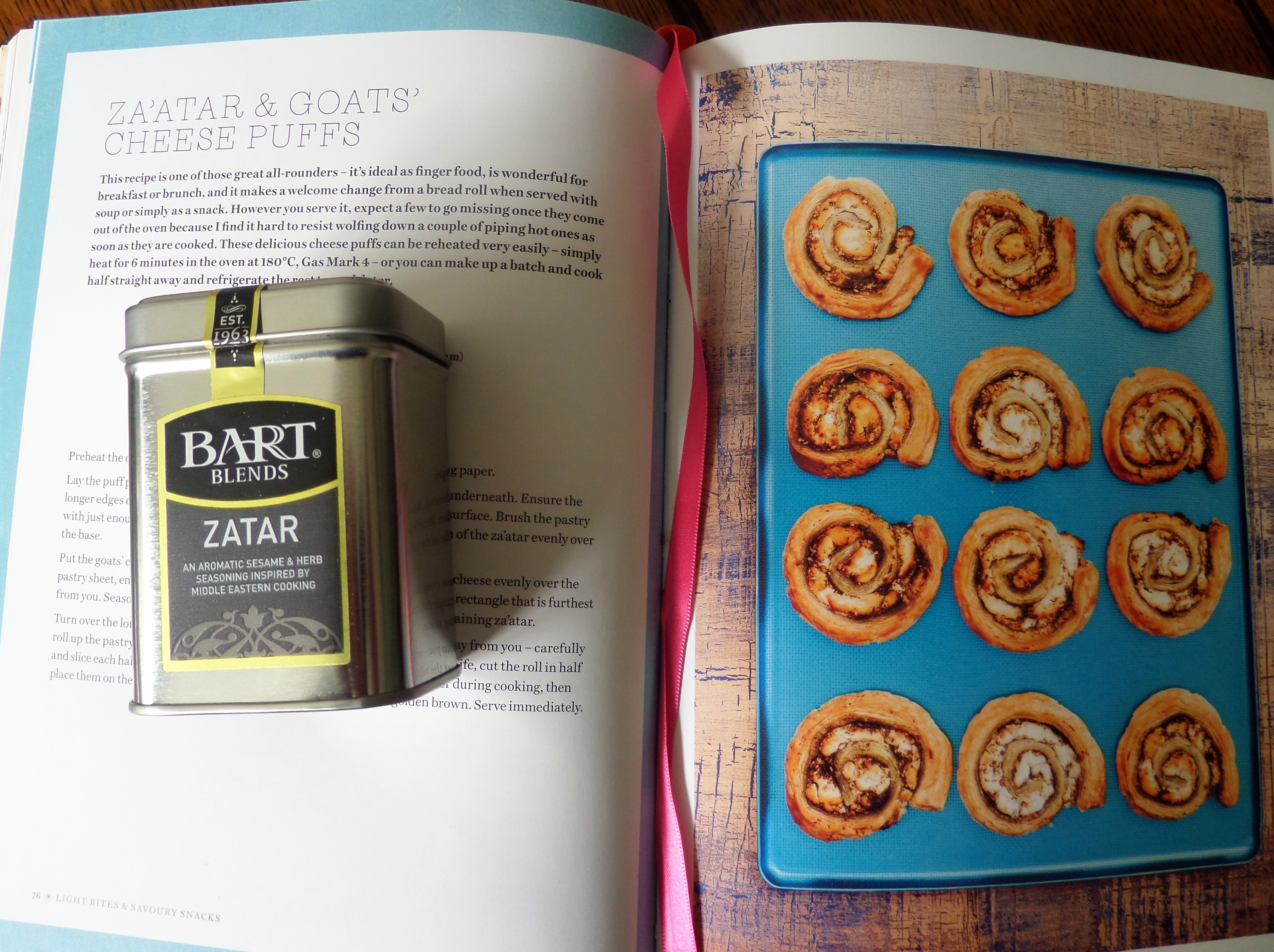
They look slightly burnt in the picture, but that’s where the cheese got a bit too well toasted on top and they didn’t taste burnt at all. We had these warm and everyone thought they were delicious. The aromatic za’atar went really well with the cheese too, so it’s worth getting a tin of this.

Next I needed a couple of salads. The first one was apple, sumac, red onion and pomegranate salad. I used sumac before when I cooked from the Ottolenghi Simple book and since then I’ve been sprinkling it on all sorts of things to give a tangy flavour.
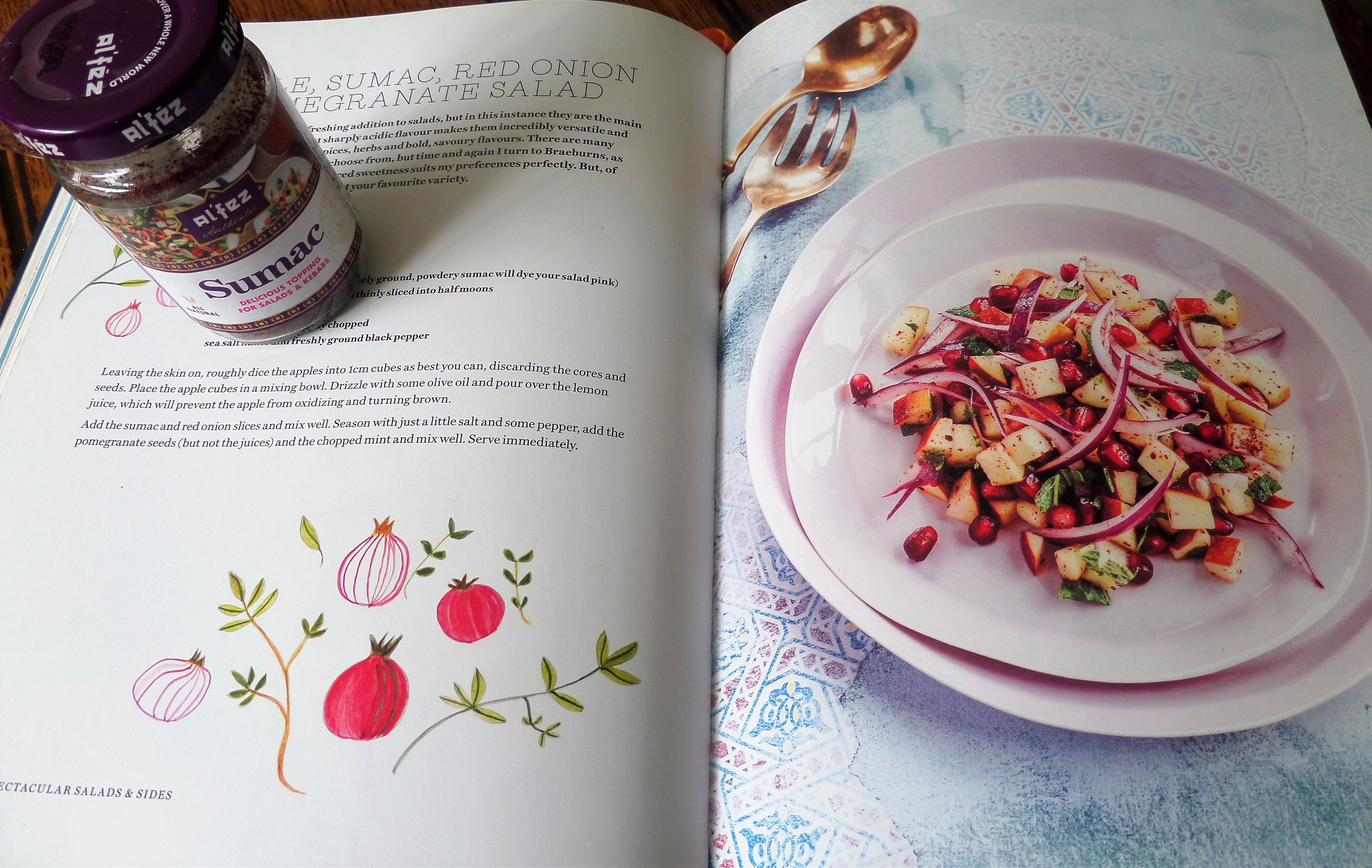
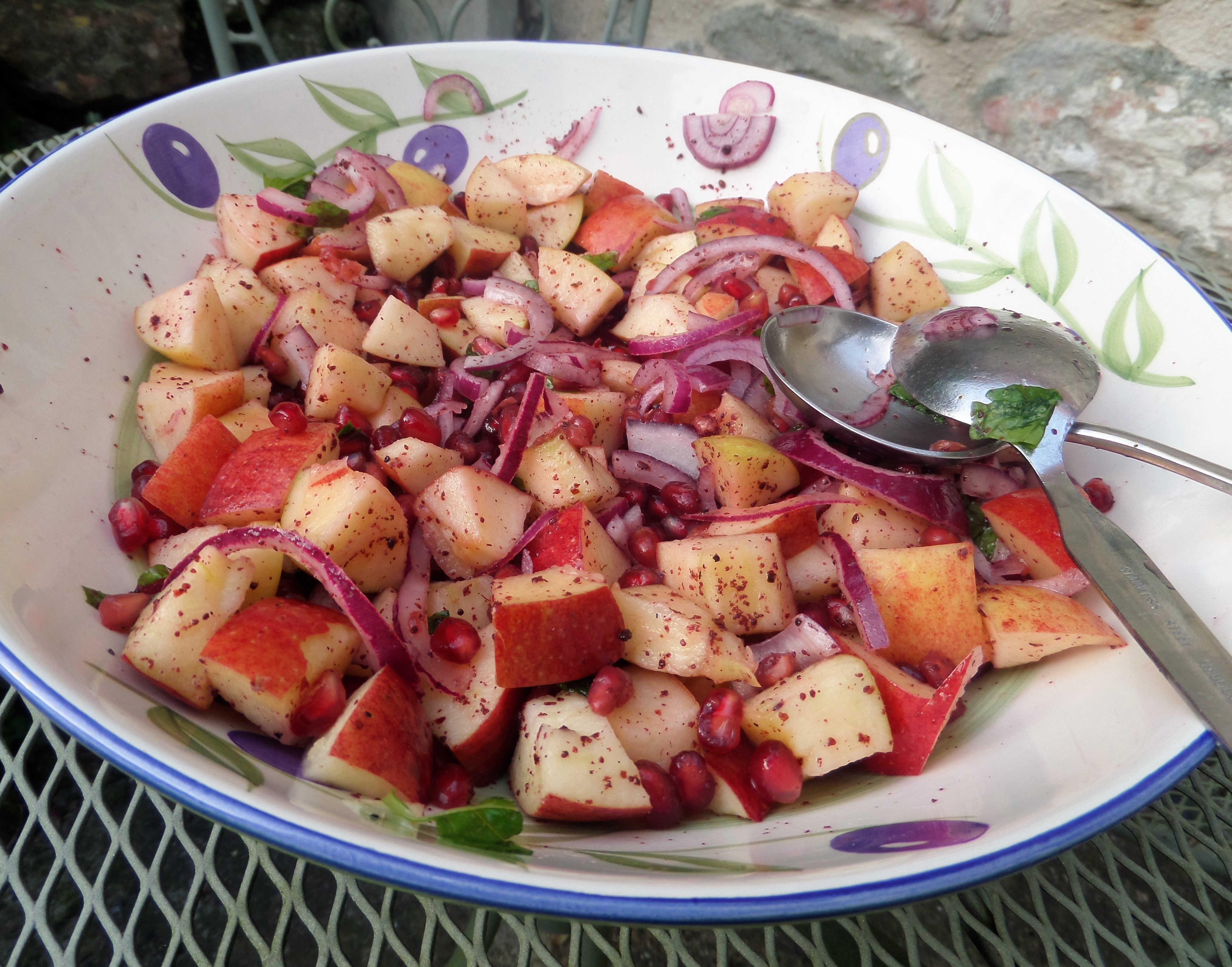
This refreshing fruity salad was a great contrast for the rich pastry and aubergine dishes. It was a large portion so there were lefotovers for Sunday lunch (the citrus juice stopped the apple from turning brown). It even looks like the picture in the book doesn’t it?

The second salad was a supposed to be made from Maftoul (Palestinian couscous), but I couldn’t find that anywhere so I used giant wholemeal couscous which I think is very similar, but not identical.
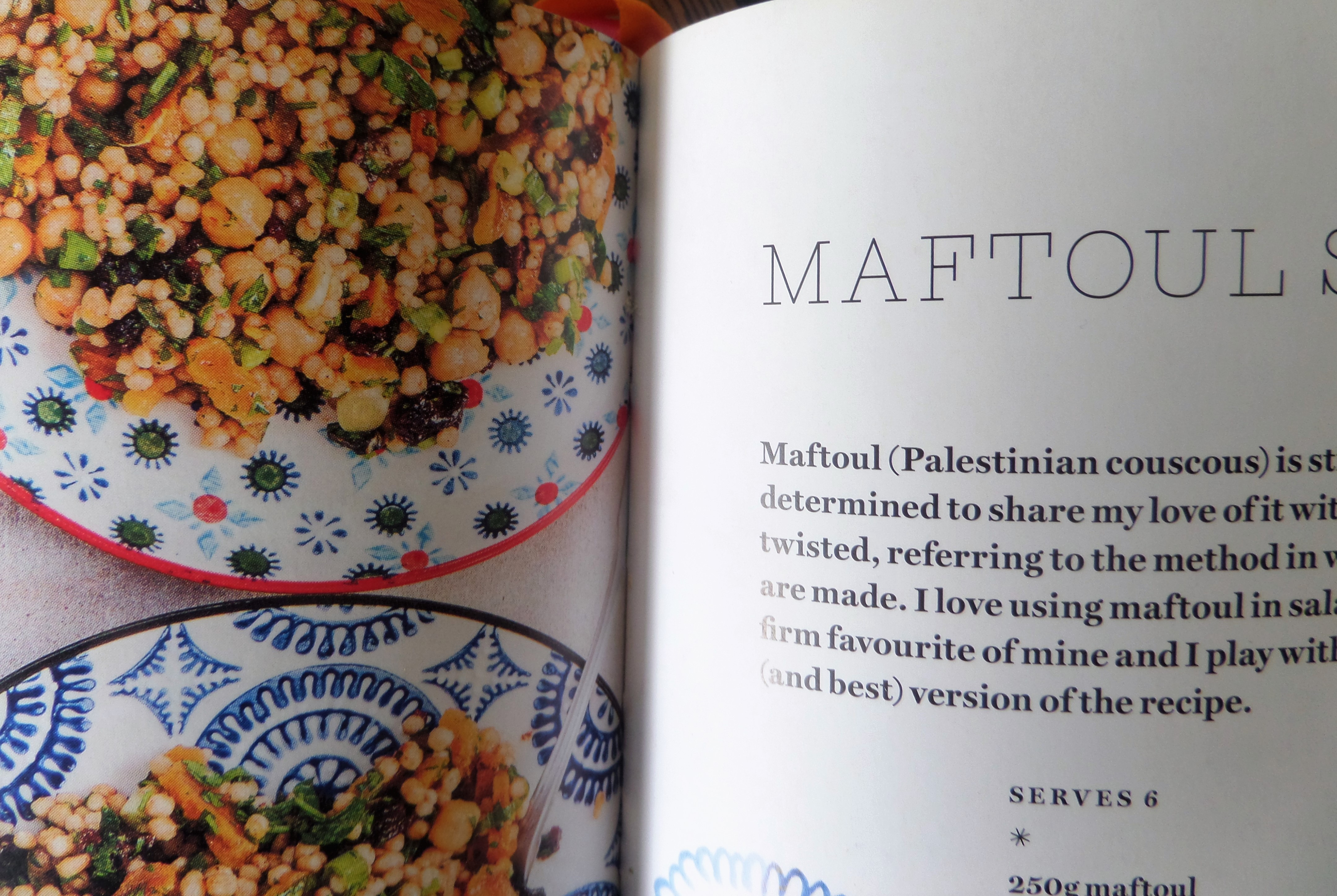
The recipe also included black garlic which I’ve never tried before. This is what it looks like.
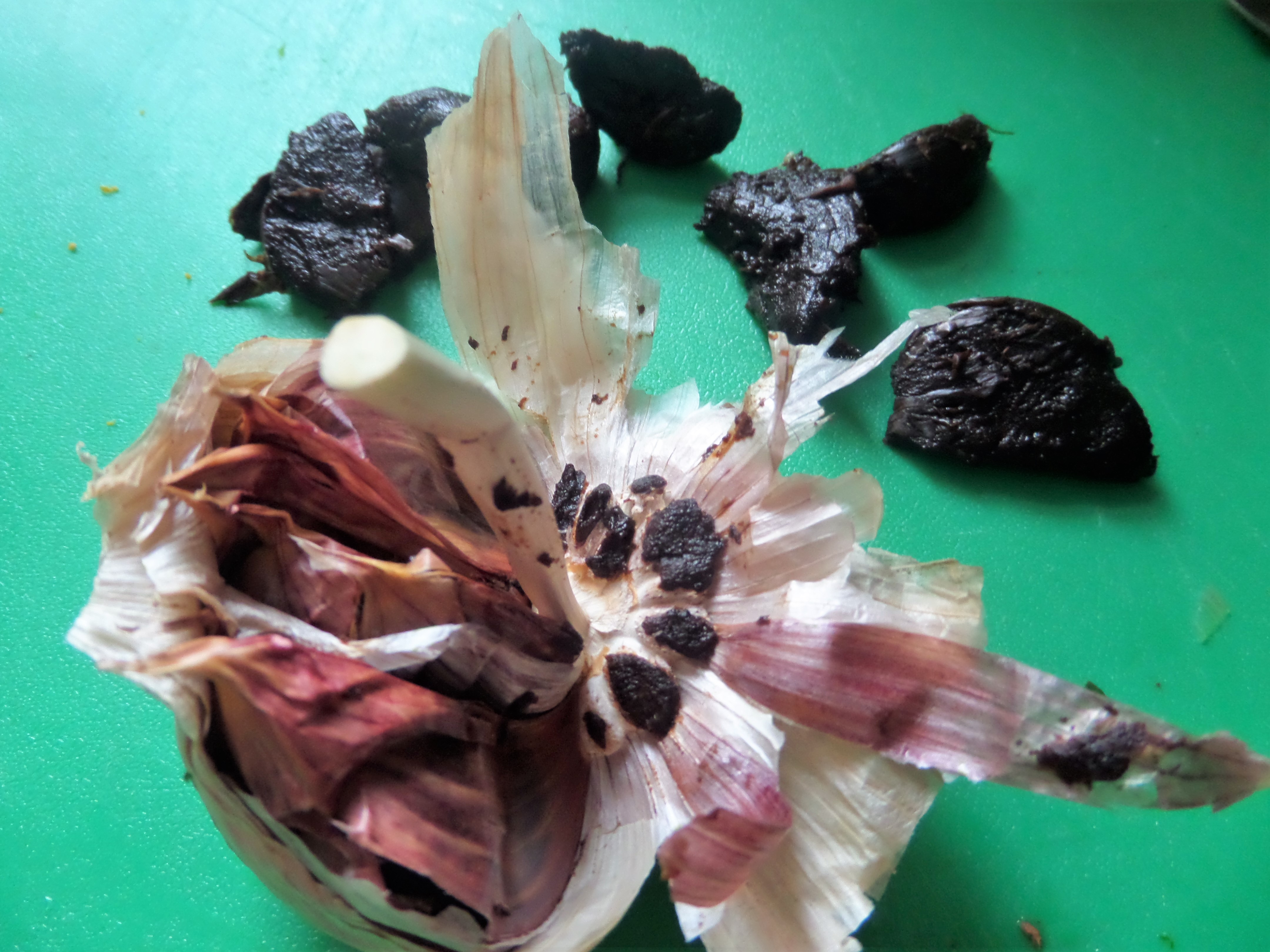

It’s been aged in special conditions until it turns black and sticky and it has a sweet mild flavour which is very different to fresh garlic. As it’s mild you usually need to use the whole bulb in a recipe which does make it quite expensive – this bulb cost me about £4. The recipe also included dried sour cherries which seem to be in short supply at the moment as I couldn’t get them in Manchester (or in Devizes, but that is quite a small place), I used ordinary dried cherries which were not too sweet, but not exactly sour either.
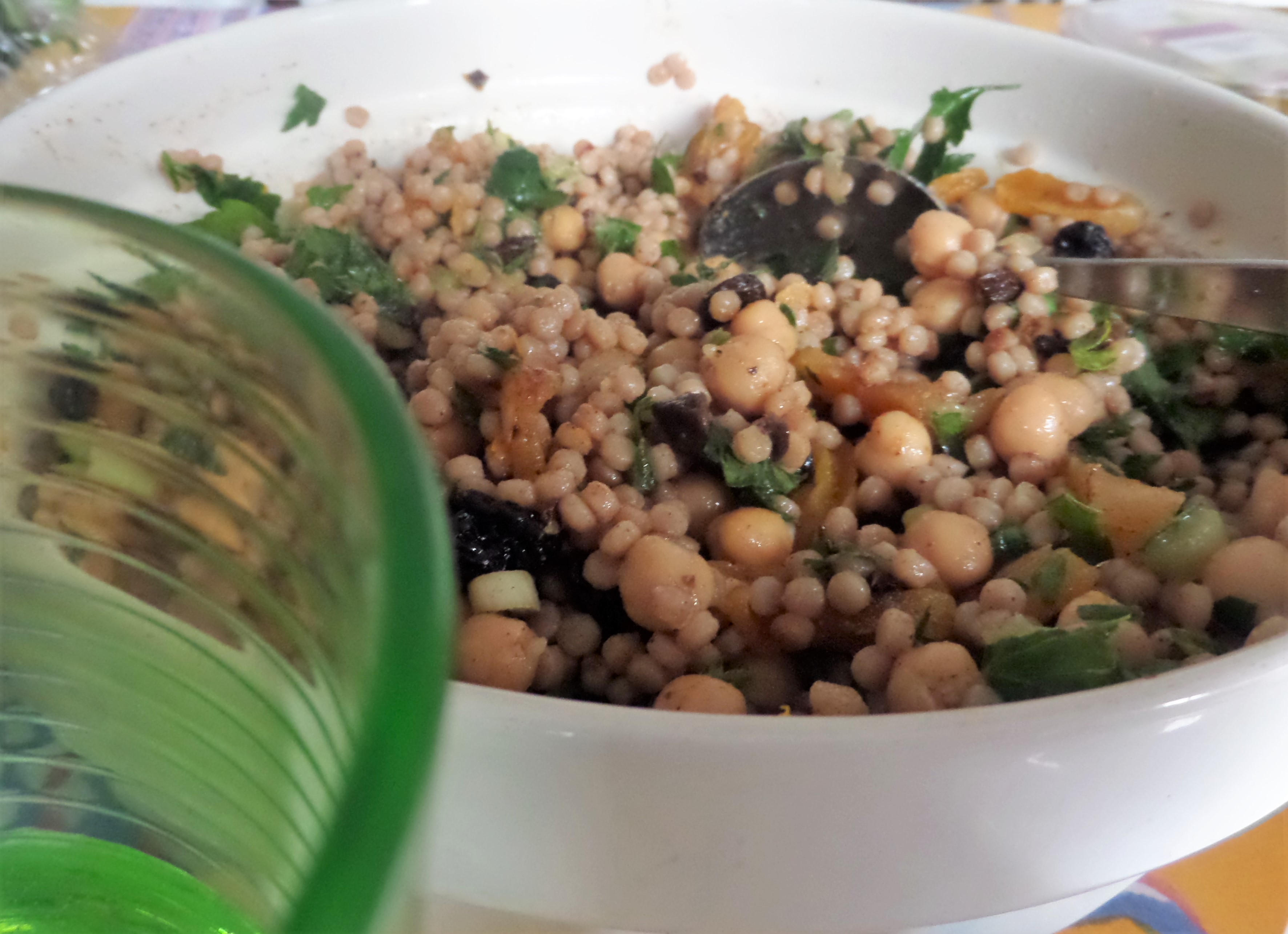
This made a huge portion with plenty of Sunday lunch leftovers. All the family liked it, except our youngest niece and nephew but they are not known for their adventurous tastes. I would have this again, although with all the dried fruit, black garlic and fresh herbs it is probably the most expensive salad I’ve ever made.
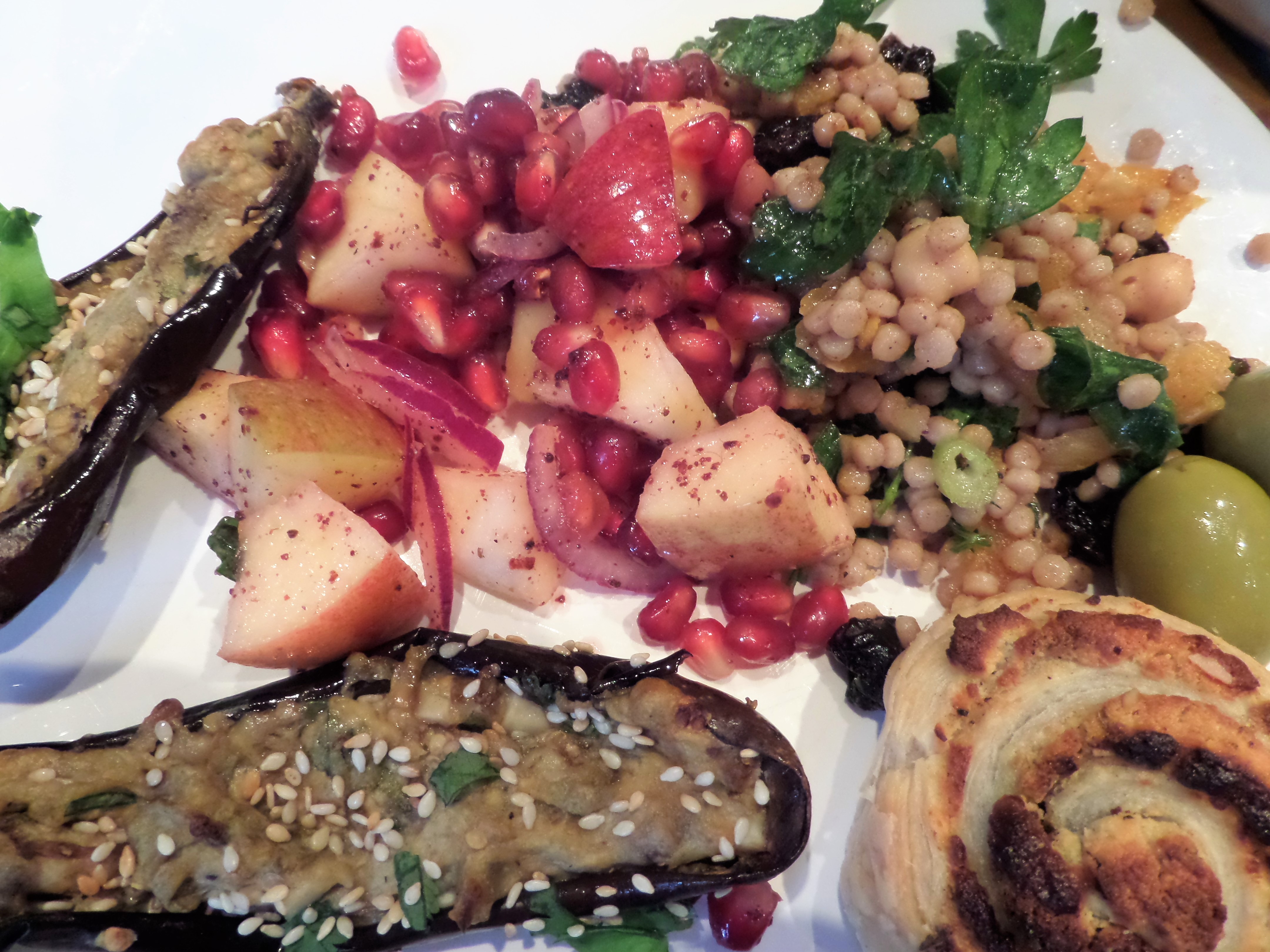
Here is the full selection of dishes.

Of course there had to be a dessert and we all love a drizzle cake so I made this one which included orange, lime and lemon.

It had a good zesty flavour and a crunchy citrus sugar topping as promised. The ground almonds give this a good moist tender texture.

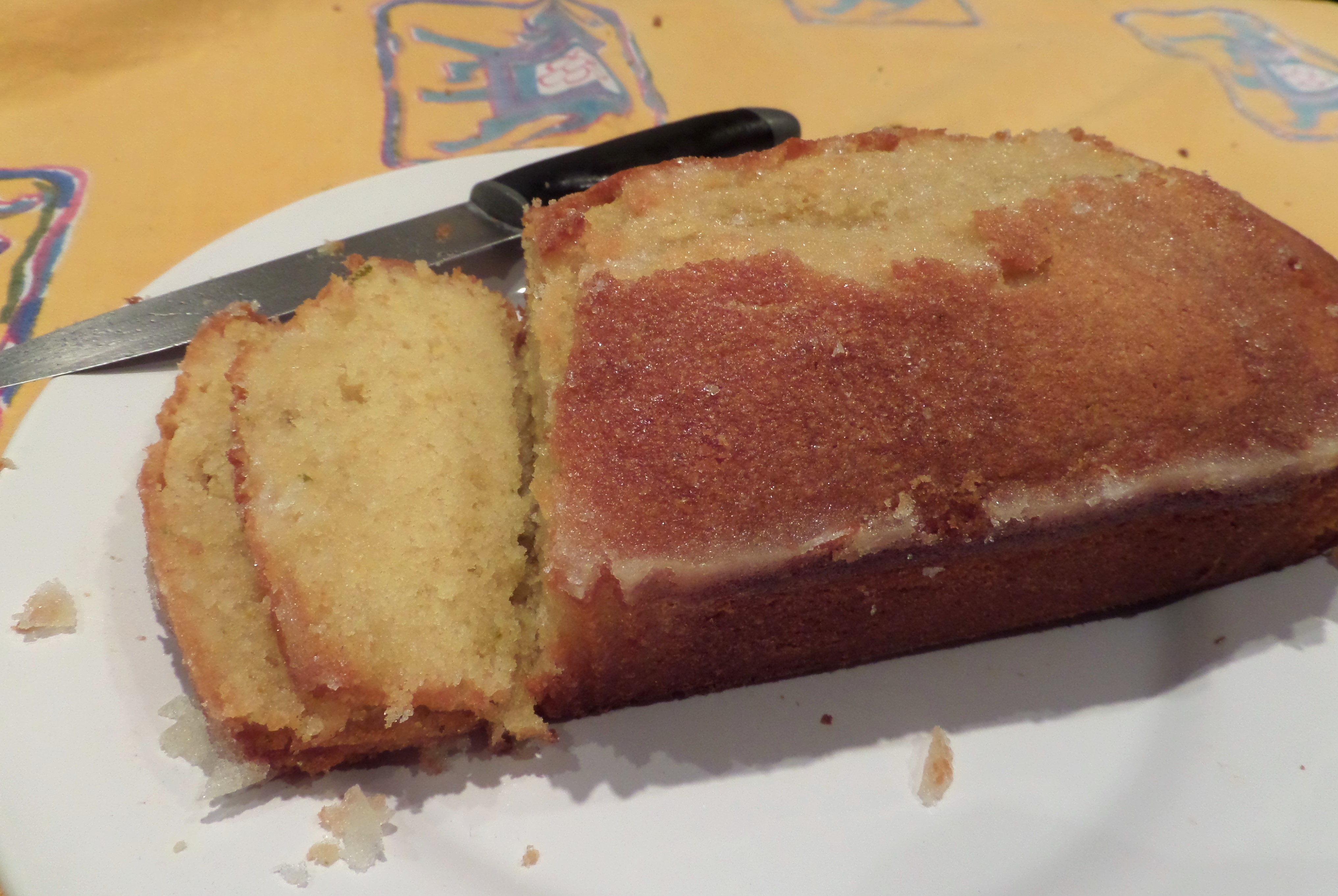
This was all quite fun to cook and not too difficult even in an unfamiliar kitchen. There was a lot of citrus fruit involved, which made everything taste light and fresh but also meant a lot of zesting. I bought a new mini grater / zester especially for this meal and the cooking would have been a little arduous without it. We enjoyed having a selection of different flavours and textures and this was a good meal for a warm sunny evening.

Cookbook Challenge Part 6 Joe Wicks Lean in 15

The Sustain Plan

I’m a bit behind with writing this up as last Sunday the washing machine malfunctioned and I spent quite a lot of the day mopping the kitchen instead of writing. That and some work travel down to Slough meant that I am only just catching up, but never mind – I’ve still been cooking, just not writing about it very quickly.

This week we stayed with the healthy theme, but in contrast to last week’s old style wholefoods, we tried something more up to date. This is my younger son’s book which he got for Christmas. He’s into keeping fit, and although I would not encourage him to follow a weight loss plan and worry about how he looks in selfies, I think that learning how to cook some healthy meals and following the exercise routines in the book is great for getting him into healthy habits.

Joe Wicks has 2.6 million followers on Instagram and a website at http://www.thebodycoach.com where you can read about his diet and exercise plan. You may find the style of his writing a bit annoying if you’re not into everything being “banging” and him referring to broccoli as “midget trees”, but there is no denying that he’s successful and the recipes are tasty, easy and fun. My son helped me choose and cook these ones so it was more messy that usual, but also more entertaining.


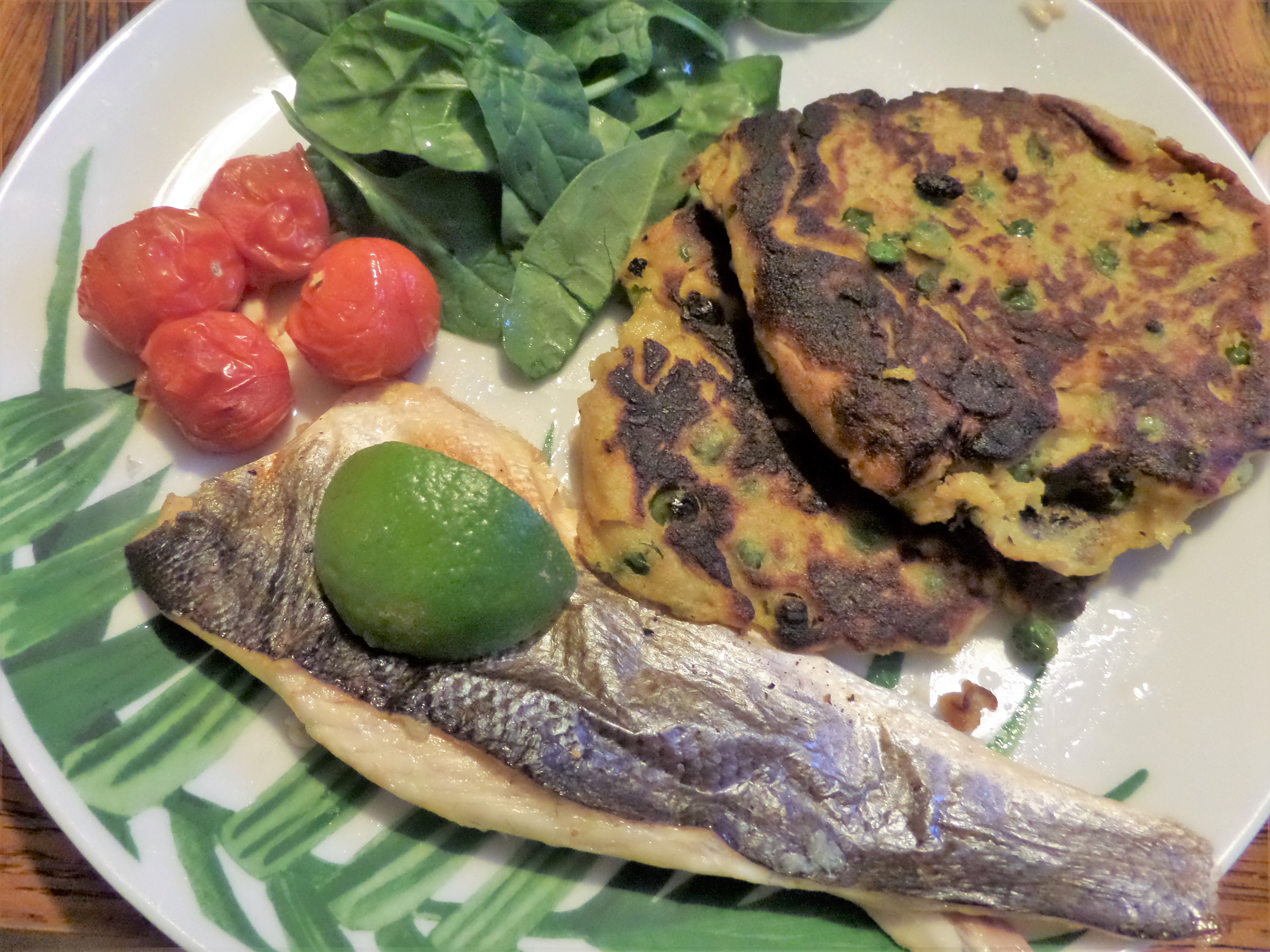
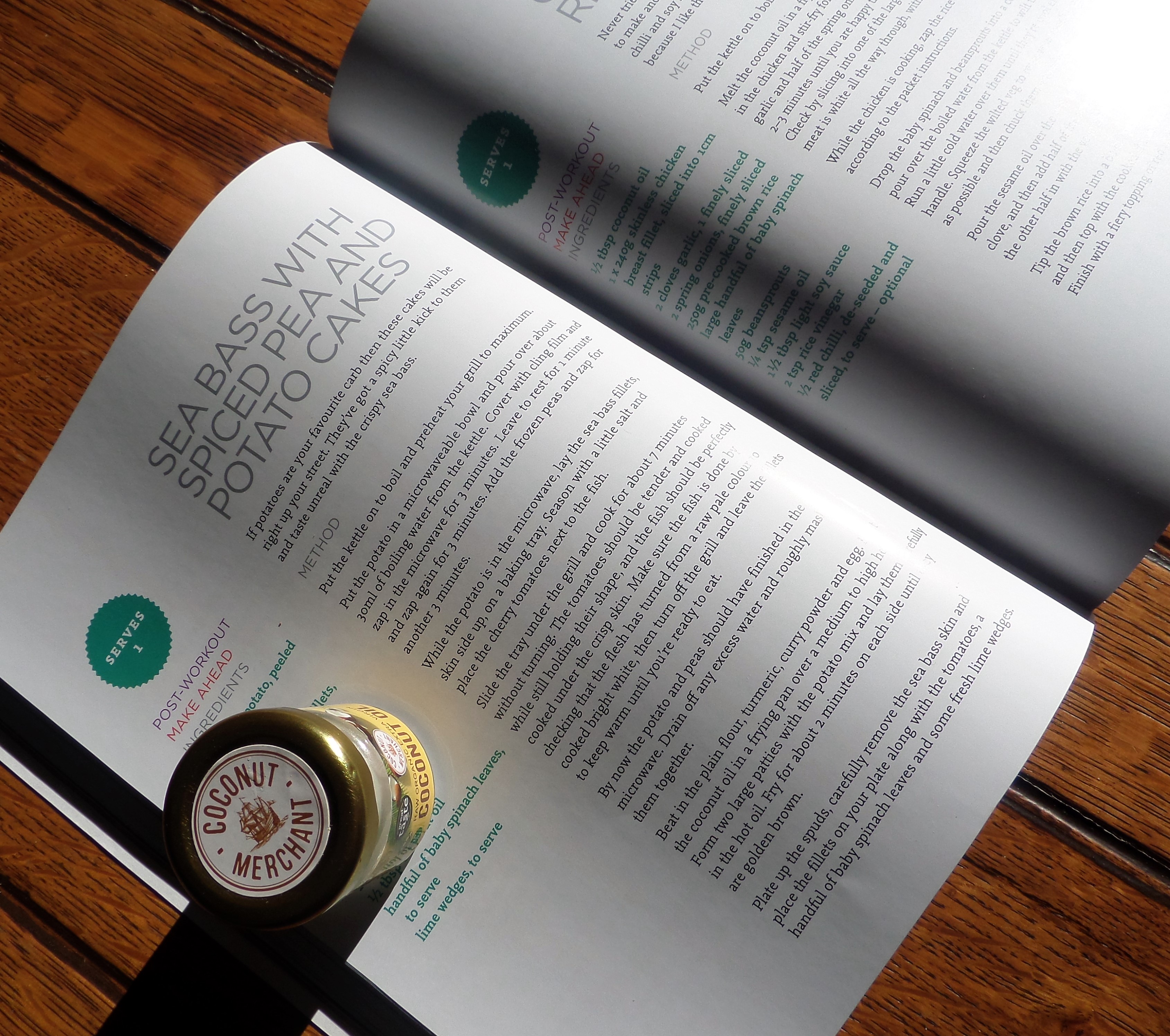
The main course was sea bass with spiced pea and potato cakes. The recipe is supposed to only take 15 minutes, but that’s just for one person. We scaled it up for 4 and it took a lot longer. For one portion, the recipe says to cook the potato in the microwave, but for our large quantity we cooked it in a pan. That wasn’t difficult, but did take longer. We then mashed all the potato cake ingredients together and fried the cakes two at a time. The potato mixture was really soft and quite difficult to flip over in the pan and we also needed to keep the first cakes warm in the oven while we cooked the rest. It was a bit of a juggling act and it was just as well there were two of us.

The recipe said we should remove the skin from the cooked sea bass, but we left it on, partly because one of his other sea bass recipes points out that the skin is the best part so I’m not sure why you would want to take it off for this one.

It was very tasty anyway and my sons really liked it, apart from the cooked tomatoes which were “too squashy”. OK…

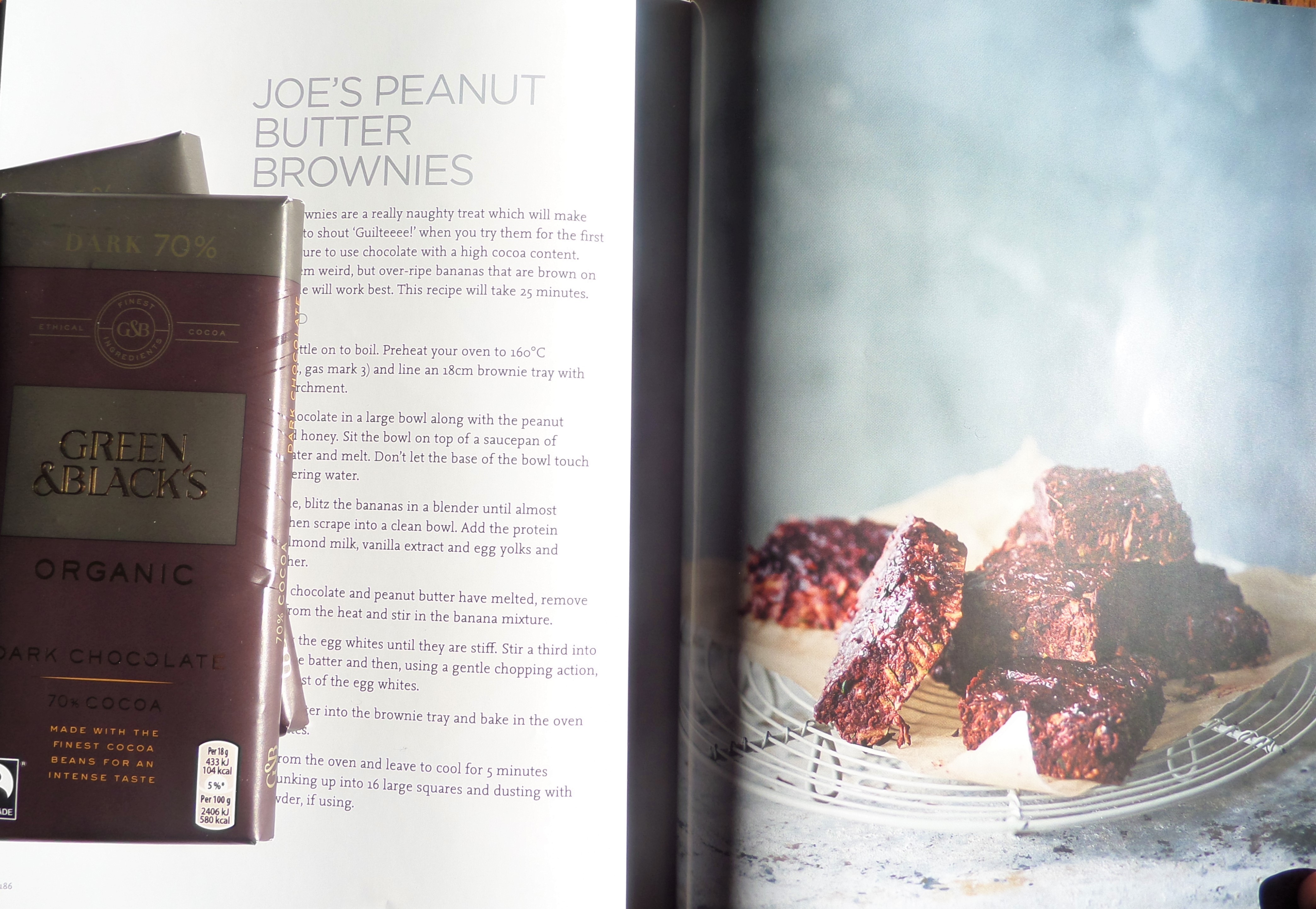
Dessert was peanut butter brownies. This made 16 brownies (well, 8 for us as we’re not into dainty portions) so there was no need to scale it up.

This was very easy to make. I did adjust the recipe a bit as it included chocolate protein powder which you can only buy in large tubs for about £30.  I replaced that and the almond milk with some chocolate protein shake and added some ground almonds which seemed to work fine.

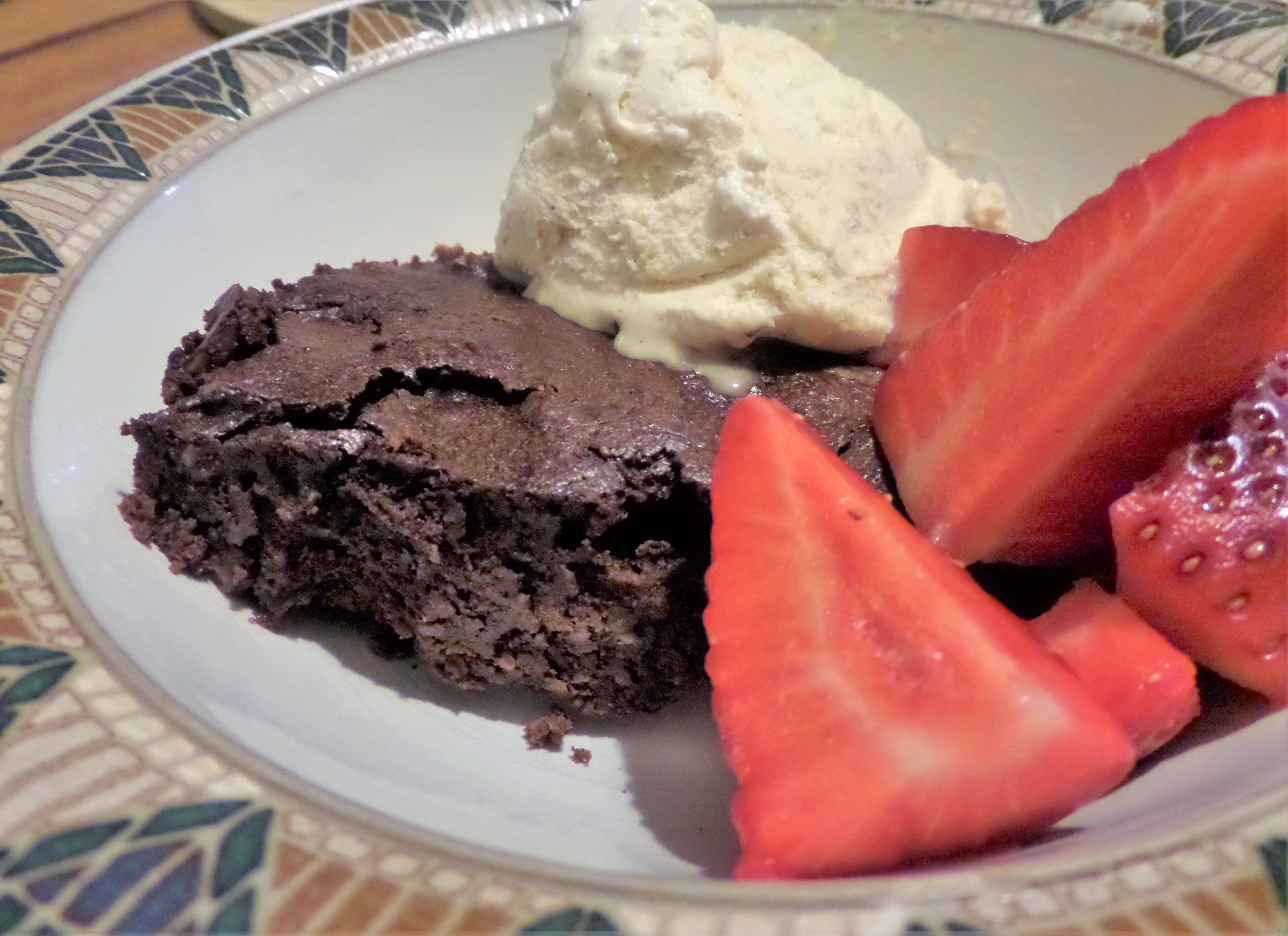
We had this with vanilla ice cream (definitely not part of the Lean in 15 plan) and strawberries, which are out of season but we found some quite juicy ones. The brownies were really good, especially served warm. They had quite a light texture and lots of chocolate flavour without being too sweet and sickly.

We all enjoyed this much more than last week’s meal. The other good thing is that my son spotted a few more recipes in the book he wants to try out. By the way I did drink wine with this, which seems wrong as I don’t think that is part of the plan, but I recently received a big box of free wine – I’ll have to write another post about that!

Eighties Cooking: The Wholefood Cookery course

Cookbook Challenge Week 5

See my previous post for more about this book

Today in the UK it’s Mother’s Day, so my dinner is being cooked for me while I sit on the sofa eating chocolates and writing about what I cooked last night. This was the least successful meal so far, and to be honest I think my family would prefer me to stay on the sofa and not make anything else from this book!

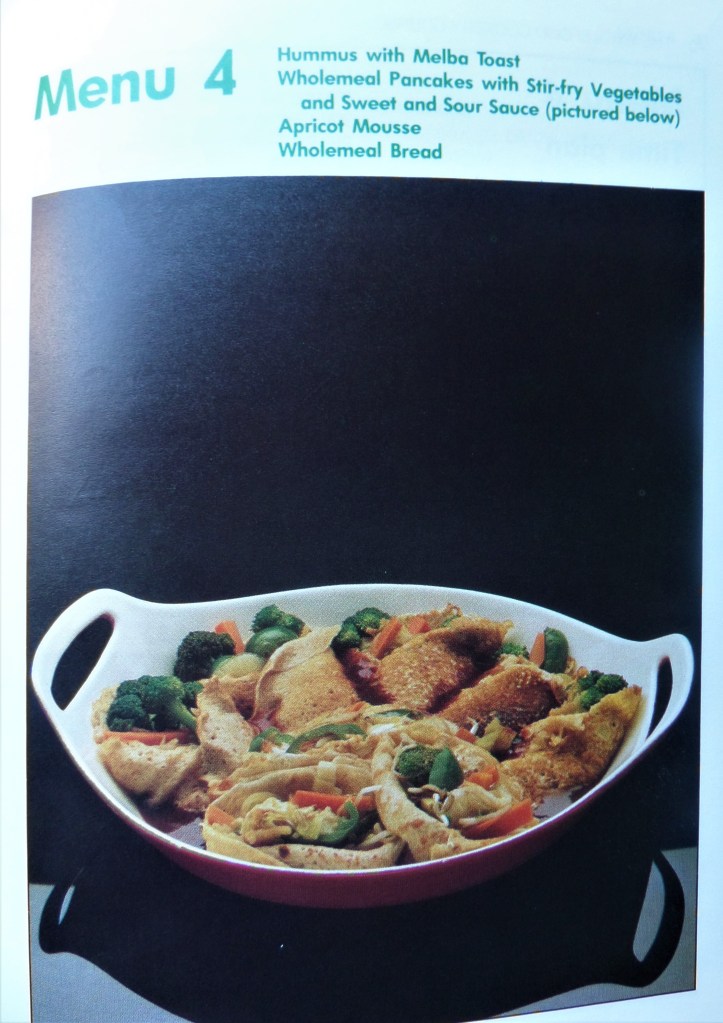
The book contains several menus and the one I picked included wholemeal vegetable pancakes with sweet and sour sauce, followed by apricot mousse. It also suggested making wholemeal melba toast with houmous, but I could not see the point of making a lovely fresh loaf just to slice it up and make dry toast, and anyway it seemed like quite enough high fibre food for one meal. Each menu includes a basic timeplan and is followed by nutritional notes. I was surprised to learn that even if I had made the full menu it would still not quite meet the recommended daily fibre allowance and most people are not eating anywhere near the guideline amounts.

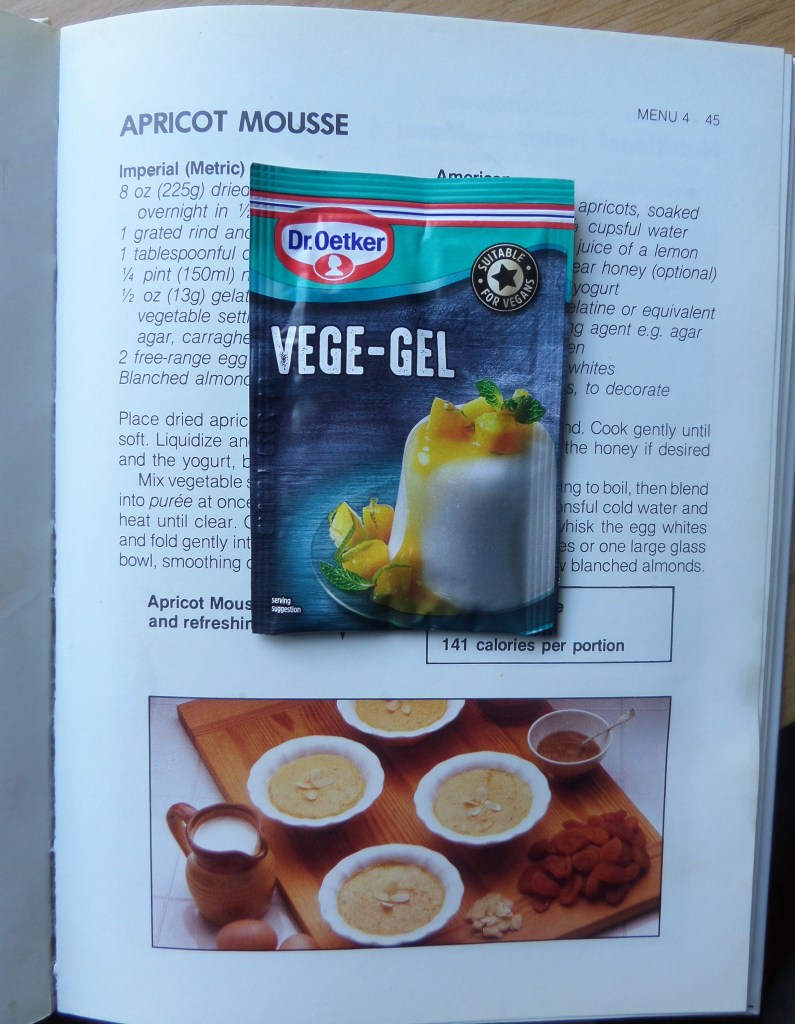
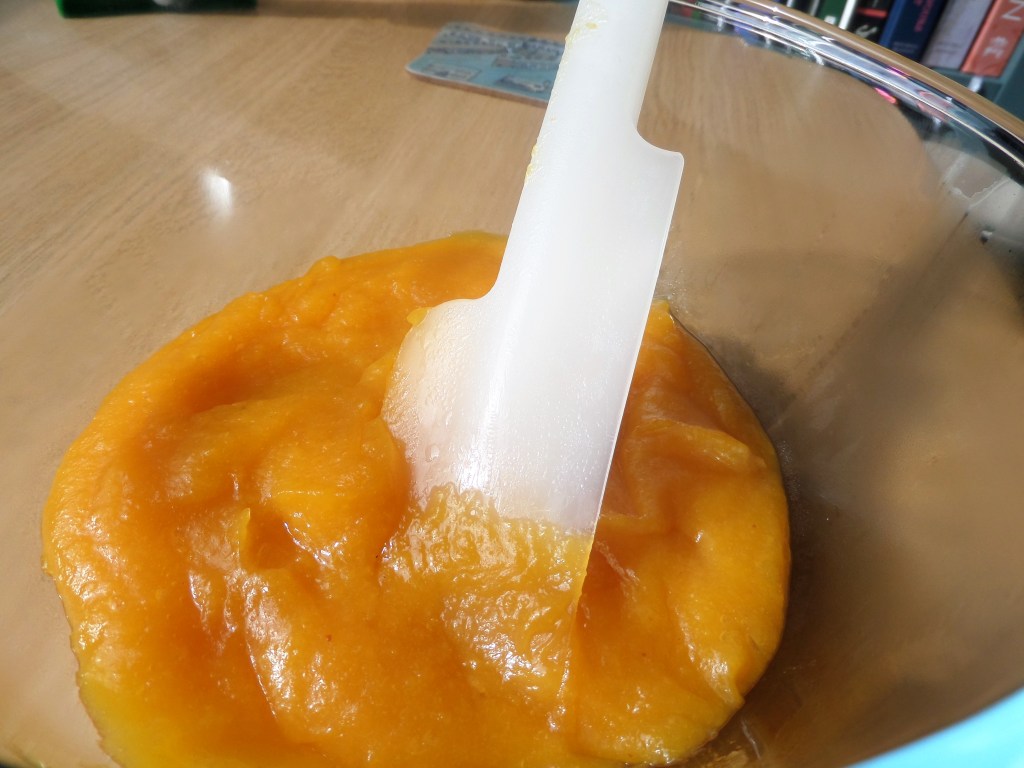
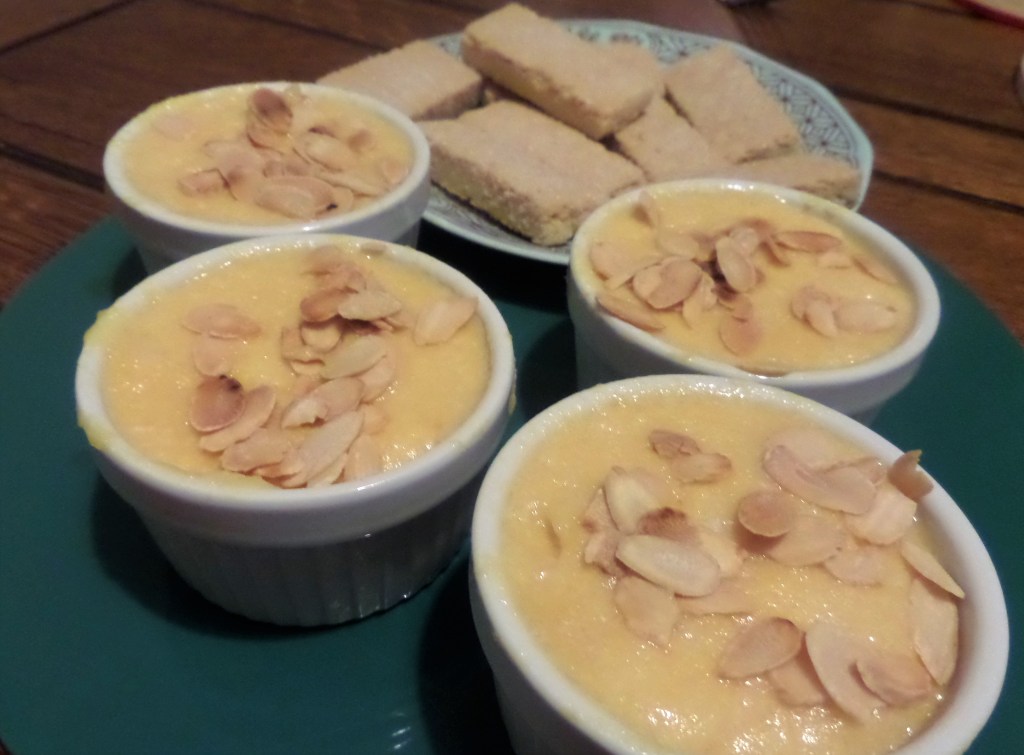
I made the mousse earlier in the day as I needed to cook and puree the apricots (which had been soaked overnight), and having learnt from my mango ice cream experience I wanted to allow time for it to cool and set.

The apricot puree – pretty colour isn’t it? My dried apricots contained sulphur dioxide to keep the colour. Organic ones would be brown, but those are the ones to use if you are worried about allergies or sensitivities.

The recipe includes two stiffly beaten egg whites which are folded in at the end. Now, this book predates the UK ‘salmonella in eggs’ scandal of 1988, in which the Junior Health Minister Edwina Currie stated that most British eggs were contaminated with salmonella. This caused a huge scandal, a 60% reduction in egg sales and led to her resignation. Even though the statement was not actually quite correct, for years afterwards recipes warned that children, the elderly and pregnant women should not eat raw or lightly cooked eggs. Fortunately chicken farming has improved since then and in 2017 the Food Standards Agency advice was updated to say that raw eggs with the Lion mark are safe again for most people.

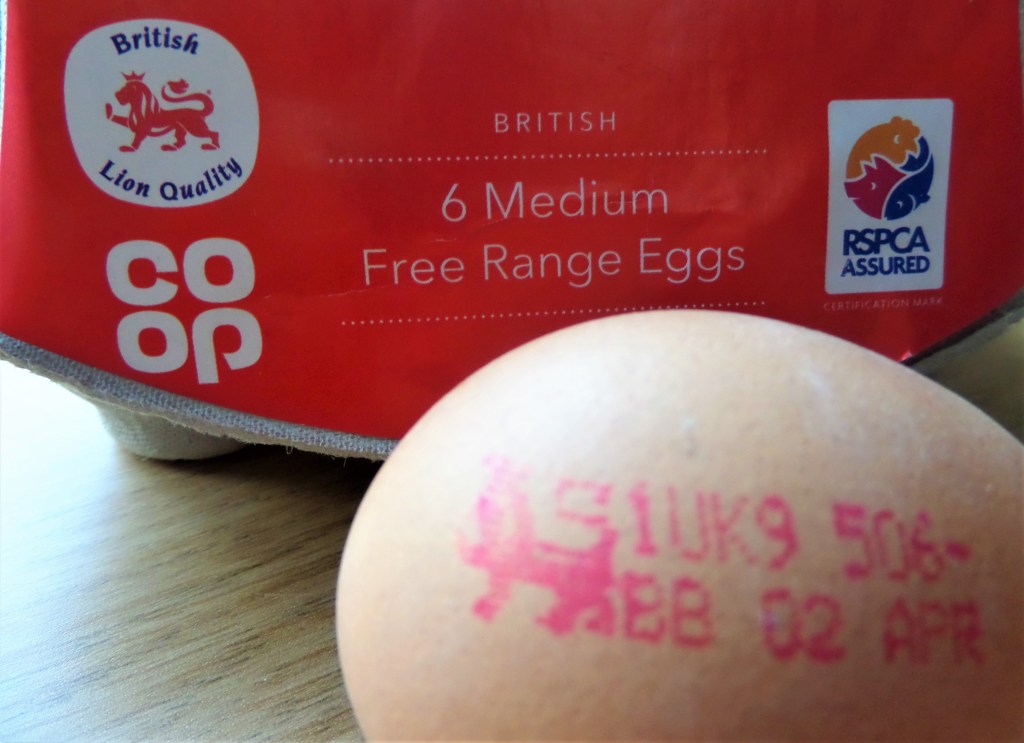
Here is the Lion mark on the egg box and stamped on the egg so we know it’s safe.

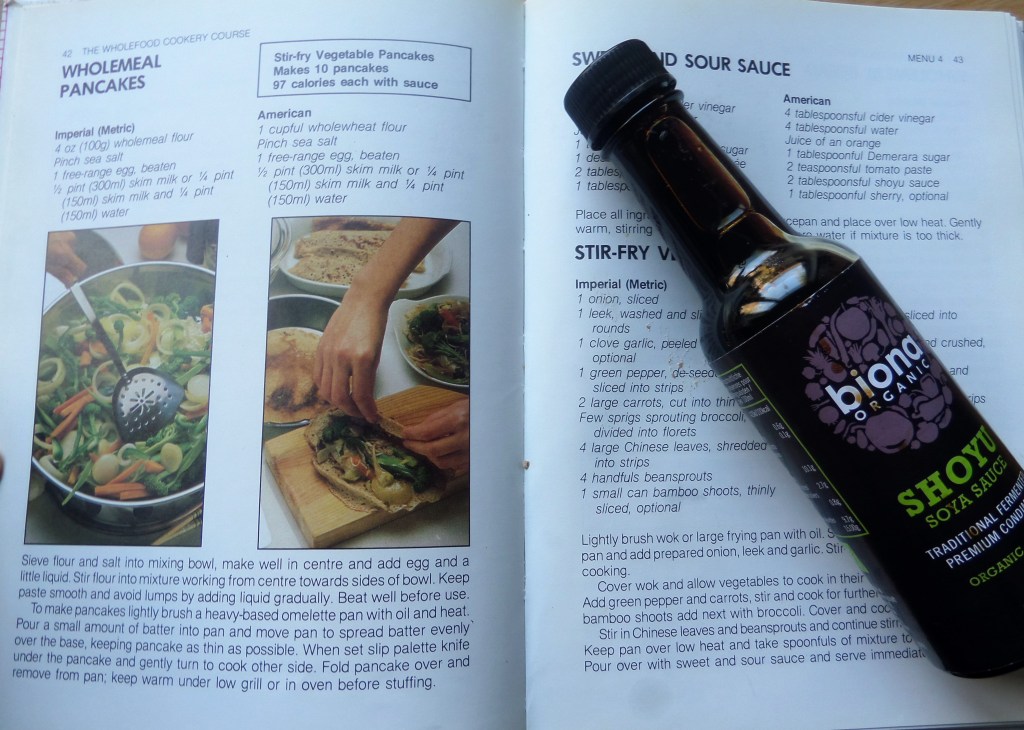
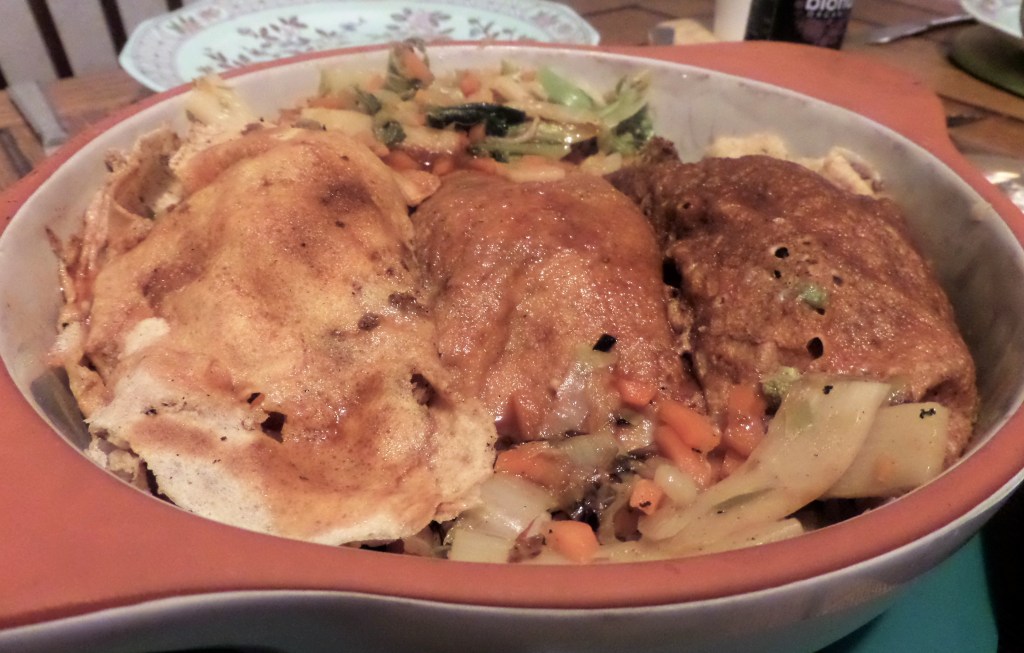
The vegetable stir fry included a large amount of veg (which I shredded in my food processor) but no seasoning apart from one optional clove of garlic. The sweet and sour sauce did contain salt from the shoyu, but I knew a big pile of plain vegetables was not going to go down well, so I cooked them in flavoured oil and also added a green chilli, a pinch of salt and some 5 Spice seasoning. The vegetables were fine, but the main problem with this recipe was that I really can’t make pancakes! I admit that is a problem with the cook rather than the recipe itself, but I had to make two batches before I had enough that were whole enough to wrap around the filling.

If you’ve read previous cookbook challenge posts, you may have noticed that I like to try and pair some wine with the recipes. This time it was a Gewurztraminer from the Alsace region – slightly sweet with some tropical fruit notes and often paired with spicy food and desserts including dried fruit. It was probably the best part of this meal!

I can’t say I really enjoyed cooking this. It was extremely hot work to cook all the pancakes and them keep them warm while I cooked the stir fry and the whole thing generated a lot of washing up.

The food was not bad, but not particularly good either. My sons thought the stir fry was OK, but did not think it went well with pancakes – even though they like pancakes they would have preferred rice or noodles with this. Son two also found the sauce far too acidic even though I added extra sugar. The mousse had a good apricot flavour but was a bit intense – my eldest son ate it but didn’t ask for any more and the younger one did not like it at all.

On reflection, I don’t think I’ll be revisiting this book. It seems very much of its time, whereas now Instagram is full of posts showing far more appealing and tasty looking dishes. Healthy cooking has definitely moved on and that’s for the best. Which healthy recipe books do you recommend?

Eighties Cooking

Cookbook challenge week 5: The Wholefood Cookery Course

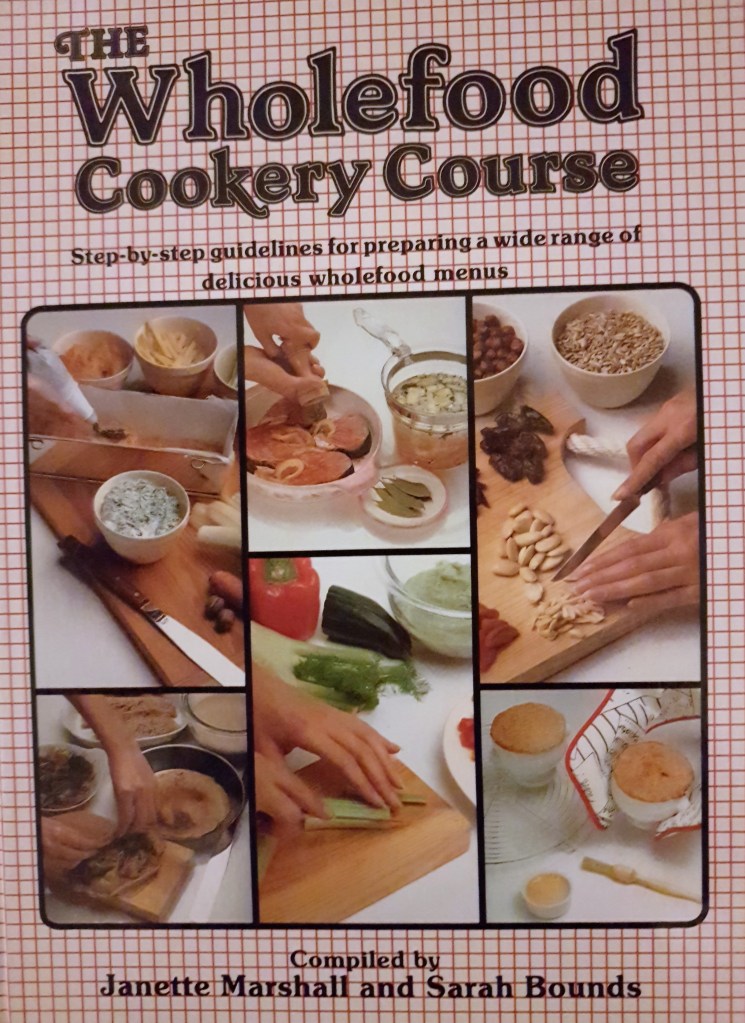
This week I tried out some eighties cooking, so we’re going back in time to 1983 – can you tell by the cover? As you can see, this book aims to teach its readers how to cook with wholefoods. Although this was the decade of Nouvelle Cuisine, most food at home was fairly basic and the very popular Chicken Kiev was considered quite exotic (as well as risky; it was easy to squirt yourself with hot butter as you cut into it). Vegetarianism was becoming more popular, and since the 1970s there had been more interest in healthy food and more anxiety about what we ate and what it was doing to us.

Aerobics classes and fitness videos were taking off, along with colourful lycra outfits to wear while you took part. Fat reduction and plenty of fibre were the key points of the healthy eating advice of the time.

I can’t remember how or when I got this book and I have definitely never cooked from it before. It’s going to be interesting to see what the family think of this – do you think it’s going to appeal to 2019 tastes?